The trucking industry continues to evolve, and so do the licensing requirements for drivers who want to operate commercial motor vehicles (CMVs) in the United States. One important category that many carriers and international drivers often overlook is the Non-Domiciled Commercial Driver’s License (CDL), a special CDL issued to individuals who legally reside in the U.S. but are not U.S. citizens or permanent residents. Whether you’re a transportation company trying to recruit qualified drivers or an immigrant worker planning a commercial driving career, understanding the rules surrounding non-domiciled CDLs is essential.
This guide breaks down the top 10 things you need to know about non-domiciled CDLs in 2025, including eligibility, documentation, compliance, renewal rules, and the impact on trucking careers.
1. A Non-Domiciled CDL is for Drivers Who Live in the U.S. but are Not Permanent Citizens
The first and most important fact is that a non-domiciled CDL is specifically designed for drivers who reside in the United States but cannot legally claim full domicile in any U.S. state due to immigration status. This includes individuals who are in the U.S. under work visas (such as H-2B, TN, E-visa, L-visa, and other employment categories). Unlike traditional CDL holders who provide proof of domicile, non-domiciled CDL applicants must demonstrate that they are legally present in the country and eligible to work, even though they may not yet qualify for permanent residency. This category allows foreign workers to fill critical workforce gaps in long-haul trucking, dedicated fleet operations, and specialized freight transportation.
2. Proof of Legal Presence is Mandatory and Strictly Enforced
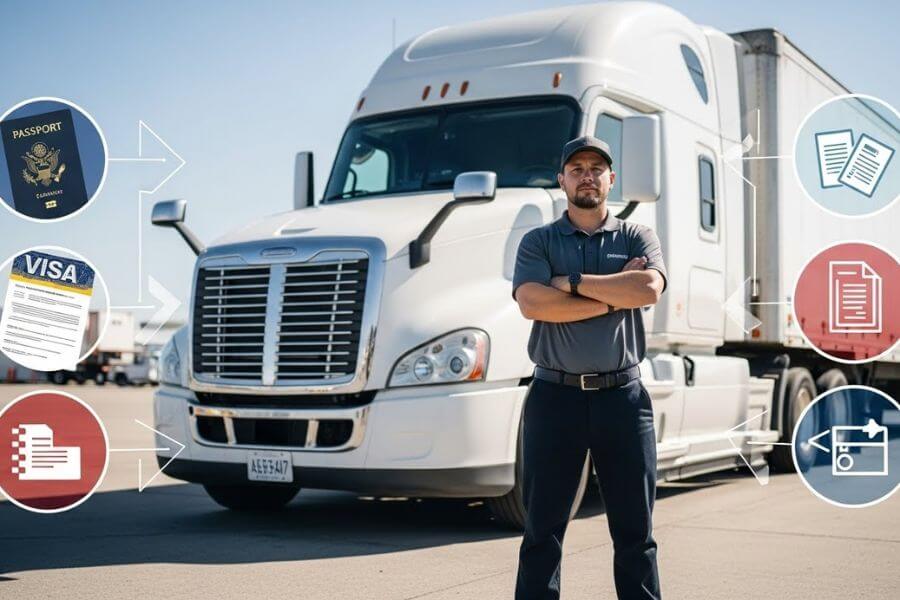
To qualify for a non-domiciled CDL, the applicant must show clear, verifiable proof of lawful presence in the United States. This typically includes documents such as:
- A valid passport from the home country
- A U.S. visa with authorization to work
- An I-94 arrival record
- An employment authorization document (EAD), if applicable
DMVs across the United States have dramatically strengthened identity verification procedures after federal REAL ID and FMCSA regulatory changes. As a result, incomplete or inconsistent documentation can delay or block the application. Transportation companies who sponsor non-domiciled CDL drivers must ensure the driver’s immigration paperwork is correct, current, and fully aligned with state CDL requirements.
3. Non-Domiciled CDL Holders Must Still Meet All Standard CDL Training and Testing Requirements
A common misconception is that non-domiciled CDL holders receive different training rules or lighter testing standards. This is not true.
All non-domiciled CDL applicants must pass the exact same:
- CDL knowledge tests
- CDL learner’s permit requirements
- Entry-Level Driver Training (ELDT) standards
- CDL skills tests
- State’s medical examiner requirements
This ensures that non-domiciled CDL drivers are trained to the same safety and competency level as domestic drivers. The FMCSA mandates uniform standards across the nation, meaning that the only difference is the immigration-related paperwork, not the skill requirements.
4. The License is Marked “Non-Domiciled” and Cannot Be Converted Without Proper Status
A non-domiciled CDL is visibly marked on the physical license. This notation does not affect the driver’s ability to operate commercial vehicles, but it does indicate that the driver’s legal presence is tied to immigration authorization rather than state residency. Importantly, a non-domiciled CDL cannot be converted into a standard state CDL unless the driver obtains lawful permanent residency or establishes full domicile. If the driver’s immigration status changes, they may be required to reapply or upgrade their license following state-specific rules.
5. The CDL Validity Period Often Matches the Immigration Status Period
Unlike a traditional CDL that can remain valid for up to eight years in some states, a non-domiciled CDL is normally valid only for the duration of the applicant’s legal stay. In many states, this means a validity period of one to two years, depending on the expiration date on the applicant’s I-94 or work authorization. When immigration documents are renewed, the CDL must also be renewed. Allowing legal documentation to expire even briefly can lead to automatic CDL cancellation, forcing the driver to restart parts of the licensing process. For carriers, this is a critical compliance detail to monitor.
6. Carriers Must Comply With Additional Verification and Recordkeeping Requirements
Hiring non-domiciled CDL drivers requires extra diligence from motor carriers. FMCSA requires carriers to maintain valid copies of:
- The driver’s medical card
- CDL information
- Immigration documents validating the driver’s eligibility to work
- I-9 employment verification records
Carriers must ensure there are no gaps or expired documents at any time. Non-compliance can result in significant violations during FMCSA audits, DOT inspections, or new entrant safety audits. Many fleets partner with HR compliance services or immigration specialists to manage document renewals and prevent operational disruptions.
7. A Non-Domiciled CDL Allows Full Operation of CMVs Across All States
Even though the CDL is marked “non-domiciled,” the license still meets all federal CDL requirements. This means the driver is legally allowed to operate:
As long as endorsements are acquired and federal regulations are met, non-domiciled CDL drivers may drive the same equipment as domestic CDL holders. Employers should treat these drivers equally in terms of equipment assignments, safety programs, and DOT compliance rules.
8. Some States Have Unique Rules or Limitations for Non-Domiciled Applicants
While federal regulations provide the baseline standards, individual states may have unique procedures for issuing non-domiciled CDLs. Common state-level differences include:
- Additional documentation for proof of residency within the issuing state
- Limited validity periods
- Different processing timelines
- State-specific translation requirements for foreign documents
- Mandatory social security checks or ITIN alternatives
States such as Texas, California, Florida, and Illinois tend to have well-established systems for handling non-domiciled CDL applicants due to larger immigrant workforces, while smaller states may have more restrictive requirements. Applicants should always check the DMV or BMV website of the state where they plan to apply.
9. Renewal, Reinstatement, and Immigration Changes Require Careful Timing
Unlike domestic CDL holders, non-domiciled applicants need to pay close attention to renewal windows. Because CDL validity is tied to immigration status, the following events may trigger CDL suspension, expiration, or required re-verification:
- Work visa expiration
- Delays in visa extension processing
- Change of employer sponsorship
- Change of visa category
- Gap in I-94 or EAD status
- Adjustment-of-status filings
To reduce the risk of losing their CDL, drivers should always submit immigration extensions early and notify the DMV immediately when receiving new documentation. Many states allow early renewal, but some require in-person verification, so timing is crucial. Employers should support drivers with reminders and document-tracking systems.
10. Non-Domiciled CDL Drivers are in High Demand Across the U.S. Trucking Industry
The U.S. trucking industry continues to face a significant driver shortage, especially in long-haul and specialized freight markets. Non-domiciled CDL drivers help fill essential positions while contributing to supply chain efficiency and fleet stability. Many carriers actively recruit international drivers who already have commercial driving experience in Canada, Mexico, or other countries.
With proper training and compliance support, non-domiciled CDL drivers often become long-term, reliable workforce members. They bring cross-border experience, strong work ethics, and the ability to adapt to diverse transportation environments. As immigration programs evolve and the demand for logistics labor grows, non-domiciled CDL holders will continue to play a critical role in the U.S. trucking ecosystem.
Conclusion
A non-domiciled CDL opens valuable opportunities for skilled foreign drivers and helps U.S. carriers address ongoing driver shortages. However, because this licensing category is closely tied to immigration status, both drivers and motor carriers must follow strict federal and state compliance rules. By understanding the top 10 factors outlined in this guide, from documentation requirements to operational privileges and renewal timing, you can stay compliant, avoid costly delays, and build a successful career or fleet operation in the U.S. trucking industry.