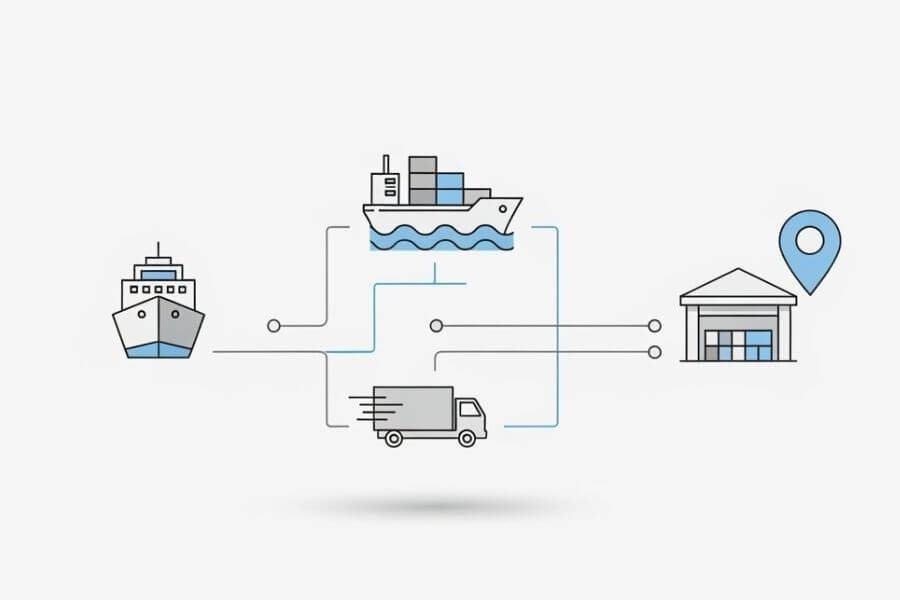
In today’s fast-paced global supply chain, even small logistics mistakes can trigger costly delays, lost revenue, and unhappy customers. From poor shipment visibility and inventory mismanagement to inaccurate documentation and underestimated shipping costs, businesses often struggle with hidden operational gaps that erode profitability. As e-commerce and cross-border trade continue to grow, optimizing logistics processes is no longer optional; it’s a competitive necessity. This guide breaks down the top 10 most common logistics and shipping errors companies make and explains how modern technology, data-driven planning, and smarter fulfillment strategies can help reduce costs, improve delivery performance, and strengthen customer satisfaction.
1. Lack of Real-Time Visibility
Operating without real-time shipment visibility leaves businesses guessing, leading to delays, lost cargo, and rising logistics costs. When teams cannot track shipment locations, conditions, or accurate ETAs, small disruptions quickly escalate into costly crises. Customers grow frustrated, expedited shipping fees increase, and brand reputation suffers. According to Gartner, poor visibility can increase logistics errors by up to 26%. Implementing GPS tracking, IoT sensors, and real-time visibility platforms such as FourKites or Project44 provides end-to-end transparency. These tools send instant alerts, integrate with ERP systems, and enable proactive decision-making. Companies using real-time tracking often reduce delays by 30-50%.
2. Poor Inventory Management
Inefficient inventory management drains cash flow and damages customer trust. Overstocking ties up capital in unsold goods, while understocking causes frequent stockouts and missed sales opportunities. McKinsey reports that optimized inventory systems can cut storage costs by 10% or more. The root problem is often inaccurate forecasting caused by siloed data or ignored demand patterns. AI-powered demand forecasting tools like Blue Yonder and Netstock, combined with modern warehouse management systems (WMS), improve accuracy. Techniques such as ABC analysis and safety stock optimization help maintain balance. Businesses adopting smarter inventory practices see inventory turnover improve by 20-40%.
3. Ignoring Last-Mile Delivery
Last-mile delivery accounts for over half of total shipping costs and heavily influences customer satisfaction. Delays, failed delivery attempts, and inefficient routing drive up fuel, labor, and return expenses. Many companies underestimate this final leg, leading to poor delivery experiences. Route optimization tools like Onfleet and Route4Me use real-time traffic, weather, and delivery windows to reduce inefficiencies. Customer-facing tracking and flexible delivery options significantly lower failed deliveries. Micro-fulfillment centers and local courier partnerships further cut costs. Businesses that optimize last-mile logistics often reduce delivery costs by 15-20% while increasing NPS scores by up to 25 points.
4. Overreliance on a Single Carrier
Depending on one carrier exposes businesses to major risks such as strikes, capacity shortages, and sudden rate increases. When disruptions occur, companies without alternatives face delays, emergency shipping fees, and lost revenue. Industry data shows diversified carrier networks are 30% more resilient during disruptions. A multi-carrier strategy using platforms like ShipBob or Flexport allows businesses to compare rates, transit times, and reliability instantly. Maintaining relationships with multiple carriers across regions and transport modes ensures continuity. Regular performance reviews and competitive bidding keep costs controlled. Companies with diversified carrier strategies recovered significantly faster during recent global supply chain disruptions.
5. Inaccurate Documentation
Errors in shipping documentation can result in customs delays, fines, shipment holds, and denied insurance claims. Missing HS codes, incorrect values, or mismatched shipment details are common causes of costly disruptions. Manual data entry increases the likelihood of mistakes, especially in international shipping. Automated trade compliance platforms like Amber Road streamline document creation and ensure regulatory accuracy. AI-powered validation tools catch discrepancies before shipments leave the warehouse. Training staff on Incoterms and regional compliance rules further reduces risk. Companies that digitize documentation processes report up to 50% faster customs clearance and a 70% reduction in compliance-related penalties.
6. Improper Packaging
Using inadequate or incorrect packaging leads to damaged goods, higher return rates, and increased shipping costs. Fragile or high-value items are especially vulnerable during long-distance or international transit. Poor packaging also increases carrier claims and customer dissatisfaction. Standardizing packaging procedures based on ISTA testing guidelines ensures products are properly protected. Automated packing solutions from providers like Sealed Air improve consistency and efficiency. Using the right cushioning, void fill, and labeling reduces damage significantly. Tracking damage rates before and after packaging improvements helps measure ROI. Businesses that optimize packaging typically reduce damage claims by 40-60% and improve overall delivery reliability.
7. Inefficient Picking Processes
Manual and outdated picking methods slow warehouse operations and inflate labor costs, especially during peak seasons. Single-order picking increases travel time and raises error rates, leading to incorrect shipments and returns. Modern warehouse management systems support batch, wave, and zone picking strategies that dramatically improve efficiency. Barcode scanning, voice-directed picking, and slotting optimization reduce errors and speed up fulfillment. Robotics and automated guided vehicles further enhance scalability. Warehouses that modernize picking operations often see order throughput increase by 50-100%, while labor costs per order drop significantly. These efficiency gains usually offset technology investments within a short payback period.
8. Wrong Address Labeling
Incorrect or incomplete address labeling is a leading cause of delivery failures, returns, and added shipping costs. Simple errors like wrong postal codes or missing unit numbers account for a large percentage of misdeliveries. Address mistakes are especially costly in international and urban deliveries. Address verification tools such as Loqate and SmartyStreets validate and correct addresses in real time during checkout. Barcode scanning and multi-stage verification reduce internal errors. Customer confirmation before dispatch adds another safeguard. Retailers that implement address validation systems report misdelivery rates dropping by up to 70% and first-attempt delivery success rates exceeding 98%.
9. No Contingency Planning
Without contingency planning, supply chains collapse under unexpected disruptions like weather events, labor strikes, or geopolitical instability. Reactive responses often triple emergency logistics costs and extend recovery times. Proactive risk management tools such as Resilinc and Everstream help businesses model disruption scenarios and identify vulnerabilities. Diversifying suppliers, transport routes, and inventory locations builds resilience. Digital twins and scenario simulations allow faster decision-making when disruptions occur. Regular contingency drills ensure teams respond effectively under pressure. According to McKinsey, companies with strong contingency plans recover up to 50% faster than competitors, minimizing revenue loss and customer impact.
10. Underestimating Total Shipping Costs
Focusing only on base freight rates hides the true cost of shipping. Accessorial charges, fuel surcharges, returns, and detention fees can inflate total logistics costs by 30-50%. Without full cost visibility, budgets suffer and margins erode. Transportation management systems like Freightos and Tai Software provide detailed cost breakdowns and historical analysis. Regular carrier audits and volume-based negotiations uncover savings opportunities. Optimizing reverse logistics reduces return-related expenses, while lane-level analysis prioritizes cost-effective routing. Companies that track total cost of ownership (TCO) consistently uncover 10-30% savings, creating more predictable and profitable shipping operations.
Conclusion
Avoiding these common logistics errors can dramatically improve supply chain efficiency, cost control, and customer experience. By investing in real-time visibility, smarter inventory management, optimized last-mile delivery, diversified carriers, accurate documentation, and contingency planning, businesses can transform logistics from a reactive cost center into a strategic advantage. Small improvements such as address validation, better packaging, or detailed cost analysis often deliver significant ROI. As market volatility and customer expectations continue to rise, companies that proactively refine their logistics operations will gain resilience, reduce disruptions, and achieve sustainable long-term growth in an increasingly competitive global marketplace.