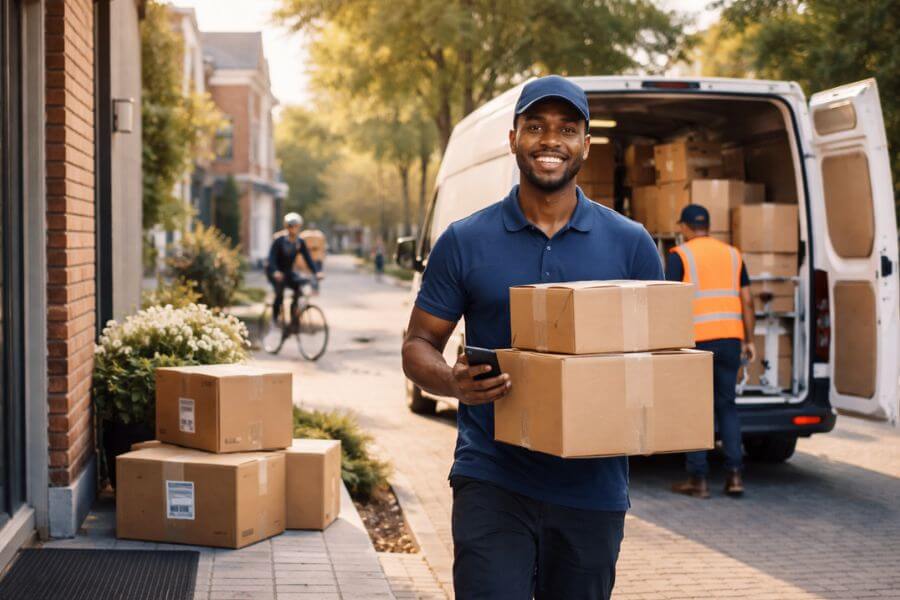
Last-mile delivery is often the most complex and expensive part of the logistics process. It is the final step where products move from a distribution center to the customer’s doorstep, and it plays a major role in customer satisfaction. Fast shipping expectations, rising fuel costs, delivery density issues, and failed delivery attempts all make last-mile logistics difficult to manage. This is where third-party logistics providers (3PLs) step in with technology, optimized networks, and operational expertise. By solving common last-mile challenges, 3PLs help ecommerce businesses improve delivery speed, reduce costs, and create better customer experiences. Here are ten common last-mile delivery challenges and how experienced 3PL providers solve them.
1. High Last-Mile Delivery Costs
Last-mile delivery can account for a significant portion of total shipping costs due to fuel expenses, labor, route inefficiencies, and low delivery density. For many e-commerce businesses, managing these costs internally can quickly become unsustainable. 3PL providers solve this challenge by leveraging economies of scale. By consolidating shipments from multiple clients, they increase delivery density and reduce per-package costs. Many also use route optimization software that calculates the most efficient delivery paths based on traffic, weather, and delivery windows. Some 3PLs also operate regional fulfillment centers to shorten delivery distances. These strategies allow businesses to offer competitive shipping rates without sacrificing margins. By outsourcing to a 3PL with an established delivery network, companies can turn unpredictable delivery costs into more stable and manageable logistics expenses while improving operational efficiency.
2. Failed Deliveries and Missed Drop-Offs
Failed deliveries create extra costs and delays while also damaging the customer experience. Incorrect addresses, unavailable recipients, and access issues in apartments or gated communities are common causes. 3PLs address this issue by using address verification technology during order processing to reduce errors before shipment. Many providers also offer delivery notifications through SMS or email that allow customers to track shipments and prepare for arrival. Some 3PLs provide delivery time windows or allow customers to reschedule deliveries. Photo confirmation and proof of delivery systems also help confirm successful drop-offs. In addition, advanced delivery partners use local carrier expertise and flexible delivery options such as pickup points or lockers. These solutions help reduce failed delivery attempts, lower redelivery costs, and improve the overall reliability of last-mile operations.
3. Customer Expectations for Faster Delivery
Modern ecommerce customers expect fast and affordable shipping, often within two days or even the next day. Meeting these expectations can be difficult without the right infrastructure. 3PLs solve this challenge by using distributed fulfillment networks that position inventory closer to customers. This reduces transit times and allows for faster delivery promises. Many 3PLs also integrate with multiple carrier networks to provide flexible shipping options based on speed and cost. Real-time inventory visibility helps ensure products ship from the closest location. Some providers also offer same-day delivery in key metropolitan areas through local courier partnerships. By combining technology with physical infrastructure, 3PLs help ecommerce brands meet rising delivery expectations without building expensive logistics networks from scratch.
4. Delivery Route Inefficiencies
Poor route planning leads to wasted fuel, delayed deliveries, and inefficient driver utilization. Without advanced tools, businesses may rely on manual planning that cannot adapt to real-world conditions. 3PLs use intelligent route planning systems that analyze delivery clusters, traffic patterns, weather conditions, and driver schedules. These systems dynamically adjust routes to improve efficiency and reduce delays. Some providers also use machine learning to continuously improve route accuracy based on historical performance. By optimizing routes, 3PLs reduce fuel consumption, increase the number of deliveries per route, and improve on-time delivery rates. This not only lowers costs but also contributes to sustainability goals. Businesses that partner with tech-enabled 3PLs gain access to these advanced optimization tools without investing in expensive software development.
5. Limited Delivery Visibility
Customers want transparency throughout the delivery process, but many businesses struggle to provide real-time updates. Lack of visibility can lead to customer service complaints and increased support inquiries. 3PLs solve this challenge by offering advanced tracking platforms that provide real-time shipment updates. These platforms often include branded tracking pages that keep customers informed while reinforcing the merchant’s brand identity. Many systems also provide proactive delay notifications and estimated arrival updates. Internally, businesses gain dashboard visibility into delivery performance, carrier metrics, and exception management. This level of transparency helps companies respond quickly to issues while improving communication with customers. Enhanced visibility not only improves customer trust but also reduces the operational burden on internal support teams.
6. Seasonal Demand Spikes
Peak seasons, such as holidays and major sales events, can overwhelm internal logistics operations. Sudden increases in order volume often lead to delays, errors, and staffing shortages. 3PLs help businesses prepare for these spikes by offering scalable fulfillment operations. Their warehouse networks, labor pools, and carrier relationships allow them to quickly adjust capacity based on demand. Many 3PLs also use forecasting tools that analyze historical sales data to prepare for peak periods. Temporary labor, flexible transportation contracts, and overflow warehouse space help maintain service levels during busy seasons. By working with a 3PL, ecommerce businesses can handle demand surges without making permanent investments in infrastructure or staffing. This flexibility allows companies to scale efficiently while maintaining delivery performance during critical sales periods.
7. Returns and Reverse Logistics Complexity
Returns are a normal part of e-commerce, but managing reverse logistics efficiently can be difficult and costly. Processing returned items, updating inventory, and coordinating return shipping require dedicated systems. 3PLs often provide integrated returns management solutions that simplify this process. These may include prepaid return labels, return portals, and centralized inspection processes. Some providers also offer refurbishment, repackaging, or resale preparation services. By streamlining returns, 3PLs help businesses recover value from returned inventory and reduce processing time. Faster returns processing also improves customer satisfaction and increases the likelihood of repeat purchases. With a structured reverse logistics strategy, companies can turn returns from a cost center into a more manageable and predictable part of operations.
8. Last-Mile Delivery in Urban Areas
Urban deliveries present unique challenges such as traffic congestion, parking restrictions, and strict delivery time windows. These factors can slow deliveries and increase costs. 3PLs address these issues by using micro fulfillment centers located near major cities. Some also partner with local courier networks that understand city-specific delivery challenges. Alternative delivery methods, such as bike couriers or electric vehicles, are sometimes used to improve access in dense areas. Advanced scheduling tools also help coordinate delivery windows that meet building requirements. By combining local expertise with flexible delivery strategies, 3PLs help businesses overcome the complexities of urban logistics while maintaining delivery speed and reliability.
9. Managing Multiple Carrier Relationships
Working with multiple shipping carriers can provide flexibility, but it also adds operational complexity. Negotiating rates, managing performance, and handling billing across several carriers requires time and expertise. 3PLs simplify this process by acting as a single point of contact for transportation management. They often maintain pre-negotiated carrier contracts that offer competitive rates. Performance monitoring tools help ensure carriers meet service level expectations. If disruptions occur, 3PLs can quickly shift volume to alternative carriers. This flexibility helps reduce risk and maintain consistent delivery performance. By centralizing carrier management, businesses can focus on growth while relying on logistics experts to manage transportation relationships.
10. Sustainability Pressures in Last-Mile Delivery
Consumers and regulators increasingly expect businesses to reduce the environmental impact of shipping. Last-mile delivery emissions are a growing concern, especially in high-volume e-commerce markets. Many 3PLs are addressing sustainability by optimizing delivery routes to reduce fuel usage and offering carbon-neutral shipping programs. Some are investing in electric delivery vehicles and eco-friendly packaging options. Consolidated delivery strategies also reduce the number of trips required. Sustainability reporting tools provided by some 3PLs help businesses measure and communicate environmental progress. By partnering with environmentally conscious logistics providers, companies can meet sustainability goals while maintaining efficient delivery operations.
Conclusion
Last-mile delivery remains one of the most challenging aspects of e-commerce logistics, but it also presents one of the greatest opportunities to improve customer satisfaction. From controlling costs to improving delivery speed and visibility, 3PL providers offer proven solutions that help businesses overcome common delivery obstacles. By leveraging technology, established carrier networks, and scalable infrastructure, 3PLs allow companies to compete with larger retailers without massive logistics investments. As customer expectations continue to rise, partnering with the right 3PL can transform last-mile delivery from a constant challenge into a strategic advantage that supports long-term ecommerce growth.
Frequently Asked Questions
What is last-mile delivery in logistics?
Last-mile delivery refers to the final stage of the shipping process, where a package moves from a fulfillment center or transportation hub to the customer’s final delivery address. This stage is often the most expensive and complex part of the supply chain because it involves individual deliveries rather than bulk transportation. Efficient last-mile delivery is essential because it directly impacts delivery speed, shipping costs, and overall customer satisfaction.
Why is last-mile delivery so expensive?
Last-mile delivery is expensive because it involves individual deliveries, driver labor, fuel costs, route planning, and delivery coordination. Unlike bulk transportation, last-mile operations lack economies of scale. Additional challenges, such as traffic delays, failed deliveries, and low delivery density, can further increase costs. Businesses often rely on 3PL providers to reduce these expenses through route optimization, shipment consolidation, and established delivery networks.
How do 3PL companies improve last-mile delivery?
3PL companies improve last-mile delivery by using advanced logistics technology, optimized warehouse networks, and strong carrier partnerships. They provide real-time tracking, route optimization, distributed inventory placement, and scalable delivery capacity. These capabilities allow e-commerce companies to offer faster and more reliable delivery without building their own logistics infrastructure. This partnership allows businesses to focus on growth while logistics experts handle operational execution.
Can small e-commerce businesses benefit from 3PL last-mile solutions?
Yes, small and mid-sized ecommerce businesses often benefit significantly from 3PL partnerships. These providers give smaller brands access to logistics infrastructure, discounted carrier rates, and technology that would otherwise be expensive to build independently. By outsourcing last-mile delivery, smaller companies can compete with larger retailers in terms of shipping speed and reliability while maintaining predictable fulfillment costs and improving operational efficiency.
What technology is used in last-mile delivery optimization?
Common technologies include route optimization software, GPS tracking, delivery management platforms, automated notifications, and inventory management systems. Some 3PLs also use predictive analytics and artificial intelligence to improve delivery planning. These technologies help reduce delays, improve delivery accuracy, and provide customers with better visibility. The result is a more efficient last-mile process that benefits both businesses and customers.
How do 3PLs handle delivery during peak seasons?
3PLs handle peak season demand by scaling warehouse operations, increasing labor availability, and expanding transportation capacity. Many also use demand forecasting tools to prepare for seasonal increases in order volume. Flexible carrier contracts and additional fulfillment space allow them to maintain delivery performance. This scalability helps ecommerce businesses meet customer expectations even during busy sales periods without overinvesting in permanent infrastructure.
What role does tracking play in last-mile delivery?
Tracking provides transparency for both businesses and customers. Real-time tracking allows customers to monitor their shipments and prepare for delivery. For businesses, tracking provides operational insights into carrier performance and delivery timelines. Many 3PLs provide branded tracking portals that improve customer communication. Better tracking reduces uncertainty, lowers customer support inquiries, and improves the overall delivery experience.
How do 3PLs reduce failed deliveries?
3PLs reduce failed deliveries through address verification tools, delivery notifications, flexible scheduling options, and proof of delivery systems. Some also offer alternative delivery options such as pickup locations or lockers. These measures help ensure customers are prepared to receive packages and reduce the chances of missed deliveries. Fewer failed deliveries lead to lower redelivery costs and improved customer satisfaction.
Are sustainable last-mile delivery options available?
Yes, many 3PL providers now offer sustainable delivery options such as electric vehicle delivery fleets, carbon offset programs, and optimized delivery routes that reduce emissions. Some also provide eco-friendly packaging options. Businesses can choose logistics partners that align with their environmental goals while maintaining efficient operations. Sustainable last-mile delivery is becoming an important factor in brand reputation and customer loyalty.
How do businesses choose the right 3PL for last-mile delivery?
Businesses should evaluate 3PL providers based on network coverage, technology capabilities, carrier relationships, scalability, and pricing transparency. It is also important to review service level agreements and performance metrics. Choosing a 3PL with experience in your industry and target markets can improve results. A strong logistics partner should act as an extension of your operations and support your long-term growth strategy.