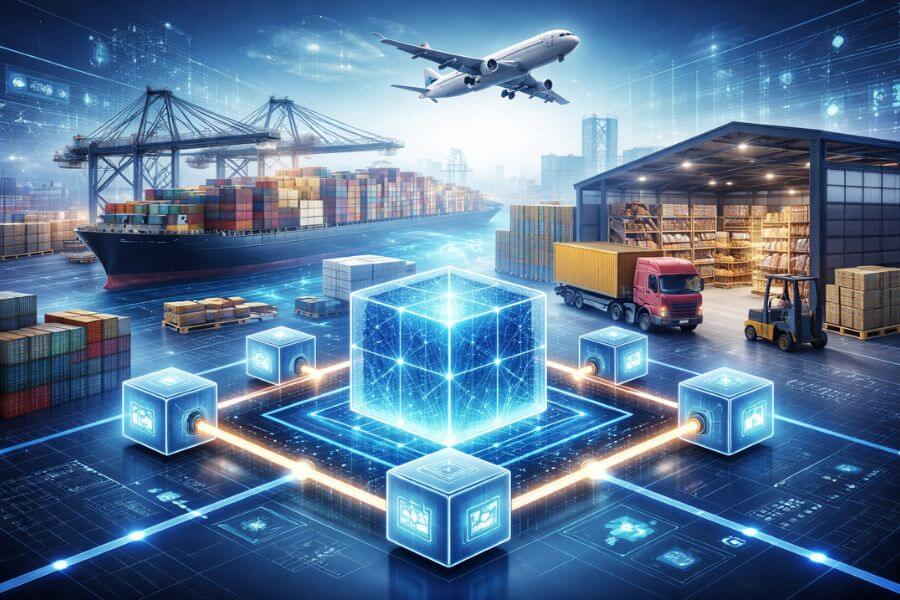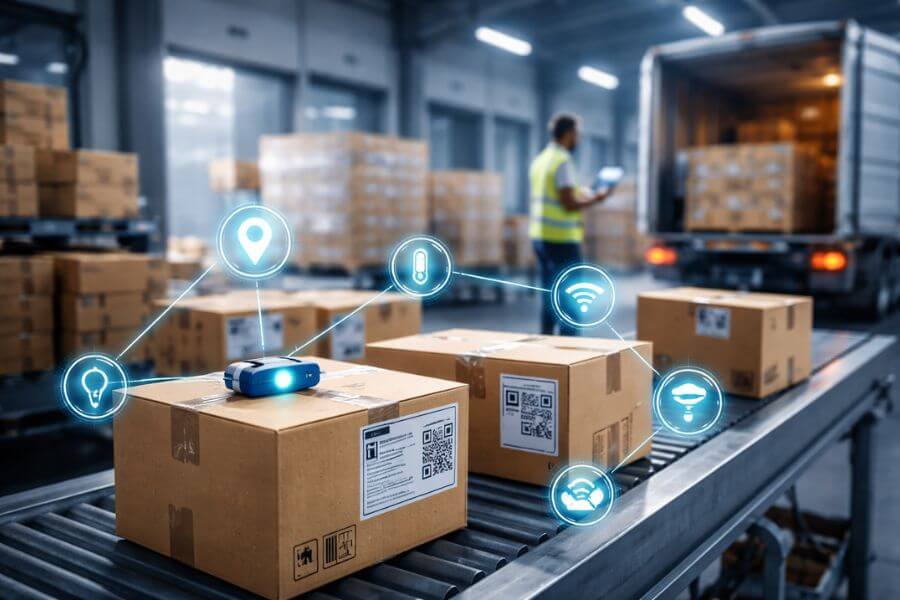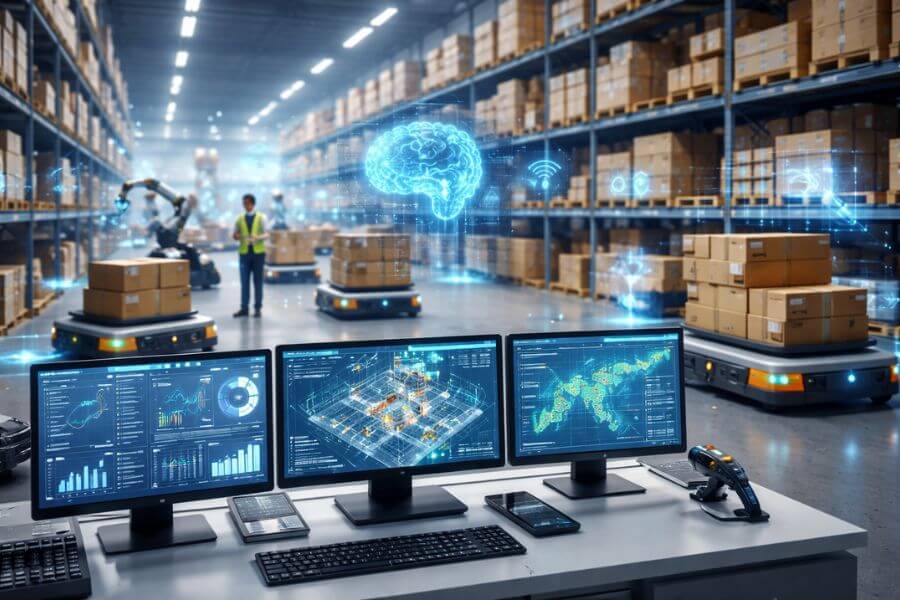
The logistics industry is undergoing a major transformation, and artificial intelligence is leading the charge. Third-party logistics providers are increasingly adopting AI tools to streamline warehouse operations, optimize transportation, reduce costs, and improve customer satisfaction. From predictive demand forecasting to intelligent route planning, AI is reshaping how 3PL companies operate in real time. For e-commerce brands and fulfillment providers alike, these technologies are no longer futuristic concepts but practical tools delivering measurable results today. In this article, we’ll explore ten AI-powered tools that are revolutionizing 3PL operations right now and helping logistics companies operate faster, smarter, and more efficiently.
1. AI Demand Forecasting Platforms
AI demand forecasting tools help 3PL providers predict order volumes with far greater accuracy than traditional methods. These platforms analyze historical sales data, seasonal patterns, promotional events, and market signals to forecast future demand. By anticipating fluctuations in order volumes, warehouses can allocate labor more efficiently, adjust inventory levels, and reduce stockouts or overstocking. This improves overall supply chain stability and helps e-commerce businesses maintain consistent fulfillment performance. For 3PL companies managing multiple clients, AI forecasting tools enable smarter planning that improves service levels while keeping operational costs under control.
2. Smart Warehouse Management Systems
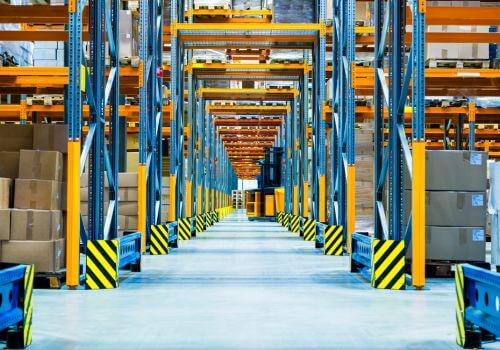
Modern warehouse management systems powered by AI are transforming how fulfillment centers operate. These platforms optimize inventory placement, picking routes, and order prioritization automatically. AI analyzes real-time warehouse activity and recommends the most efficient workflows to minimize travel time and maximize productivity. Smart WMS solutions also help reduce human errors in picking and packing processes. For 3PL providers handling thousands of daily orders, this automation dramatically improves operational speed and accuracy. By continuously learning from warehouse data, AI-driven systems keep improving efficiency over time without requiring constant manual adjustments.
3. AI Route Optimization Software
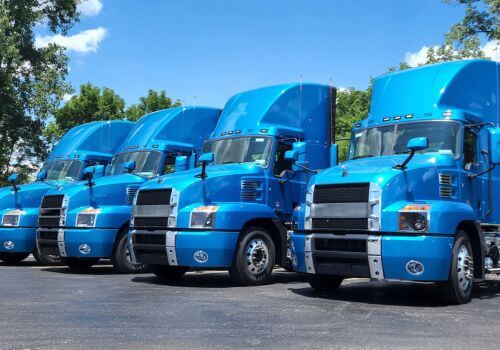
Transportation is one of the highest costs in logistics, and AI route optimization tools help reduce these expenses significantly. These systems analyze traffic conditions, weather patterns, fuel consumption, delivery windows, and driver availability to generate the most efficient delivery routes. Unlike traditional routing software, AI continuously adjusts routes in real time as conditions change. For 3PL providers managing last-mile delivery or regional distribution, this results in faster deliveries and lower fuel costs. The ability to dynamically optimize routes also helps improve on-time delivery rates and overall customer satisfaction.
4. Predictive Inventory Management Tools
Predictive inventory management systems use AI to determine optimal stock levels across warehouses and fulfillment centers. By analyzing sales trends, supplier lead times, and order patterns, these tools recommend when and how much inventory to replenish. This helps prevent stockouts that disrupt fulfillment operations while also reducing excess inventory that ties up capital. For 3PL providers supporting multiple e-commerce brands, predictive inventory systems provide visibility and automation that make inventory planning far more efficient. The result is improved warehouse utilization and better service reliability for clients.
5. AI-Powered Robotics in Warehouses
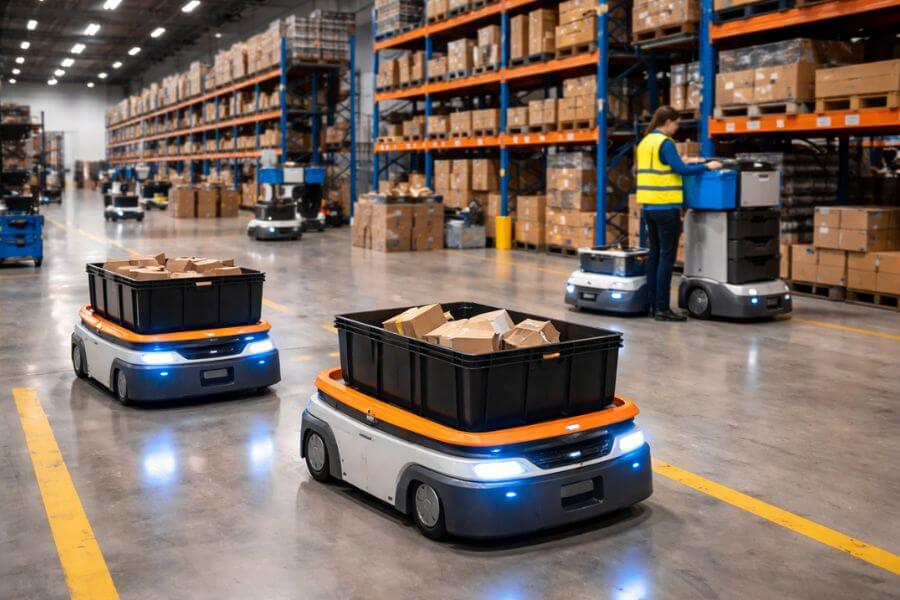
Warehouse robotics powered by artificial intelligence is becoming increasingly common in modern fulfillment centers. These robots assist with tasks such as picking, sorting, and transporting inventory across the warehouse floor. AI enables robots to navigate complex environments, avoid obstacles, and coordinate with human workers safely. For 3PL operators, robotic automation increases throughput while reducing labor-intensive tasks. This allows warehouse teams to focus on higher-value activities while robots handle repetitive movement tasks. Over time, robotic systems learn and adapt, further improving efficiency within the fulfillment operation.
6. Intelligent Order Processing Systems
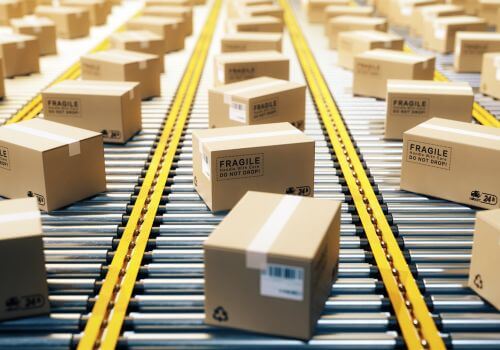
AI-driven order processing platforms streamline the flow of orders from e-commerce stores to warehouse operations. These systems automatically prioritize orders based on shipping deadlines, customer preferences, and inventory availability. Intelligent automation reduces delays and ensures urgent orders are processed quickly. For 3PL providers supporting multiple sales channels, AI order processing eliminates bottlenecks that often occur during peak demand periods. This leads to faster order turnaround times and more reliable fulfillment performance. By minimizing manual intervention, AI helps logistics teams process higher volumes without increasing operational complexity.
7. AI Chatbots for Customer Support
Customer service is an important part of logistics operations, and AI chatbots are helping 3PL providers deliver faster responses to clients and end customers. These chatbots can answer common questions about shipments, tracking updates, delivery schedules, and order status instantly. AI-powered support systems also assist internal teams by retrieving operational data quickly. This reduces the workload on customer service representatives and improves response times. For e-commerce brands relying on 3PL partners, AI chatbots enhance transparency and communication while keeping support operations efficient and scalable.
8. AI Fraud Detection and Risk Management
Fraud and operational risks can create costly disruptions in logistics operations. AI risk management systems monitor transactions, shipment patterns, and account activity to detect unusual behavior that may indicate fraud or operational errors. These tools help 3PL providers identify suspicious orders, prevent payment fraud, and reduce shipment theft risks. AI algorithms continuously learn from past incidents to improve detection accuracy. By catching problems early, logistics companies can avoid costly disputes and protect both their operations and their clients from financial losses.
9. Computer Vision for Warehouse Accuracy
Computer vision technology uses AI-powered cameras to monitor warehouse activities and improve operational accuracy. These systems can verify items during picking and packing processes, ensuring the correct products are shipped to customers. Computer vision can also track inventory movement and detect misplaced items. For 3PL providers managing large product catalogs, visual verification significantly reduces fulfillment errors. This improves order accuracy and reduces costly returns. By integrating cameras with warehouse management systems, AI provides real-time oversight that enhances both quality control and operational efficiency.
10. AI Transportation Analytics Platforms
Transportation analytics tools powered by AI provide deep insights into shipping performance and logistics costs. These platforms analyze carrier performance, shipping routes, fuel consumption, and delivery times to identify optimization opportunities. For 3PL providers, transportation analytics helps determine the best carriers, shipping methods, and regional distribution strategies. AI-driven insights allow logistics managers to make data-based decisions that improve efficiency and reduce expenses. Over time, these platforms become smarter as they analyze more shipping data, helping companies continuously refine their transportation strategies.
Conclusion
Artificial intelligence is quickly becoming an essential part of modern logistics operations. For third-party logistics providers, AI tools offer powerful capabilities that improve forecasting accuracy, warehouse efficiency, transportation planning, and customer service. As e-commerce continues to grow, the demand for faster and more reliable fulfillment will only increase. Companies that adopt AI-driven solutions today will be better positioned to scale their operations and remain competitive in a rapidly evolving logistics landscape. The future of 3PL operations will be shaped by intelligent automation, data-driven decision-making, and continuous technological innovation.
Frequently Asked Questions
What is AI in 3PL logistics?
AI in third-party logistics refers to the use of artificial intelligence technologies to automate and optimize logistics operations. These tools analyze large datasets to improve demand forecasting, warehouse management, transportation planning, and customer service. AI helps logistics providers make faster and more accurate operational decisions.
How does AI improve warehouse efficiency?
AI improves warehouse efficiency by optimizing inventory placement, picking routes, and labor allocation. Smart systems analyze operational data in real time and recommend the most efficient workflows. This reduces unnecessary movement inside the warehouse, speeds up order fulfillment, and minimizes errors in picking and packing processes.
Can AI reduce shipping costs for 3PL companies?
Yes, AI can significantly reduce shipping costs by optimizing delivery routes, analyzing carrier performance, and improving load planning. Route optimization tools help minimize fuel usage and travel time, while transportation analytics identify cost-saving opportunities across shipping operations.
Is AI replacing warehouse workers?
AI is not replacing warehouse workers but instead assisting them. Technologies like robotics and smart warehouse systems automate repetitive tasks while humans focus on decision-making and quality control. This collaboration improves productivity while making warehouse jobs safer and more efficient.
What role does AI play in demand forecasting?
AI demand forecasting analyzes historical sales data, seasonal trends, and market conditions to predict future order volumes. Accurate forecasts help logistics providers prepare labor, inventory, and warehouse space in advance. This reduces operational disruptions and improves fulfillment reliability.
How do AI chatbots help logistics companies?
AI chatbots handle common customer service inquiries such as shipment tracking, order updates, and delivery schedules. They provide instant responses without requiring human intervention. This improves response times while allowing customer support teams to focus on complex issues.
What is computer vision in logistics?
Computer vision uses AI-powered cameras to analyze visual information inside warehouses. It helps verify products during picking and packing, track inventory movement, and detect errors in real time. This technology improves order accuracy and strengthens quality control processes.
Are AI logistics tools expensive to implement?
The cost of implementing AI tools varies depending on the technology and scale of operations. Many modern AI logistics platforms are cloud-based and scalable, allowing companies to start small and expand gradually. Over time, efficiency gains and cost savings often outweigh the initial investment.
Can small e-commerce brands benefit from AI logistics?
Yes, small e-commerce brands can benefit by partnering with 3PL providers that use AI-powered logistics systems. These technologies improve fulfillment speed, accuracy, and shipping efficiency. As a result, smaller brands gain access to advanced logistics capabilities without building their own infrastructure.
What is the future of AI in 3PL operations?
The future of AI in logistics includes deeper automation, smarter predictive analytics, and greater integration between supply chain systems. As technology advances, AI will continue improving warehouse operations, transportation planning, and customer experience across the global logistics industry.