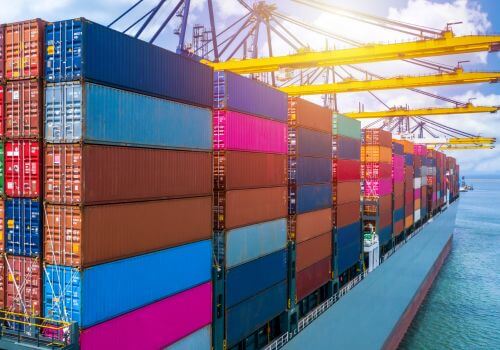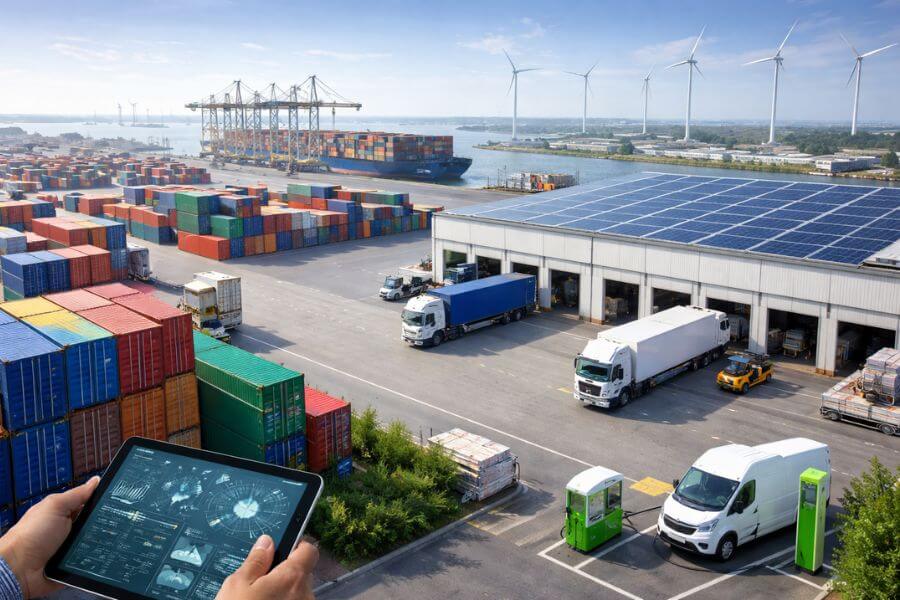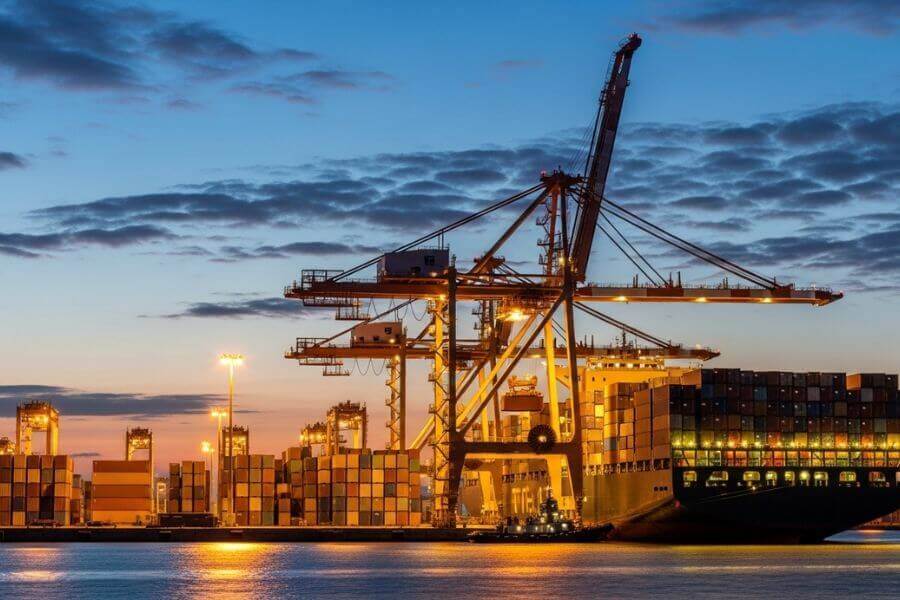
Container shipping ports are the backbone of global trade, moving billions of TEUs (Twenty-foot Equivalent Units) every year. These ports connect manufacturers, retailers, and consumers across continents, making them essential for international logistics, e-commerce fulfillment, and supply chain efficiency. Ranked using recent 2024-2025 throughput estimates, the top 10 container shipping ports in the world stand out for their strategic locations, advanced automation, and ability to handle massive cargo volumes efficiently.
1. Shanghai Port, China
Shanghai is the world’s busiest container shipping port, handling approximately 51.5 million TEUs annually. Located at the mouth of the Yangtze River, it serves China’s largest industrial and manufacturing regions. The port features the world’s largest automated container terminal, enabling ultra-large container vessels to operate with exceptional efficiency. Shanghai is a critical hub for global carriers such as Maersk, COSCO, and MSC. Its smart port technologies, green logistics initiatives, and unmatched scale make it the undisputed leader in global container shipping.
2. Port of Singapore, Singapore
The Port of Singapore ranks second globally, processing between 38 and 40 million TEUs each year. It is the most important transshipment hub in Southeast Asia, connecting Asia-Europe and Asia–US trade routes. Known for its speed, reliability, and world-class infrastructure, Singapore handles a wide mix of containerized, bulk, and project cargo. Its unmatched connectivity, advanced port management systems, and strong logistics ecosystem make it a preferred choice for international shipping lines and global e-commerce supply chains.
3. Ningbo-Zhoushan Port, China
Ningbo-Zhoushan Port handles an estimated 34 to 36 million TEUs annually, making it one of the fastest-growing container ports in the world. Located near major manufacturing zones in eastern China, it specializes in electronics, machinery, and textiles. Its modern deep-water terminals support high-volume exports and seamless connections to global shipping routes. Together with Shanghai, Ningbo-Zhoushan forms a powerful logistics corridor for East Asian trade, strengthening China’s dominance in global container throughput.
4. Shenzhen Port, China
Shenzhen Port processes approximately 28 to 30 million TEUs each year and serves as a major export gateway for the Pearl River Delta. It plays a vital role in shipping electronics, machinery, furniture, and consumer goods produced in one of China’s most advanced manufacturing regions. As a global technology hub, Shenzhen attracts major shipping lines such as Evergreen and Ocean Network Express (ONE). Strong industrial integration and consistent export demand keep Shenzhen among the top container ports worldwide.
5. Guangzhou Port, China
Guangzhou Port handles around 32 to 34 million TEUs annually, ranking fifth among the world’s largest container ports. Located in southern China, it manages a diverse mix of containers, bulk cargo, vehicles, and industrial goods. The port plays a strategic role in China’s Belt and Road Initiative and benefits from the dense manufacturing network of the Pearl River Delta. Its versatility, large hinterland, and multimodal transport links ensure steady growth and global shipping relevance.
6. Port of Busan, South Korea
Busan is South Korea’s largest container port, managing approximately 22 to 24 million TEUs each year. Positioned at the southeastern tip of the Korean Peninsula, it serves as a critical transshipment hub for Northeast Asia and trans-Pacific trade. Busan is known for its efficient port operations, advanced terminals, and strong links to major carriers such as ZIM and OOCL. Its strategic location makes it especially valuable for Korean exporters and global e-commerce logistics.
7. Qingdao Port, China
Qingdao Port processes an estimated 23 to 25 million TEUs annually and is a major logistics center in eastern China. In addition to containers, it handles large volumes of bulk cargo such as iron ore and coal, supporting heavy industries in Shandong Province. The port’s modern infrastructure and deep-water terminals attract global shipping lines, including Hapag-Lloyd. Its balanced mix of containerized and bulk cargo operations supports consistent throughput growth and trade stability.
8. Tianjin Port, China
Tianjin Port handles approximately 15 to 16 million TEUs per year and serves as northern China’s primary maritime gateway. Located near Beijing, it supports containerized cargo, energy products, and industrial commodities. Tianjin’s proximity to major economic centers strengthens its role in Northeast Asian trade routes. Frequent calls by global shipping lines such as MSC highlight its importance in regional logistics. Continuous infrastructure upgrades ensure Tianjin remains competitive in global container shipping.
9. Port of Rotterdam, Netherlands
Rotterdam is Europe’s largest container port, handling around 15.5 to 16 million TEUs annually. It serves as the main gateway for European trade, supported by extensive inland waterways, rail connections, and road networks. The port manages containers, energy products, and bulk cargo with exceptional efficiency. Rotterdam is also a global leader in port sustainability and digitalization, making it a benchmark for modern port operations and environmentally responsible logistics.
10. Ports of Los Angeles and Long Beach, USA
Together, the Ports of Los Angeles and Long Beach handle approximately 12 to 13 million TEUs annually, forming North America’s busiest container gateway. Located on the US West Coast, they manage a wide range of imports and exports, including consumer goods, electronics, and automotive cargo. Major shipping lines such as Maersk rely on these ports for trans-Pacific trade. Ongoing infrastructure expansions and automation projects continue to strengthen their role in global commerce.
Conclusion
The top 10 container shipping ports in the world play a crucial role in keeping global trade efficient, reliable, and connected. From China’s high-volume manufacturing hubs to strategic transshipment centers like Singapore and Busan, these ports support modern supply chains and fast-growing e-commerce. As automation, sustainability, and smart logistics advance toward 2026, businesses that understand these key ports can optimize shipping routes, reduce transit times, and stay competitive in international trade.
Container Shipping Ports Summary
| Rank | Port | Country / Region | Estimated TEUs (Recent) | Key Strengths |
|---|---|---|---|---|
| 1 | Shanghai | China | 48–51M | World’s busiest port, automation, ultra-large vessel handling |
| 2 | Singapore | Singapore | 38–40M | Global transshipment hub, high efficiency |
| 3 | Ningbo-Zhoushan | China | 34–36M | Close to manufacturing zones, modern facilities |
| 4 | Shenzhen | China | 28–30M | Technology exports, strong manufacturing links |
| 5 | Guangzhou | China | 32–34M | Belt & Road role, diverse cargo handling |
| 6 | Busan | South Korea | 22–24M | Efficient operations, trans-Pacific connectivity |
| 7 | Qingdao | China | 23–25M | Bulk and container cargo balance |
| 8 | Tianjin | China | 15–16M | Northern China gateway, proximity to Beijing |
| 9 | Rotterdam | Netherlands | 15.5–16M | Europe’s main trade gateway, inland connectivity |
| 10 | Los Angeles / Long Beach | USA | 12–13M | North America’s busiest import gateway |