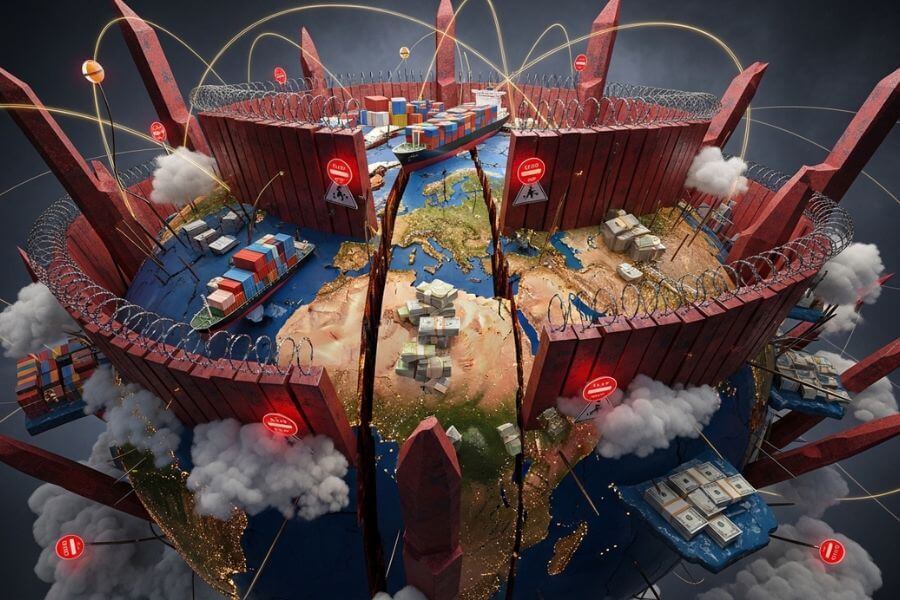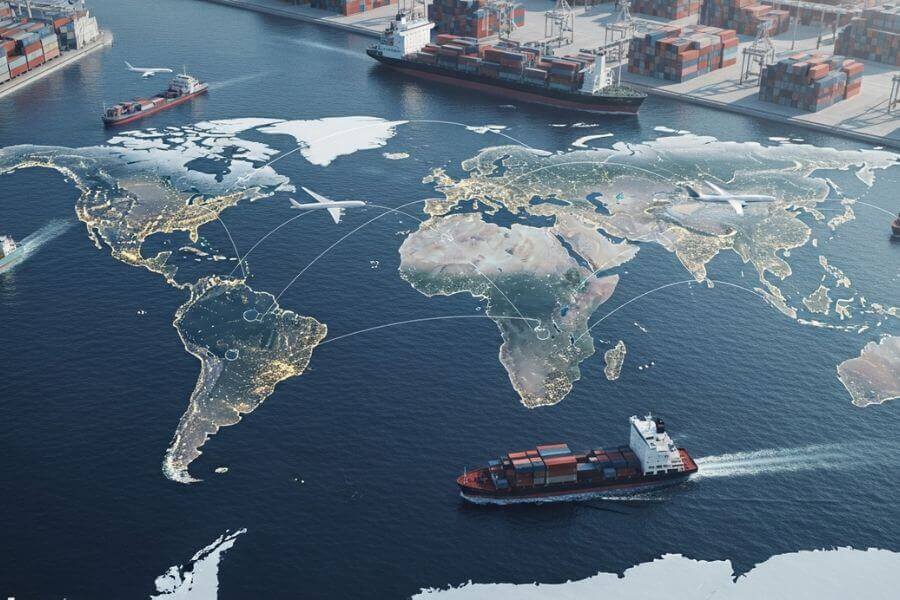
International trade agreements shape how countries buy, sell, and cooperate across borders. These agreements reduce tariffs, protect investments, and open global markets, making international trade faster and more predictable. From massive multilateral deals to strategic regional partnerships, trade agreements influence prices, supply chains, and economic growth worldwide. Below are the top 10 international trade agreements, explained simply to help you understand why they matter and how they impact the global economy.
1. World Trade Organization (WTO)
The World Trade Organization (WTO) is the foundation of global trade rules, overseeing trade relations among more than 160 countries. Established in 1995, it aims to reduce trade barriers, resolve disputes, and promote fair competition. The WTO sets standards for goods, services, and intellectual property, ensuring transparency and predictability in international trade. While it doesn’t eliminate all tariffs, it provides a legal framework that prevents trade wars and discrimination. For businesses and governments alike, the WTO is essential for maintaining stability in the global trading system.
2. North American Free Trade Agreement (NAFTA) / USMCA
Originally launched as NAFTA in 1994, this agreement connected the United States, Canada, and Mexico into one of the world’s largest free trade zones. In 2020, it was modernized as the USMCA (United States–Mexico–Canada Agreement). The deal eliminates most tariffs, strengthens labor and environmental rules, and updates digital trade provisions. USMCA supports regional manufacturing, especially in automotive and agriculture, while encouraging fair wages and intellectual property protection. It remains a cornerstone of North American economic integration.
3. European Union Single Market
The EU Single Market allows goods, services, capital, and people to move freely among 27 European countries. Unlike traditional trade agreements, it goes beyond tariffs by harmonizing regulations and standards. This creates a seamless economic area where businesses can operate across borders with minimal friction. The Single Market boosts competition, lowers consumer prices, and strengthens Europe’s global trade power. It is one of the most advanced economic integration models in the world, influencing trade policy far beyond Europe.
4. Comprehensive and Progressive Agreement for Trans-Pacific Partnership (CPTPP)
The CPTPP is a major trade pact linking 11 countries across the Asia-Pacific region, including Japan, Canada, Australia, and Vietnam. It focuses on reducing tariffs, protecting intellectual property, and promoting digital trade and labor standards. Despite the U.S. withdrawal from the original TPP, the CPTPP remains highly influential. It supports supply chain diversification and sets high-standard trade rules, making it attractive to economies seeking deeper integration in the Asia-Pacific region.
5. Regional Comprehensive Economic Partnership (RCEP)
RCEP is the world’s largest trade agreement, covering 15 Asia-Pacific countries, including China, South Korea, Japan, and ASEAN members. It simplifies trade rules, reduces tariffs over time, and strengthens regional supply chains. RCEP focuses more on practical trade facilitation than on strict labor or environmental standards. By unifying rules of origin, it helps businesses operate more efficiently across Asia. RCEP significantly boosts intra-Asian trade and reinforces the region’s role as a global manufacturing hub.
6. European Union–South Korea Free Trade Agreement
The EU–South Korea FTA, effective since 2011, is one of the EU’s most successful bilateral trade agreements. It eliminated nearly all tariffs between the two economies and expanded access to services and government procurement. The agreement also includes strong protections for intellectual property and commitments to labor and environmental standards. It has significantly increased trade volumes, especially in automobiles, electronics, and cosmetics, serving as a model for modern, high-quality free trade agreements.
7. United States–Japan Trade Agreement
The U.S.–Japan Trade Agreement strengthens economic ties between two of the world’s largest economies. It focuses on reducing tariffs on agricultural products, industrial goods, and digital trade. While narrower than traditional free trade agreements, it improves market access and sets rules for e-commerce and data flows. This agreement supports supply chain stability and reinforces strategic cooperation between the U.S. and Japan, particularly in the technology and manufacturing sectors.
8. ASEAN Free Trade Area (AFTA)
The ASEAN Free Trade Area promotes economic integration among Southeast Asian nations by reducing tariffs and encouraging regional production networks. AFTA has helped ASEAN become a key global manufacturing and export hub. By lowering trade barriers, it attracts foreign investment and supports small and medium-sized enterprises. The agreement strengthens ASEAN’s collective bargaining power in global trade negotiations and plays a vital role in connecting Asia’s emerging economies.
9. Mercosur Trade Bloc
Mercosur is a South American trade bloc comprising Brazil, Argentina, Paraguay, and Uruguay. It aims to promote free trade and economic cooperation within the region. Mercosur reduces internal tariffs and coordinates external trade policies, particularly for agriculture and raw materials. While challenges remain, the bloc has increased regional trade and strengthened South America’s presence in global markets. Ongoing negotiations with the EU highlight Mercosur’s growing international relevance.
10. African Continental Free Trade Area (AfCFTA)
AfCFTA is a landmark agreement uniting 50+ African countries into a single continental market. It seeks to reduce tariffs, boost intra-African trade, and support industrialization. By creating a massive unified market, AfCFTA encourages regional value chains and economic diversification. The agreement has the potential to lift millions out of poverty and transform Africa’s role in global trade. It represents one of the most ambitious trade initiatives in modern history.
Conclusion
International trade agreements play a crucial role in shaping the global economy by lowering trade barriers, strengthening cooperation, and expanding market access. From global frameworks like the WTO to regional powerhouses such as RCEP and AfCFTA, these agreements influence supply chains, prices, and economic growth worldwide. Understanding major international trade agreements helps businesses, policymakers, and consumers navigate global trade more confidently and seize cross-border opportunities in an increasingly interconnected world.
International Trade Agreements Comparison Table
| Trade Agreement | Member Regions | Year Established | Key Focus | Global Impact |
|---|---|---|---|---|
| WTO | Global (160+ countries) | 1995 | Global trade rules & dispute settlement | Foundation of international trade |
| USMCA (NAFTA) | North America | 1994 / 2020 | Tariff reduction, labor & digital trade | Strengthens North American supply chains |
| EU Single Market | Europe (27 countries) | 1993 | Free movement of goods, services, people | Deepest economic integration model |
| CPTPP | Asia-Pacific | 2018 | High-standard trade & IP protection | Sets modern trade benchmarks |
| RCEP | Asia-Pacific | 2022 | Trade facilitation & unified rules | World’s largest trade bloc |
| EU–South Korea FTA | Europe & East Asia | 2011 | Tariff elimination & services trade | Model bilateral FTA |
| U.S.–Japan Trade Agreement | North America & East Asia | 2020 | Agriculture & digital trade | Strategic economic partnership |
| AFTA | Southeast Asia | 1992 | Regional tariff reduction | Boosts ASEAN manufacturing |
| Mercosur | South America | 1991 | Regional trade cooperation | Strengthens South American exports |
| AfCFTA | Africa (50+ countries) | 2021 | Continental free trade | Transformational for African economies |