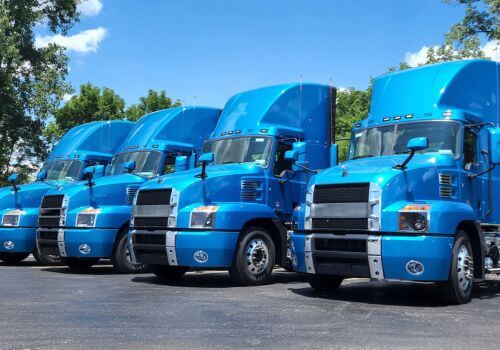
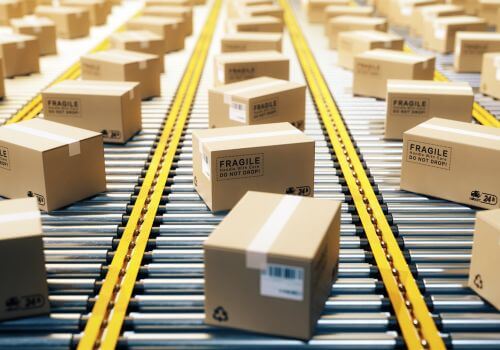
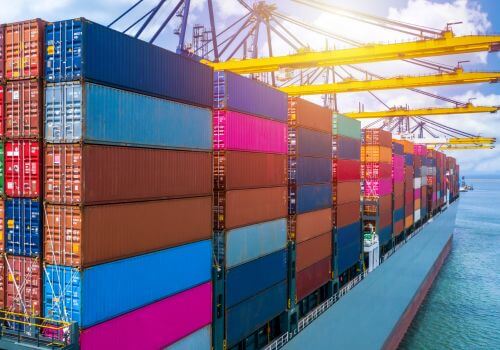
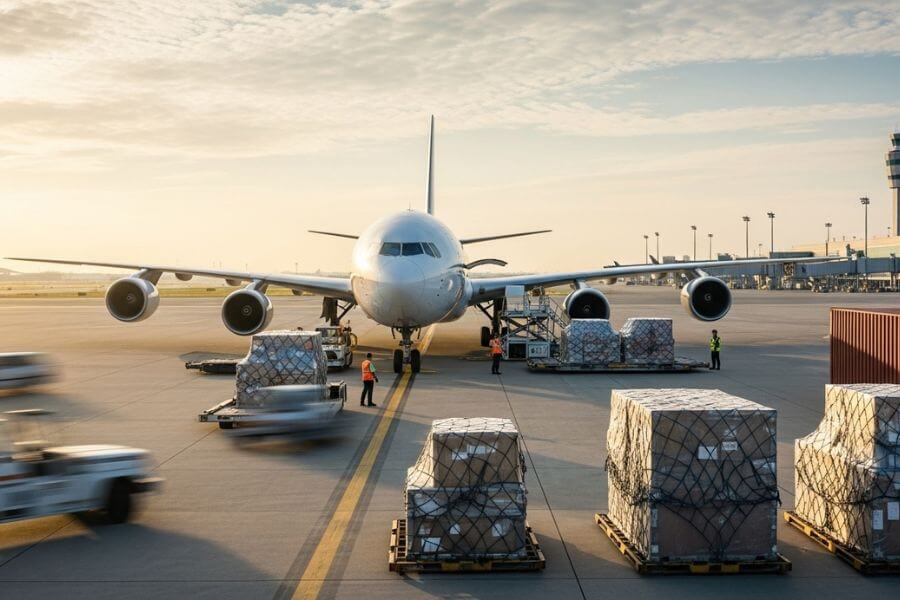
Incoterms play a critical role in international shipping by clearly defining the responsibilities, costs, and risks shared between buyers and sellers in global trade. Whether you are an importer, exporter, e-commerce seller, or logistics professional, understanding Incoterms such as EXW, FCA, FOB, CIF, and DDP helps prevent costly disputes and ensures smoother freight movement across borders. Each Incoterm determines who handles transportation, insurance, customs clearance, and delivery at different stages of the supply chain. In this guide, we break down the 10 most commonly used Incoterms, explaining how they work, when to use them, and which party bears responsibility. By choosing the right Incoterm, businesses can optimize shipping costs, improve delivery reliability, and gain better control over international logistics operations.
1. EXW – Ex Works
Ex Works (EXW) is the Incoterm that places the maximum responsibility on the buyer. The seller’s obligation ends once the goods are made available at their factory, warehouse, or specified location. From that point onward, the buyer handles loading, export clearance, transportation, insurance, and import customs, while also bearing all associated risks. EXW is commonly used by experienced importers with strong local logistics capabilities, such as multinational companies sourcing from Korean manufacturers. While EXW minimizes seller involvement and administrative burden, it requires buyers to manage compliance, inland trucking, and port coordination carefully to avoid delays or penalties. This Incoterm is popular in B2B trades for electronics, machinery, and auto parts, where buyers prefer full control over routing and carriers. To prevent disputes, always define the pickup point clearly, for example, “EXW Busan Factory.” EXW works best for seasoned traders seeking flexibility and cost optimization.
2. FCA – Free Carrier
Free Carrier (FCA) is one of the most flexible and widely recommended Incoterms for modern international trade. Under FCA, the seller delivers the goods to a named carrier or location and completes export customs clearance. Risk transfers to the buyer once the goods are handed over. FCA works across all transport modes, including road, rail, air, and sea, making it ideal for containerized and intermodal shipments. Korean exporters often use FCA for shipments via Busan Port or Incheon Airport, allowing buyers to choose their preferred freight forwarders. Compared to FOB, FCA eliminates confusion around container loading and reduces disputes. Buyers benefit from greater control over main carriage and insurance, often negotiating better freight rates. To avoid delays, it’s essential to specify the delivery point precisely, such as “FCA Incheon Airport Cargo Terminal.” FCA offers a balanced division of responsibility and is highly suited to e-commerce and global supply chains.
3. FOB – Free On Board
Free On Board (FOB) is a classic Incoterm for sea and inland waterway shipping, widely used in bulk and commodity trades. Under FOB, the seller is responsible for inland transport, export clearance, and loading the goods onto the vessel at the port of shipment. Risk transfers to the buyer once the goods are onboard. FOB remains popular for exports such as steel, grains, and electronics from ports like Busan or Shanghai. Buyers then arrange ocean freight, insurance, unloading, and import clearance. While containerization has blurred the traditional “ship’s rail” concept, FOB continues to dominate maritime contracts due to its clarity and compatibility with trade financing tools like letters of credit. Buyers should monitor demurrage and port congestion risks after loading. Always define the loading port clearly such as “FOB Busan Port Terminal” to ensure compliance and avoid misunderstandings in high-volume global trade.
4. CIF – Cost, Insurance, and Freight
Cost, Insurance, and Freight (CIF) requires the seller to arrange and pay for ocean freight and minimum cargo insurance to the destination port, while risk transfers once the goods are loaded at the origin port. CIF is commonly used in long-distance trade where buyers lack logistics expertise in the exporting country. It’s especially prevalent in commodities, oil, and consumer goods such as Korean cosmetics shipped to the US or Europe. The insurance provided under CIF covers basic risks, though buyers often purchase additional coverage for theft or damage. CIF simplifies pricing and offers predictable landed costs, making it attractive in emerging markets. However, sellers may include higher margins to cover freight volatility. In times of supply chain disruption, CIF’s bundled approach can reduce uncertainty. Always specify the destination port clearly, for example, “CIF Los Angeles Port.” CIF works best when buyers value convenience over control.
5. DDP – Delivered Duty Paid
Delivered Duty Paid (DDP) places maximum responsibility on the seller, covering all transportation, risks, export and import duties, taxes, and final delivery to the buyer’s location. The buyer simply receives the goods, ready for unloading, with no additional costs. DDP is especially popular in cross-border e-commerce and direct-to-consumer models, where simplicity drives conversions. Korean food and beauty brands often use DDP to ship globally without burdening customers with customs procedures. While DDP enhances buyer experience and brand trust, it exposes sellers to fluctuating duties, VAT, and local regulations. As a result, it’s best suited for high-margin or premium products. Precise delivery terms, such as “DDP Seoul Distribution Center,” are critical. In global shipping, DDP supports international retail growth, though many sellers choose DAP as a lower-risk alternative for scalability.
6. CPT – Carriage Paid To
Carriage Paid To (CPT) requires the seller to pay for transportation to a named destination, while risk transfers to the buyer once the goods are handed to the first carrier. CPT is suitable for all transport modes and is widely used for rail, road, and air shipments. Sellers handle export clearance, while buyers manage insurance, import duties, and unloading. CPT is common for machinery and industrial goods moving between Asia and Europe or India, where predictable freight costs are important. Sellers often benefit from volume freight contracts, while buyers maintain control over insurance claims. Because risk transfers early, buyers should ensure adequate cargo insurance. Clearly naming the destination such as “CPT Mumbai Inland Terminal” prevents responsibility gaps. CPT offers a practical balance between cost certainty and risk allocation, making it a strong choice for diversified supply chains in today’s global trade environment.
7. CIP – Carriage and Insurance Paid To
Carriage and Insurance Paid To (CIP) builds on CPT by requiring the seller to provide comprehensive cargo insurance under Institute Cargo Clauses (A). While the seller pays for transport and insurance to the named destination, risk transfers to the buyer once the goods are handed to the first carrier. CIP is ideal for high-value or sensitive cargo, such as electronics, medical equipment, or semiconductors. Korean technology exporters often use CIP for air shipments to North America and Europe, offering buyers added peace of mind. The 2020 Incoterms update strengthened insurance requirements, making CIP more attractive than older sea-only terms. Although seller costs increase slightly, CIP can justify premium pricing and reduce disputes. Always specify the destination clearly, such as “CIP Chicago Warehouse.” With rising multimodal and e-commerce trade, CIP is becoming one of the most preferred Incoterms globally.
8. CFR – Cost and Freight
Cost and Freight (CFR) is a sea-only Incoterm where the seller pays for ocean freight to the destination port, but risk transfers once the goods are loaded at the port of shipment. Unlike CIF, CFR does not include insurance, leaving buyers responsible for coverage, import clearance, and unloading. CFR is commonly used for bulk commodities and low-risk cargo such as steel coils, chemicals, or grains. Sellers retain control over vessel selection and freight booking, often achieving operational efficiencies. Buyers, however, must be vigilant about cargo insurance and inspection upon arrival. CFR remains popular in stable trade lanes where risk exposure is predictable. Always define ports clearly for example, “CFR Rotterdam Port.” While CFR usage has declined compared to CIF, it remains relevant for cost-sensitive shipments where buyers prefer managing insurance independently.
9. DAP – Delivered at Place
Delivered at Place (DAP) requires the seller to transport goods to a named destination, bearing all risks and costs except import duties and taxes. The goods are delivered ready for unloading, making DAP ideal for door-to-door shipments without the complexity of DDP. It works across all transport modes and is widely used for B2B and e-commerce fulfillment. Korean exporters shipping merchandise to overseas warehouses often prefer DAP to avoid VAT exposure while still offering delivery assurance. Buyers handle import clearance and local taxes, maintaining regulatory control. Precise destination naming such as “DAP Los Angeles Fulfillment Center” is essential. Since 2020, DAP adoption has grown rapidly due to its balance of responsibility and simplicity. In global shipping, DAP supports just-in-time logistics and scalable international expansion.
10. FAS – Free Alongside Ship
Free Alongside Ship (FAS) is a sea-only Incoterm where the seller delivers goods alongside the vessel at the port of shipment. Risk transfers once the cargo is placed on the quay, ready for loading. The seller handles export clearance, while the buyer manages loading, ocean freight, insurance, and import customs. FAS is mainly used for breakbulk or non-containerized cargo, such as timber, minerals, or seafood. Although its usage has declined with containerization, FAS remains relevant in niche trades requiring direct port access. Buyers gain greater control over vessel loading and stevedoring, while sellers avoid delays related to ship schedules. Always specify the exact location, such as “FAS Busan Port Quay,” to avoid disputes. In global shipping, FAS serves specialized industries where flexibility outweighs standardization.
Conclusion
Selecting the right Incoterm is essential for managing risk, controlling freight costs, and building successful international trade relationships. From buyer-controlled terms like EXW to seller-inclusive options such as DDP, each Incoterm serves a specific purpose depending on shipment value, transport mode, and logistics expertise. Understanding these terms allows businesses to negotiate smarter contracts, avoid unexpected charges, and improve supply chain efficiency. As global shipping continues to evolve with e-commerce growth and multimodal transport, using the correct Incoterm ensures transparency and smoother cross-border transactions. Always define locations clearly, align terms with your logistics capabilities, and review Incoterms carefully before finalizing any international shipping agreement.