The United States and Japan share one of the most significant and complex trading relationships in the world. Their bilateral trade in goods and services reached over $300 billion in recent years, making Japan one of the U.S.’s top economic partners.
Understanding the top goods exchanged between these two economies offers valuable insight into their industrial structures, comparative advantages, and the sectors that underpin this deeply interconnected partnership. In this article, we’ll explore the top 10 most traded goods between the U.S. and Japan, highlighting which products dominate exports and imports, why they matter, and the broader implications for trade policy and economic strategy.
1. Automobiles & Cars
One of the most iconic and high-value goods in U.S.-Japan trade is automobiles. Japanese cars remain among the top imports into the U.S., reflecting Japan’s global strength in automotive manufacturing.
Japanese automakers such as Toyota, Honda, Nissan, and others have long supplied high-quality vehicles to U.S. consumers. These are not just passenger cars; they include trucks, SUVs, performance vehicles, and parts. The import of vehicles underlines how deeply integrated the automotive industries of the two countries are.
For Japan, exporting cars to the U.S. is both a major source of revenue and a demonstration of its manufacturing prowess. For the U.S., these imports help meet consumer demand for a variety of vehicle types, including fuel-efficient and high-performance models.
2. Automotive Parts & Accessories
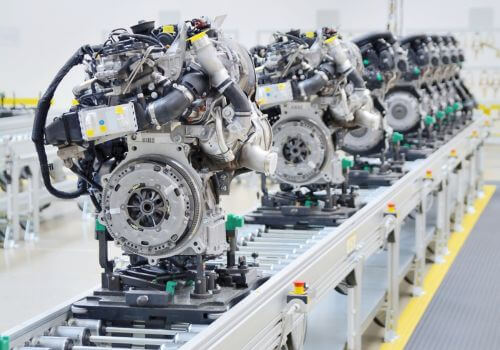
Closely tied to complete vehicles is the second biggest traded good: auto parts and accessories. Beyond finished cars, the U.S. imports a wide array of components from Japan: transmission systems, engine parts, braking systems, electrical units, and more.
These parts are essential for both aftermarket maintenance and for supply chains in U.S.-based vehicle assembly plants. Many U.S. automakers, or their suppliers, rely on Japanese components for quality, reliability, and technical innovation.
From Japan’s side, exporting parts is highly synergistic with its car exports as it leverages the same industrial capacity, engineering expertise, and global supply networks.
3. Industrial Machinery & Mechanical Appliances
Industrial machinery, which includes mechanical appliances and related equipment, is a cornerstone of the U.S.-Japan trade dynamic. Japan is a global leader in precision machinery, which ranges from heavy equipment to highly specialized reactors, boilers, and production-line gear.
For the U.S., importing Japanese machinery supports its own manufacturing base, from automotive to aerospace to industrial production. These machines often deliver high efficiency, durability, and advanced technology, making them invaluable for U.S. firms investing in productivity and automation.
On the Japanese side, machinery exports reflect decades of industrial investment and innovation, where Japanese engineering sophistication continues to be a strong export driver.
4. Electrical Machinery & Electronics
Another top traded good is electrical machinery and electronics. This category spans semiconductors, telecommunications equipment, consumer devices, and more. Japan’s export strength in electronic goods is well-known, encompassing both consumer electronics and industrial electronics.
The U.S. imports significant volumes of these products from Japan, leveraging Japan’s high-quality components, legacy in miniaturization, and reliability. These imports feed into broader U.S. supply chains, for example, in computing, telecommunications, and fabrication.
For Japan, electrical machinery remains a competitive edge: exports reflect its continued role as an essential node in the global electronics network, with deep specialization in precision, reliability, and high value-added manufacturing.
5. Mineral Fuels, Oils, & Petroleum Gases
Energy-related goods, especially mineral fuels and petroleum gases, are among the top U.S. exports to Japan.
This includes liquified natural gas (LNG), which is critically important given Japan’s limited domestic fossil fuel resources. Japan depends heavily on energy imports, and U.S. natural gas helps meet its demand for cleaner-burning fuels and energy security.
From the U.S. perspective, exporting energy resources, especially LNG, is a lucrative and strategic business. It strengthens energy ties with Japan and contributes to global energy diversification.
6. Pharmaceutical Preparations & Medicines
Pharmaceuticals and medical products also feature prominently in U.S. exports to Japan. Preparations for medical use, including both generic and specialized medicines, form a significant part of bilateral trade.
This trade reflects not only the innovation strength of the U.S. pharmaceutical industry but also the robust regulatory frameworks and demand from Japan’s aging population. Japan often imports advanced medicines, diagnostic reagents, and other healthcare-related products.
For Japan, importing pharmaceuticals helps address public health needs and supports its healthcare system. For U.S. firms, Japan represents a high-value market with a sophisticated medical infrastructure.
7. Optical, Technical & Medical Instruments
Japan exports a wide variety of optical, photo, measuring, and medical instruments, including high-precision devices like microscopes, diagnostic equipment, cameras, and lenses.
These instruments are critical for many industries: medical, scientific research, semiconductor manufacturing, and even consumer electronics. The U.S. imports these products to support its healthcare sector, research institutions, and high-tech manufacturing.
For Japan, this category leverages its reputation in precision engineering and optics. Many of its instruments are globally competitive, contributing significantly to its trade balance.
8. Aircraft & Aerospace Components
Another key export from the U.S. to Japan is in civil aircraft, spacecraft, and their parts.
This includes commercial aircraft, engines, aerospace components, and possibly defense-related non-classified parts. The trade underlines the strategic nature of aerospace in U.S.-Japan relations, not just commercially, but also technologically.
Japan, which has limited domestic aircraft production capacity compared to the U.S., relies on American aerospace technology for both civil aviation and specific advanced components. This trade channel helps sustain a high level of technical exchange and cooperation.
9. Agricultural Products (Corn, Meat, Soybeans, Wheat)
Agricultural goods represent a significant portion of U.S. exports to Japan. Among the top items are corn, beef, pork, soybeans, and wheat.
- Corn: U.S. corn exports to Japan are a major part of the trade.
- Beef & Pork: These meat exports are not only food items but also symbols of high-quality protein trade that Japan values, especially for its food culture.
- Soybeans and Wheat: These are staples and important for feed, food processing, and industrial use.
For Japan, importing these agricultural goods helps supplement its limited domestic production of feed grains and meat. It also ensures a stable food supply for both human consumption and industrial processes.
For U.S. farmers and agribusinesses, Japan is a long-term, dependable market, contributing to the business case for large-scale commodity production.
10. Organic Chemicals & Chemical Residual Products
Finally, organic chemicals, as well as other chemical products and residuals, are among the most traded goods in this bilateral relationship.
Organic chemicals cover a broad range of industrial inputs from specialty chemicals for pharmaceuticals to petrochemical-derived substances. The U.S. exports many such chemicals to Japan, feeding into Japan’s manufacturing ecosystem, which includes plastics, electronics, pharmaceuticals, and more.
On the flip side, chemical residuals from Japan (byproducts, intermediates, or specialized chemical materials) also play a role in U.S. industrial supply chains. This mutual exchange underscores both countries’ advanced chemical industries and their interdependence in highly specialized manufacturing.
Conclusion
The trade relationship between the U.S. and Japan is a microcosm of global economic interdependence. From high-performance automobiles and industrial machinery to agricultural commodities and pharmaceuticals, the top 10 traded goods reflect both countries’ strengths and mutual reliance.
These goods not only generate significant economic value but also underpin strategic ties, providing energy security, enabling technological cooperation, and supporting food supply lines. As global dynamics shift with energy transition, technological innovation, and geopolitical changes, the nature of trade between the U.S. and Japan could evolve, but these core categories will likely remain crucial for the foreseeable future.