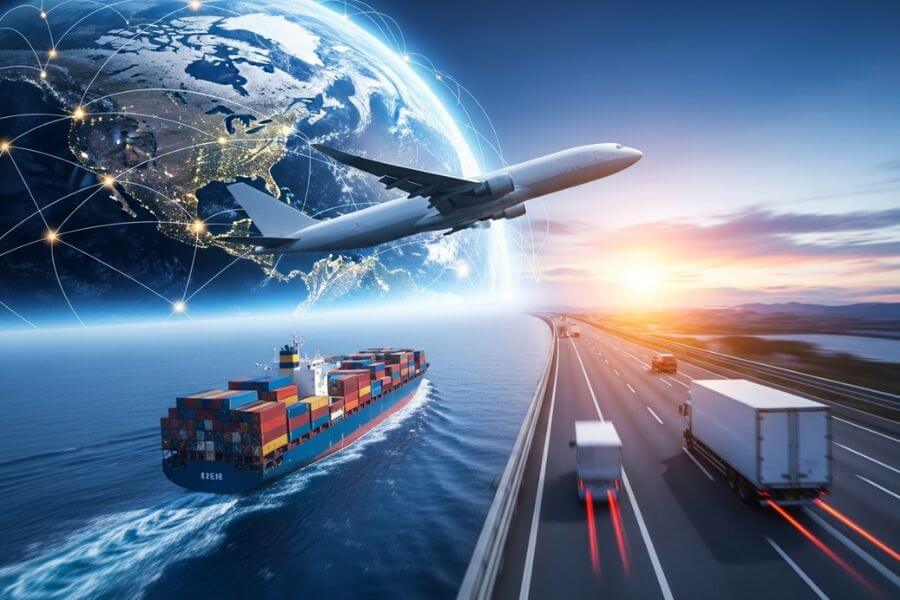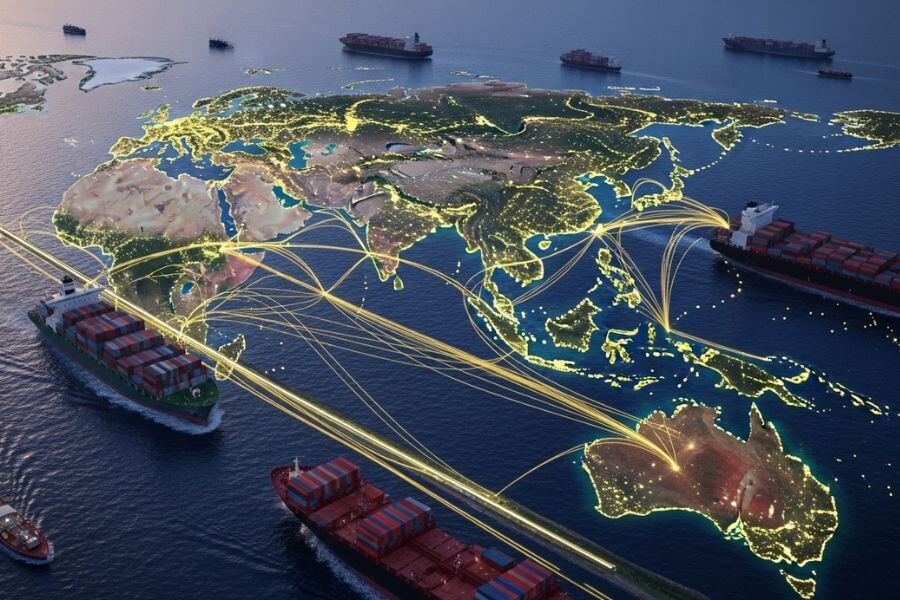
Global trade relies on key shipping corridors that connect major economies, reduce transportation costs, and keep supply chains moving. These trade routes handle trillions of dollars in goods annually, including oil, electronics, food, and manufactured products. From historic maritime passages to modern logistics corridors, the world’s most important trade routes shape global commerce, geopolitics, and economic growth. Below are the top 10 trade routes in global commerce, ranked by strategic importance, cargo volume, and economic impact.
1. Strait of Malacca
The Strait of Malacca is the most important trade route in global commerce, linking the Indian Ocean with the South China Sea. Nearly 40% of the world’s trade passes through this narrow waterway, including oil shipments to China, Japan, and South Korea. Its strategic position makes it vital for Asia’s manufacturing supply chains and global energy security. Any disruption here can impact oil prices, shipping costs, and global trade flows almost instantly.
2. Suez Canal Route
Connecting the Mediterranean Sea to the Red Sea, the Suez Canal is a critical shortcut between Europe and Asia. This route eliminates the need to sail around Africa, saving time and fuel for container ships and oil tankers. Roughly 12% of global trade flows through the canal, including consumer goods, energy products, and raw materials. The Suez Canal plays a major role in keeping European and Asian supply chains efficient and competitive.
3. Panama Canal Route
The Panama Canal connects the Atlantic and Pacific Oceans, making it essential for trade between Asia, North America, and Latin America. It is especially important for U.S. East Coast ports, allowing faster access to Asian markets. The canal handles massive volumes of containerized goods, agricultural products, and LNG shipments. Its expansion has further increased its role in global commerce by accommodating larger vessels.
4. Trans-Pacific Trade Route
The Trans-Pacific route links East Asia with North America and is one of the busiest container shipping corridors in the world. It supports massive trade volumes between China, Japan, South Korea, and the United States. Electronics, machinery, automobiles, and consumer goods dominate this route. Seasonal demand surges, such as holiday retail shipping, make this corridor a key driver of global freight rates and port congestion.
5. Trans-Atlantic Trade Route
The Trans-Atlantic trade route connects North America with Europe, supporting long-standing economic ties. It carries high-value goods such as machinery, pharmaceuticals, automobiles, and aerospace components. Compared to other routes, it is known for stable trade volumes and strong regulatory alignment between trading partners. This route remains crucial for developed economies and plays a major role in global investment and industrial supply chains.
6. Silk Road Economic Belt
The modern Silk Road, also known as the Belt and Road Initiative, connects China with Europe, Central Asia, and the Middle East through land corridors. Rail freight on this route offers a faster alternative to sea shipping for time-sensitive goods. It supports the movement of electronics, automotive parts, and industrial machinery. The Silk Road Economic Belt is reshaping Eurasian trade by improving inland connectivity and logistics infrastructure.
7. South China Sea Trade Route
The South China Sea is a vital maritime corridor connecting Northeast Asia, Southeast Asia, and global markets. It supports trade for major economies like China, Vietnam, Malaysia, and the Philippines. A wide range of goods passes through this route, including electronics, textiles, oil, and gas. Due to its strategic importance, the South China Sea plays a major role in both global commerce and geopolitical dynamics.
8. Cape of Good Hope Route
The Cape of Good Hope route serves as an alternative path between Europe and Asia when the Suez Canal is unavailable or congested. While longer and more expensive, it remains essential for oil tankers and bulk carriers. This route highlights the importance of redundancy in global trade networks. During disruptions, it becomes a lifeline for maintaining the flow of energy and raw materials.
9. Indian Ocean Trade Route
The Indian Ocean trade route connects Africa, the Middle East, South Asia, and Southeast Asia. It plays a key role in transporting oil, gas, agricultural products, and manufactured goods. Major ports in India, the Gulf states, and East Africa depend on this corridor. As emerging economies grow, the Indian Ocean continues to gain importance in shaping future global trade patterns.
10. Arctic Northern Sea Route
The Northern Sea Route runs along Russia’s Arctic coast and is gaining attention due to climate change and melting ice. It offers a shorter shipping path between Asia and Europe compared to traditional routes. While still limited by seasonal conditions and infrastructure challenges, this route has long-term potential to reshape global commerce by reducing transit times and fuel consumption for certain trade flows.
Conclusion
The world’s major trade routes are the backbone of global commerce, driving economic growth and keeping international supply chains connected. From strategic canals to vital maritime corridors, these routes reduce costs, shorten transit times, and support trillions in trade annually. As globalization, e-commerce, and emerging markets expand, the importance of efficient trade routes will continue to shape the future of global trade and logistics worldwide.
Global Trade Routes Summary
| Trade Route | Region Connected | Primary Goods | Strategic Importance |
|---|---|---|---|
| Strait of Malacca | Asia–Middle East–Europe | Oil, electronics, consumer goods | World’s busiest maritime chokepoint |
| Suez Canal Route | Europe–Asia | Containers, oil, raw materials | Shortens Europe–Asia shipping time |
| Panama Canal Route | Atlantic–Pacific | Containers, agriculture, LNG | Key link for Americas–Asia trade |
| Trans-Pacific Route | East Asia–North America | Electronics, machinery, retail goods | Highest container trade volume |
| Trans-Atlantic Route | North America–Europe | Automobiles, pharma, machinery | Stable, high-value trade corridor |
| Silk Road Economic Belt | Asia–Europe (land) | Electronics, industrial goods | Faster rail alternative to sea |
| South China Sea Route | East & Southeast Asia | Oil, gas, manufactured goods | Critical Asian trade hub |
| Cape of Good Hope Route | Europe–Asia–Africa | Oil, bulk cargo | Essential alternative route |
| Indian Ocean Route | Asia–Africa–Middle East | Energy, food, textiles | Emerging market trade backbone |
| Northern Sea Route | Asia–Europe (Arctic) | Energy, containers | Shorter future shipping option |