The past week has delivered a stark reminder that logistics is the backbone of global commerce and one that is constantly tested by geopolitical shifts, changing freight markets, and evolving supply-chain strategies.
From sudden global shipping disruptions to tightening trucking capacity and shifting import patterns, logistics leaders across the United States are navigating a complex and rapidly changing landscape. For businesses that depend on reliable freight movement, the message is clear: resilience and agility are no longer optional.
Here’s what the latest developments mean for the future of logistics.
1. Geopolitical Tensions Are Rippling Through Global Supply Chains
A major story shaping logistics this week is the escalation of conflict involving Iran, which has begun to disrupt some of the world’s most important shipping and aviation routes.
The Strait of Hormuz, one of the world’s most critical maritime chokepoints, has faced closures and operational disruption, impacting shipping flows and forcing carriers to reroute vessels.
The implications reach far beyond the Middle East:
- Around 20% of global oil shipments pass through the Strait of Hormuz, meaning disruption can quickly ripple through fuel prices and transport costs.
- Airlines and cargo carriers are already avoiding Middle Eastern airspace, which is expected to push air-freight rates higher.
- Some shipping lines have paused or rerouted cargo bookings to the region entirely.
For U.S. shippers and importers, these disruptions highlight a familiar truth: global supply chains remain tightly interconnected and highly sensitive to geopolitical risk.
2. Ocean Freight Rates Are Falling But Uncertainty Remains
While geopolitical risks grow, ocean freight markets are experiencing an unexpected shift.
Spot container rates from Asia to the United States have fallen as new vessels entering service increase shipping capacity, giving importers stronger negotiating power with carriers.
Retailers are already pushing for 10–15% lower contract rates in upcoming negotiations.
However, the outlook isn’t straightforward:
- Import volumes at major U.S. ports have softened slightly compared with last year’s tariff-driven surge.
- Yet consumer demand, especially among higher-income households, remains resilient.
This combination of lower freight rates but uncertain demand signals is creating a delicate balancing act for logistics planners.
3. Trucking Capacity Is Tightening Again
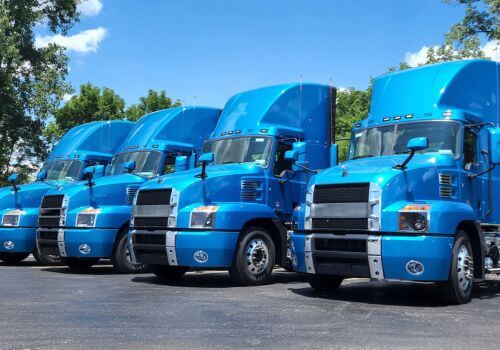
On the domestic front, trucking, the backbone of U.S. logistics, is showing early signs of tightening capacity.
Recent supply-chain reports indicate that trucking availability is unexpectedly tight for this time of year, while warehouse capacity is beginning to tighten after post-holiday softness.
For shippers, that means:
- Increased competition for reliable carriers
- Higher potential spot-market volatility
- Greater emphasis on strategic carrier partnerships
In a market where trucking still handles the majority of domestic freight movement, capacity fluctuations can quickly cascade across entire supply chains.
4. Trade Policy and Tariffs Continue to Reshape Logistics Flows
Trade policy developments are also reshaping how goods move into the United States.
Recent legal rulings have invalidated some tariffs, while new import surcharges are being discussed under alternative trade rules.
These changes are pushing companies to rethink sourcing strategies:
- Diversifying suppliers outside China
- Increasing imports from Southeast Asia
- Expanding nearshoring in North America
For logistics providers, this means freight flows are shifting geographically, altering port volumes, intermodal routes, and distribution networks.
5. The Strategic Imperative: Resilience
If there’s a common thread across this week’s logistics news, it’s that disruption is no longer an exception; it’s the operating environment.
From geopolitical tensions and volatile freight markets to shifting trade policies and domestic capacity constraints, supply chains are navigating constant change.
For modern logistics providers, success increasingly depends on three core capabilities:
- Visibility: real-time insights across the supply chain
- Flexibility: the ability to shift routes and modes quickly
- Partnership: close collaboration between shippers, carriers, and logistics providers
Global events can reshape freight networks overnight. Logistics isn’t just about moving goods anymore, but keeping commerce moving throughout turbulence.