Green logistics is no longer just a branding strategy. In 2026, it has become a competitive advantage for third-party logistics providers that want to reduce costs, meet regulatory requirements, and attract environmentally conscious clients. As e-commerce continues to expand globally, 3PL companies are under pressure to lower emissions while maintaining fast and reliable fulfillment. The good news is that many logistics providers are proving that sustainability and efficiency can work together. From electric delivery fleets to smart packaging optimization, leading 3PLs are investing heavily in greener operations. Here are ten of the most impactful green logistics initiatives transforming the industry this year.
1. Electrification of Delivery Fleets
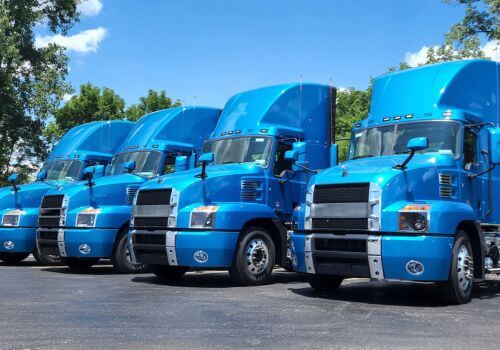
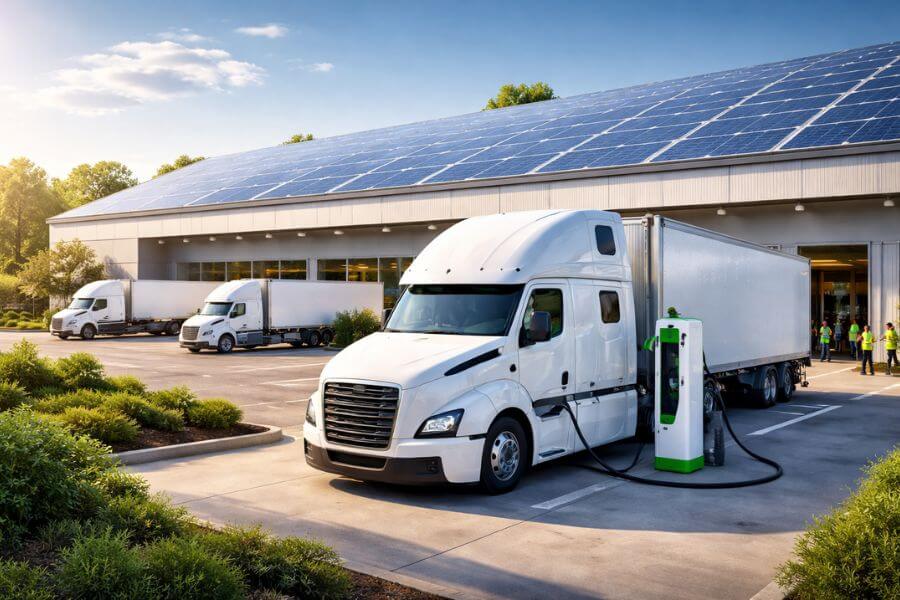
One of the most visible sustainability initiatives among 3PL providers in 2026 is the transition to electric delivery vehicles. Companies are gradually replacing diesel vans and trucks with electric alternatives to reduce carbon emissions and lower long-term fuel costs. While the upfront investment can be significant, government incentives and lower maintenance expenses are helping accelerate adoption. Many 3PLs are also installing charging infrastructure at warehouses to support their growing electric fleets. This transition is especially effective for last-mile delivery routes where predictable distances make electric vehicles practical. As battery technology improves and charging networks expand, electric transportation is becoming a realistic standard rather than an experimental investment. Forward-thinking logistics providers are also using route optimization software to maximize battery efficiency and extend vehicle range.
2. Warehouse Solar Power Adoption
Large warehouse rooftops provide the perfect opportunity for solar panel installations, and many leading 3PLs are taking advantage of this unused space. By generating renewable energy on-site, logistics providers can significantly reduce their dependence on traditional power sources. Solar-powered fulfillment centers help reduce operating expenses while also supporting corporate sustainability goals. Some facilities are even producing surplus electricity that can be sold back to local power grids. In addition to solar panels, energy storage systems are becoming more common to ensure stable power availability. As energy costs continue to fluctuate, self-generated renewable power gives 3PLs more predictable operating expenses. This investment also appeals to e-commerce brands seeking environmentally responsible logistics partners that align with their sustainability commitments.
3. Smart Packaging Reduction Programs
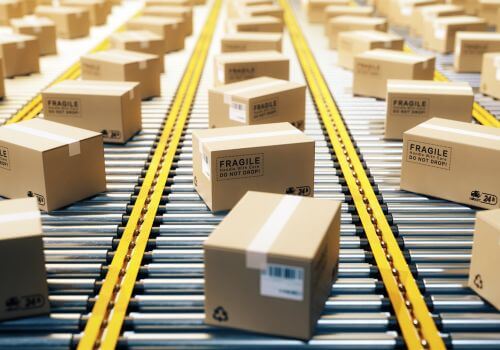
Packaging waste remains one of the biggest environmental challenges in e-commerce logistics. In response, 3PL providers are implementing smart packaging systems that automatically select the most efficient box size for each order. These systems reduce empty space, minimize filler materials, and lower shipping weight. Some providers are also introducing recyclable or biodegradable packaging materials to further reduce environmental impact. Advanced packaging algorithms can now analyze product dimensions and fragility to determine the best packaging configuration. By reducing packaging waste, companies can also lower shipping costs due to dimensional weight pricing. This initiative benefits both the environment and the bottom line. Customers are also responding positively to reduced packaging waste, which strengthens brand loyalty and improves the unboxing experience.
4. Carbon Neutral Shipping Programs
Carbon-neutral shipping is becoming a standard offering among competitive 3PL providers. These programs typically involve calculating shipping emissions and investing in verified carbon offset projects such as reforestation or renewable energy development. Some logistics providers offer merchants the option to enable carbon-neutral shipping at checkout, while others include it as part of their standard service. Transparency is becoming increasingly important, with dashboards that show estimated emission reductions. While carbon offsetting is not a complete solution, it is an important transitional strategy as the industry works toward fully sustainable transportation. Many e-commerce brands now prioritize logistics partners that can help them meet their environmental reporting goals and ESG commitments.
5. AI-Powered Route Optimization
Artificial intelligence is helping logistics companies reduce fuel consumption through smarter route planning. AI-powered transportation management systems can analyze traffic patterns, weather conditions, delivery density, and fuel usage to identify the most efficient delivery routes. This reduces unnecessary mileage and lowers emissions without sacrificing delivery speed. Some systems also support dynamic rerouting to avoid congestion in real time. Beyond environmental benefits, route optimization can significantly reduce transportation costs and improve delivery reliability. As fuel prices remain unpredictable, this technology provides both financial and environmental advantages. Leading 3PL providers are increasingly integrating machine learning tools into their logistics operations to continuously improve efficiency based on real performance data.
6. Green Warehouse Design and Automation
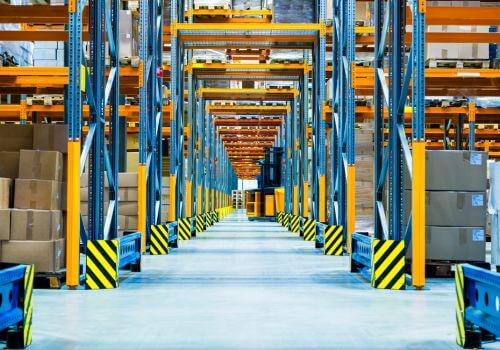
Modern fulfillment centers are being designed with sustainability in mind from the ground up. New green warehouses incorporate LED lighting, motion sensors, improved insulation, and energy-efficient HVAC systems. Automation also plays a key role by reducing energy waste and improving operational efficiency. Robotics can minimize unnecessary movement inside warehouses, which saves both time and power. Some facilities are also pursuing green building certifications to demonstrate environmental responsibility. These design improvements often lead to lower utility costs and improved working conditions. As automation technology becomes more affordable, even mid-sized 3PL providers are investing in environmentally efficient facility upgrades to remain competitive in the evolving logistics landscape.
7. Reverse Logistics and Returns Optimization
Returns management is a growing environmental concern due to transportation emissions and product waste. To address this, 3PL providers are improving reverse logistics processes to reduce unnecessary shipping and landfill waste. Some companies are using local return consolidation centers to minimize transportation distances. Others are investing in refurbishment programs that allow returned products to be resold instead of being discarded. Data analytics also helps identify common return reasons so merchants can reduce return rates through better product descriptions and quality control. By improving returns processing, logistics providers can lower costs while also reducing their environmental footprint. Efficient reverse logistics is becoming an essential part of sustainable e-commerce fulfillment strategies.
8. Sustainable Supplier and Carrier Partnerships
Leading 3PL companies are increasingly evaluating the environmental practices of their partners. This includes selecting carriers with modern fuel-efficient fleets and working with packaging suppliers that prioritize recyclable materials. Some logistics providers now include sustainability criteria in their vendor selection process. By building greener supply networks, 3PLs can extend their environmental impact beyond their own operations. Collaborative sustainability programs are also becoming more common, where logistics partners share environmental performance data. This creates accountability across the supply chain. Businesses that take a holistic approach to sustainability often see stronger long-term results compared to those focusing only on internal operations.
9. Water Conservation and Waste Reduction Programs
Water conservation is becoming another focus area in sustainable logistics operations. Warehouses are introducing water-efficient fixtures, recycling systems, and improved waste management processes. Some facilities are implementing zero-waste programs aimed at diverting most operational waste away from landfills. Composting, recycling, and material reuse programs are helping reduce environmental impact while also lowering disposal costs. Digital documentation is also reducing paper waste across logistics operations. These initiatives may seem small individually, but collectively they contribute to meaningful sustainability improvements. As environmental reporting becomes more important, even these operational details are becoming key performance indicators for logistics providers.
10. Real-Time Sustainability Tracking and Reporting
Data transparency is becoming essential as companies face increasing pressure to demonstrate environmental progress. Many 3PL providers now offer sustainability dashboards that track emissions, packaging reduction, and energy usage. These reporting tools help e-commerce brands measure their supply chain environmental impact. Real-time analytics also allows logistics companies to identify inefficiencies and improve sustainability performance continuously. Some providers are integrating sustainability metrics directly into client reporting portals. This level of transparency builds trust and helps businesses meet regulatory and investor expectations. As sustainability becomes a core business requirement rather than a marketing message, data-driven environmental reporting is becoming a standard feature among top logistics providers.
Conclusion
Green logistics is rapidly becoming a defining factor in the future of third-party fulfillment. The most successful 3PL providers in 2026 are proving that sustainability initiatives can improve efficiency, reduce costs, and strengthen client relationships at the same time. From electric vehicles to intelligent packaging and real-time emissions tracking, these initiatives demonstrate how innovation is driving meaningful environmental progress. As e-commerce continues to grow, sustainable logistics will only become more important. Businesses that choose environmentally responsible logistics partners today are positioning themselves for long-term success in a market that increasingly values sustainability.
Frequently Asked Questions
Why is green logistics important for 3PL providers?
Green logistics helps 3PL providers reduce operating costs, meet environmental regulations, and attract sustainability-focused clients. As e-commerce companies increasingly prioritize ESG goals, logistics partners must demonstrate environmental responsibility. Sustainable practices can also improve efficiency through better route planning and energy management. Over time, these improvements can strengthen competitiveness while reducing environmental impact, making sustainability both a business and operational advantage.
Do green logistics initiatives increase fulfillment costs?
Some initiatives require upfront investment, but many reduce long-term costs. Electric vehicles lower fuel and maintenance expenses, while packaging optimization reduces shipping costs. Energy-efficient warehouses can also lower utility bills. While initial implementation may require capital, many 3PL providers find that sustainability programs improve profitability over time through efficiency gains and operational savings.
What is carbon-neutral shipping?
Carbon-neutral shipping involves measuring emissions generated during transportation and offsetting them through environmental projects. These projects often include renewable energy development or reforestation efforts. While it does not eliminate emissions completely, it helps balance environmental impact. Many logistics providers now offer this option to help e-commerce brands reduce their reported carbon footprint.
How do electric vehicles help logistics companies?
Electric vehicles reduce greenhouse gas emissions and lower fuel costs compared to traditional diesel vehicles. They also require fewer moving parts, which reduces maintenance needs. For predictable delivery routes, especially in urban last-mile logistics, electric fleets can provide both environmental and financial benefits. As charging infrastructure improves, adoption continues to accelerate.
What role does AI play in green logistics?
Artificial intelligence helps logistics providers identify inefficiencies and optimize operations. Route optimization reduces fuel consumption, while predictive analytics can improve inventory placement and reduce unnecessary transportation. AI can also support packaging optimization and demand forecasting. These improvements help reduce waste while improving service reliability and cost efficiency.
How can e-commerce brands benefit from green 3PL partners?
E-commerce brands can strengthen their sustainability commitments by partnering with environmentally responsible logistics providers. This can improve brand reputation and help meet environmental reporting requirements. Many consumers now prefer brands that demonstrate environmental responsibility. Working with a green 3PL can also improve operational efficiency and reduce packaging waste.
What is sustainable packaging in logistics?
Sustainable packaging focuses on reducing waste and using environmentally friendly materials. This can include recyclable boxes, biodegradable fillers, and right-sized packaging to minimize empty space. These strategies help reduce shipping weight and material use. Sustainable packaging also improves customer perception as buyers increasingly expect environmentally responsible shipping practices.
Are small 3PL providers adopting green logistics?
Yes, sustainability is not limited to large logistics providers. Many smaller 3PL companies are adopting energy-efficient lighting, packaging optimization, and digital documentation to reduce waste. Technology is becoming more affordable, allowing smaller providers to implement green practices. Even incremental improvements can create meaningful environmental benefits over time.
What is reverse logistics sustainability?
Reverse logistics sustainability focuses on reducing the environmental impact of product returns. This includes consolidating returns, refurbishing products, and reducing unnecessary transportation. Efficient returns management can lower emissions while improving cost recovery. Many logistics providers now see returns optimization as a key part of their sustainability strategy.
What trends will shape green logistics beyond 2026?
Future trends may include hydrogen-powered transport, expanded automation, and stricter environmental reporting requirements. Companies may also invest more in circular supply chains that emphasize reuse and recycling. As technology advances, sustainability will likely become a standard expectation rather than a competitive advantage, shaping the next generation of logistics innovation.