As e-commerce continues to expand globally, so does the environmental impact of shipping and fulfillment. Today’s online shoppers are increasingly aware of sustainability and often prefer brands that actively reduce their carbon footprint. Carbon-neutral shipping is no longer just a marketing advantage. It is becoming a competitive necessity. From smarter packaging to carbon offset programs and green logistics partnerships, e-commerce brands have more options than ever to ship responsibly without sacrificing speed or profitability. Whether you run a growing Shopify store or manage large-scale fulfillment operations, adopting carbon-neutral shipping strategies can strengthen your brand reputation while supporting long-term environmental goals.
1. Partner With Carbon-Neutral Carriers
One of the easiest ways to move toward carbon-neutral shipping is by partnering with carriers that offer carbon offset programs or operate low-emission logistics networks. Many major shipping providers now invest in renewable energy, electric delivery vehicles, and carbon offset initiatives that compensate for emissions generated during transportation. By selecting these partners, e-commerce brands can significantly reduce their environmental impact without changing their core operations. Some carriers even provide carbon tracking reports that can be shared with customers to increase transparency. This strategy also simplifies sustainability reporting because emissions data is often provided directly by the carrier. While carbon-neutral services may sometimes carry slightly higher costs, the long-term brand value and customer trust they build often outweigh the expense. Choosing the right logistics partner can be one of the fastest ways to make measurable sustainability progress.
2. Use Carbon Offset Programs at Checkout
Offering customers the option to support carbon offset programs at checkout is becoming a popular strategy among environmentally conscious brands. This approach allows businesses to calculate the emissions associated with each shipment and invest in environmental projects such as reforestation, renewable energy, or methane capture initiatives. Many e-commerce platforms now integrate apps that automatically calculate shipping emissions and add a small offset fee. Some brands choose to cover the cost themselves as part of their sustainability commitment, while others give customers the option to contribute voluntarily. This not only reduces environmental impact but also strengthens customer engagement by making sustainability part of the buying experience. When customers see that a brand is actively investing in climate solutions, it often increases loyalty and repeat purchases while reinforcing a positive brand image.
3. Optimize Packaging to Reduce Weight
Reducing package weight is one of the most effective ways to lower shipping emissions. Heavier packages require more fuel during transportation, which directly increases carbon output. E-commerce brands can address this by redesigning packaging to eliminate unnecessary materials while still protecting products. Lightweight mailers, right-sized boxes, and recyclable cushioning materials can make a significant difference. Packaging optimization software can also help determine the most efficient box size for each order. This reduces both shipping costs and environmental impact at the same time. In addition, customers increasingly appreciate minimal packaging that reduces waste. Brands that communicate their packaging improvements often see positive feedback from sustainability-minded shoppers. Small changes in packaging design can produce large environmental benefits when scaled across thousands of shipments.
4. Distribute Inventory Across Fulfillment Centers
Shipping products shorter distances reduces transportation emissions. One effective strategy is distributing inventory across multiple fulfillment centers located closer to key customer regions. This approach, often called distributed fulfillment, reduces last-mile delivery distances and can significantly lower carbon emissions. It also improves delivery speeds, which enhances the customer experience. Many third-party logistics providers offer multi-warehouse fulfillment networks that make this strategy accessible even for mid-sized brands. By analyzing order data, businesses can strategically place inventory in regions with the highest demand. This reduces reliance on air shipping and long-distance ground transportation. While inventory distribution requires careful planning, the environmental and operational advantages make it a powerful carbon reduction strategy for growing e-commerce companies.
5. Adopt Electric and Low-Emission Delivery Options
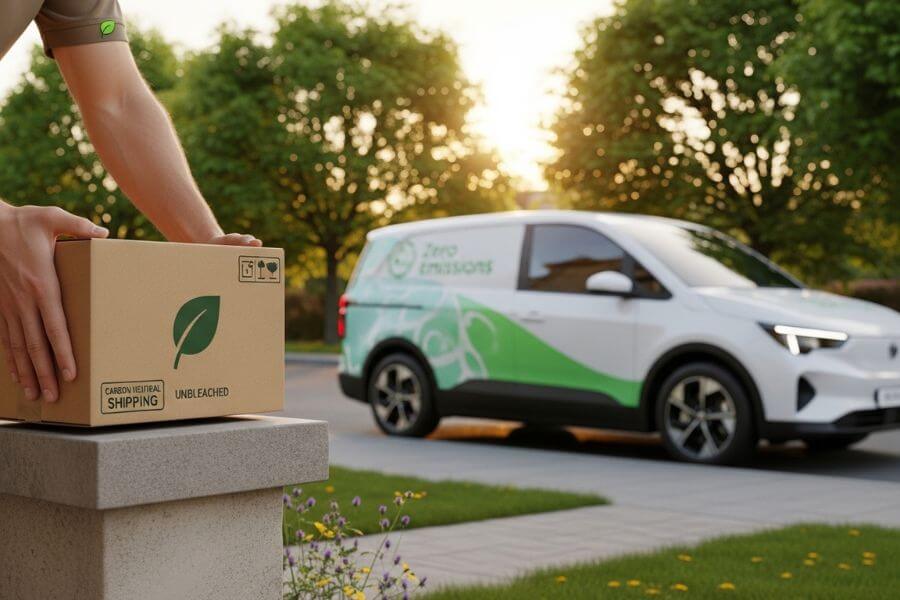
Electric delivery vehicles are rapidly becoming part of modern logistics networks. Many carriers are investing heavily in electric vans, cargo bikes, and alternative fuel vehicles to reduce emissions in urban delivery routes. E-commerce brands can prioritize carriers that use these technologies or offer green delivery options. Some companies also offer customers the option to select slower but lower-emission shipping methods at checkout. Encouraging customers to choose environmentally friendly delivery options can reduce overall emissions while reinforcing sustainability messaging. As electric vehicle infrastructure continues to improve, this strategy will become even more practical and cost-effective. Brands that begin adopting these options early position themselves as forward-thinking leaders in sustainable logistics while also preparing for future environmental regulations.
6. Implement Order Consolidation Strategies
Order consolidation helps reduce emissions by combining multiple items into a single shipment rather than sending separate packages. This can be achieved by encouraging customers to bundle purchases or by using smart fulfillment rules that delay shipments slightly to allow combined packing. Subscription brands often use this strategy to ship products on predictable schedules rather than sending multiple small shipments. Fewer shipments mean fewer transportation trips, which directly reduces carbon output. This approach also lowers packaging costs and improves operational efficiency. Clear communication is important so customers understand why slightly longer processing times may benefit the environment. Many sustainability-focused consumers are willing to accept minor delays if it means reducing environmental impact. Consolidation is a simple but powerful tactic that benefits both the planet and operational costs.
7. Invest in Sustainable Packaging Materials
Switching to recyclable, biodegradable, or compostable packaging materials can significantly reduce the environmental impact of shipping. Traditional plastic packaging often ends up in landfills, while eco-friendly alternatives can reduce long-term environmental harm. Materials such as recycled cardboard, paper-based fillers, and plant-based mailers are becoming more affordable and widely available. Some brands also experiment with reusable packaging programs that allow customers to return packaging for future use. While sustainable materials may initially cost more, they often provide marketing advantages and strengthen brand perception. Customers increasingly look for eco-conscious packaging when evaluating brands. By clearly labeling sustainable packaging efforts, companies can turn operational improvements into brand trust and differentiation.
8. Measure and Report Shipping Emissions
You cannot reduce what you do not measure. Tracking shipping emissions is essential for building an effective carbon-neutral strategy. Many logistics technology platforms now provide carbon tracking dashboards that estimate emissions based on shipping distance, weight, and transportation method. By monitoring this data, e-commerce brands can identify high-emission routes and make smarter logistics decisions. Regular reporting also helps businesses set sustainability benchmarks and track progress over time. Some companies publish sustainability reports or share carbon reduction milestones with customers. Transparency builds credibility and demonstrates genuine commitment rather than surface-level marketing. Over time, emissions data can guide investments in greener fulfillment solutions and help companies continuously improve their environmental performance.
9. Offer Carbon-Neutral Shipping as a Brand Promise
Some e-commerce brands choose to fully commit by making carbon-neutral shipping part of their brand identity. This means offsetting all shipping emissions as part of every order rather than offering it as an optional add-on. Brands that take this approach often highlight their sustainability commitment in marketing and product pages. This strategy can create a strong competitive advantage among environmentally conscious consumers. The key is ensuring that carbon offset investments are credible and aligned with recognized environmental programs. Clear messaging about how carbon neutrality is achieved helps avoid confusion and builds trust. When executed authentically, this strategy can transform sustainability from an operational decision into a core brand value that attracts loyal customers.
10. Work With Sustainable 3PL Fulfillment Partners
Choosing a fulfillment partner that prioritizes sustainability can accelerate carbon-neutral shipping efforts. Many modern third-party logistics providers invest in energy-efficient warehouses, solar power, smart inventory systems, and optimized transportation networks. By working with these providers, e-commerce brands can benefit from sustainability investments without building their own infrastructure. Some 3PL companies also provide carbon reporting tools and packaging optimization services. This allows brands to scale while maintaining environmental responsibility. When evaluating fulfillment partners, businesses should consider sustainability certifications, energy usage practices, and transportation efficiency programs. A strong logistics partner can play a major role in achieving long-term carbon reduction goals while supporting business growth.
Conclusion
Carbon-neutral shipping is quickly becoming a standard expectation rather than a niche initiative. As customers become more environmentally conscious, brands that invest in sustainable logistics will be better positioned for long-term success. The good news is that many carbon reduction strategies also improve efficiency and reduce costs over time. From smarter packaging and distributed fulfillment to carbon offset programs and sustainable 3PL partnerships, every improvement contributes to a greener supply chain. E-commerce brands that start implementing these strategies today will not only reduce their environmental impact but also build stronger trust with the next generation of conscious consumers.
Frequently Asked Questions
What does carbon-neutral shipping mean?
Carbon-neutral shipping means that the carbon emissions generated from transporting an order are balanced by investing in environmental initiatives that remove or prevent the same amount of emissions. This usually involves carbon offset projects such as tree planting or renewable energy investments. The goal is to ensure that the net environmental impact of shipping is effectively reduced to zero through a combination of reduction efforts and environmental compensation strategies.
Is carbon-neutral shipping expensive for e-commerce brands?
The cost varies depending on shipping volume and the methods used. Carbon offset costs are often relatively small per package, and many efficiency improvements, such as packaging optimization, can actually reduce expenses. While some sustainability investments require upfront spending, many brands find that operational savings and improved customer loyalty provide long-term financial benefits that justify the investment in carbon-neutral shipping programs.
Do customers really care about sustainable shipping?
Many modern consumers actively prefer brands that demonstrate environmental responsibility. Sustainable shipping can influence buying decisions, especially among younger demographics. Even customers who do not specifically seek eco-friendly brands often respond positively when sustainability efforts are clearly communicated. This makes carbon-neutral shipping both an environmental and a branding opportunity for companies looking to stand out in competitive markets.
What are carbon offsets in shipping?
Carbon offsets are environmental projects funded to compensate for emissions generated during shipping. These projects may include forest restoration, renewable energy development, or landfill methane capture. The idea is to balance unavoidable emissions by supporting projects that reduce greenhouse gases elsewhere. While offsets are helpful, most sustainability experts recommend combining them with actual emission reduction strategies for the strongest environmental impact.
How can small e-commerce businesses implement carbon-neutral shipping?
Small businesses can start by using carriers that offer carbon offset programs, switching to lightweight packaging, and offering carbon offset options at checkout. Many affordable apps and fulfillment services now provide built-in sustainability tools. Starting with small operational improvements allows growing brands to gradually build a more comprehensive sustainability strategy without overwhelming their resources or operational capacity.
Does faster shipping increase carbon emissions?
In many cases, faster shipping methods such as air transport generate higher emissions compared to ground shipping. Offering customers multiple delivery options can help reduce environmental impact by encouraging slower but more efficient shipping methods. Some brands even provide incentives for selecting eco-friendly delivery options, which can help balance customer expectations with sustainability goals.
What role does packaging play in carbon-neutral shipping?
Packaging plays a major role because excess materials increase both shipping weight and waste. Using right-sized boxes, recyclable materials, and minimal fillers can significantly lower emissions. Sustainable packaging also improves the customer experience by reducing waste. Many brands now highlight their packaging improvements as part of their sustainability messaging to strengthen brand trust and customer satisfaction.
Can 3PL providers help reduce shipping emissions?
Yes, many modern 3PL providers invest in energy-efficient facilities, optimized transportation networks, and advanced logistics software. These improvements can help reduce emissions across the fulfillment process. By choosing sustainability-focused partners, e-commerce brands can benefit from greener operations without making major infrastructure investments. This makes 3PL partnerships an effective strategy for improving environmental performance.
How can brands communicate their carbon-neutral shipping efforts?
Brands can communicate sustainability efforts through product pages, checkout messaging, packaging inserts, and sustainability reports. Transparency is important. Explaining how emissions are measured and reduced helps build credibility. Sharing measurable progress, such as emission reductions or environmental projects supported, helps customers see that the commitment is genuine and not just a marketing claim.
What is the first step toward carbon-neutral shipping?
The first step is understanding your current shipping emissions through carbon tracking tools or logistics reports. Once you have baseline data, you can identify opportunities such as packaging improvements, better carrier selection, or carbon offset programs. Starting with measurement allows businesses to prioritize the most effective improvements and build a realistic roadmap toward carbon-neutral shipping.