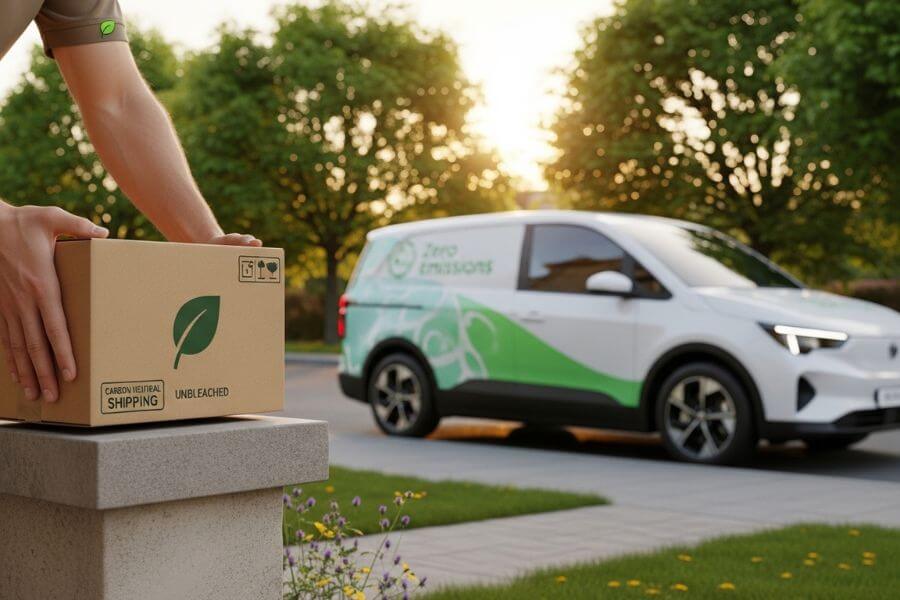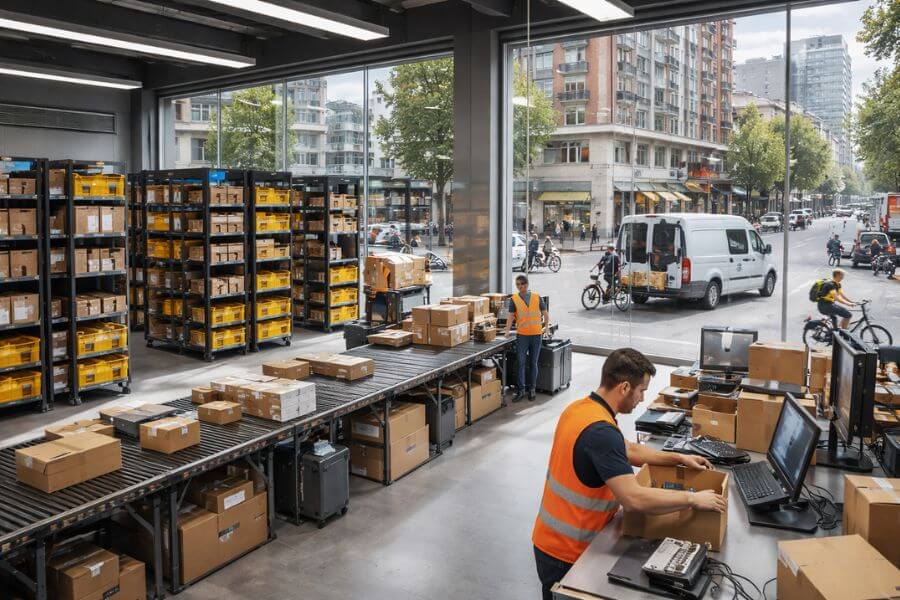
As customer expectations for same-day and next-day delivery continue to rise, e-commerce brands and 3PL providers are turning to urban micro-fulfillment centers (MFCs) to stay competitive. These small, strategically located facilities allow businesses to store fast-moving inventory closer to customers, reducing delivery times and transportation costs. Instead of relying only on large regional warehouses, companies are building distributed fulfillment networks designed for speed and flexibility. Micro-fulfillment is not just about location. It also involves smart technology, automation, and data-driven inventory decisions. Here are ten proven strategies companies are using to maximize last-mile delivery speed through urban micro-fulfillment centers.
1. Position Facilities Near High-Density Customer Zones
One of the most effective micro-fulfillment strategies is placing facilities as close as possible to major customer concentrations. Urban neighborhoods with high e-commerce order volume provide ideal locations because they allow faster delivery windows and reduced transportation distance. Companies often analyze order heat maps, zip code demand data, and delivery time metrics to identify the best placement opportunities. By reducing the distance between inventory and customers, businesses can enable same-day delivery without significantly increasing costs. Some companies even convert underutilized retail spaces or small industrial units into fulfillment hubs. This approach allows businesses to react quickly to market demand while maintaining cost efficiency. The closer the inventory is to the customer, the more predictable the delivery performance becomes. This strategy also improves courier productivity because drivers can complete more deliveries within shorter travel distances, increasing overall operational efficiency.
2. Use Automation to Accelerate Order Processing
Automation is a key driver of speed inside micro-fulfillment centers. Technologies such as automated storage systems, robotic picking solutions, and conveyor sorting equipment can dramatically reduce processing times. Even in smaller facilities, compact automation solutions can maximize vertical space while increasing picking accuracy. Automated systems also reduce reliance on manual labor during peak demand periods, helping companies maintain consistent performance. Faster picking means orders can be dispatched more quickly, which directly impacts last-mile delivery timelines. Many operators also integrate barcode scanning and warehouse management systems to coordinate workflows and eliminate bottlenecks. The goal is to create a streamlined operation where orders move from placement to shipment with minimal delay. Automation also improves scalability since businesses can handle growing order volumes without needing significant additional space. This makes micro-fulfillment centers both fast and adaptable.
3. Implement Real-Time Inventory Visibility
Real-time inventory visibility ensures that every micro-fulfillment center has accurate stock information at all times. Without this capability, companies risk overselling products or routing orders inefficiently. Cloud-based inventory platforms allow businesses to see stock levels across all fulfillment locations instantly. This allows orders to be routed to the closest facility with available inventory, which reduces delivery time. Accurate inventory data also helps prevent split shipments, which can slow delivery and increase costs. Many companies integrate their e-commerce platforms with fulfillment software so stock updates occur automatically after each order. This visibility also helps forecasting teams anticipate demand surges and reposition inventory proactively. The result is a fulfillment network that operates as one connected system instead of isolated facilities. This level of coordination is essential for achieving consistent last-mile speed and customer satisfaction.
4. Optimize SKU Selection for Micro-Fulfillment Locations
Not every product belongs in a micro-fulfillment center. Successful operators carefully select which SKUs to store in urban locations based on demand frequency, size, and delivery urgency. Fast-moving items, popular seasonal products, and high-margin goods are typically prioritized. Slower-moving inventory often remains in regional distribution centers to conserve valuable urban space. Data analytics plays an important role in determining which products deserve placement in these facilities. Companies review sales velocity, return rates, and order patterns to make informed decisions. This approach ensures that the most frequently ordered products are always closest to customers. Optimizing SKU selection also reduces congestion inside small warehouses, making operations more efficient. By focusing on the right inventory mix, companies can increase order fulfillment speed while maintaining operational simplicity and reducing unnecessary storage costs.
5. Establish Dynamic Order Routing Rules
Dynamic order routing allows businesses to automatically assign orders to the best fulfillment location based on factors such as distance, inventory availability, courier capacity, and delivery deadlines. This strategy prevents delays that can occur when orders are assigned manually or through static rules. Intelligent routing software can evaluate multiple variables within seconds and choose the fastest fulfillment path. For example, if one micro-fulfillment center is experiencing high order volume, the system can redirect orders to another nearby location. This flexibility ensures consistent delivery performance even during peak periods. Companies that invest in smart routing technology often see improvements in delivery speed and reduced shipping costs. The ability to constantly optimize fulfillment decisions is essential in urban logistics environments where conditions change quickly, and customer expectations remain high.
6. Partner with Local Courier Networks
Local delivery partners play an important role in maximizing the effectiveness of micro-fulfillment strategies. By working with regional courier companies, bike delivery services, and last-mile specialists, businesses can expand delivery capacity without building their own fleets. Local couriers often have better knowledge of traffic patterns, neighborhood access points, and delivery shortcuts. This knowledge can significantly improve delivery reliability. Companies often use a hybrid model that combines national carriers with local partners to balance cost and speed. Technology platforms that allow multi-carrier shipping selection help businesses automatically choose the best courier for each order. Building strong relationships with local delivery providers also provides backup capacity during peak seasons. This diversified delivery network helps maintain fast service even when demand surges unexpectedly.
7. Design Facilities for Rapid Picking Workflows
The physical layout of a micro-fulfillment center directly affects operational speed. Efficient facilities are designed with fast-moving products located near packing stations and shipping zones. Logical product grouping and clear picking paths reduce walking time and improve accuracy. Some companies use zone picking strategies where workers focus on specific sections instead of covering the entire warehouse. Others use batch picking to process multiple orders at once. Even small layout improvements can create significant time savings across thousands of daily orders. Clear signage, ergonomic workstations, and optimized packing stations also improve productivity. The goal is to create a smooth operational flow where orders move logically from storage to packing to dispatch. This design philosophy helps micro-fulfillment centers deliver the speed advantages they are built to provide.
8. Enable Buy Online Pickup and Local Delivery Options
Micro-fulfillment centers can also support alternative fulfillment methods such as buy online, pickup in store, curbside pickup, and hyperlocal delivery. These options reduce pressure on traditional shipping networks while giving customers more flexibility. When customers pick up orders locally, businesses eliminate last-mile delivery costs entirely. For local delivery, companies can offer scheduled time slots or rapid delivery windows. Offering multiple fulfillment choices improves the overall customer experience while optimizing operational efficiency. Many brands use micro-fulfillment locations as hybrid facilities that support both shipping and customer pickup. This strategy also increases inventory utilization because stock can serve multiple fulfillment channels. Providing flexible fulfillment options ensures businesses can meet different customer preferences while maintaining fast delivery capabilities.
9. Leverage Predictive Demand Forecasting
Predictive analytics helps companies anticipate where demand will occur and position inventory accordingly. By analyzing historical order data, seasonal trends, and marketing campaigns, businesses can forecast demand at the neighborhood level. This allows companies to pre-position inventory in the right micro-fulfillment centers before demand spikes. Advanced forecasting tools can also account for weather events, promotions, and regional buying trends. When inventory is already in place before orders arrive, fulfillment becomes significantly faster. This proactive strategy also reduces expensive emergency transfers between facilities. Forecasting improves not only delivery speed but also inventory efficiency. Companies that successfully integrate predictive demand planning into their micro-fulfillment operations often achieve more reliable delivery timelines and better resource utilization.
10. Integrate Micro-Fulfillment Centers into a Larger 3PL Network
Micro-fulfillment centers work best when they are part of a larger fulfillment ecosystem. Regional warehouses can handle bulk storage and slower-moving inventory, while micro facilities focus on fast local fulfillment. This layered approach balances cost efficiency with delivery speed. Many 3PL providers are building distributed networks that allow inventory to flow between facilities based on demand. This structure provides flexibility while maintaining fast service levels. Businesses that partner with experienced 3PL providers can often launch micro-fulfillment strategies faster than building infrastructure themselves. Integrated networks also allow easier expansion into new markets. As e-commerce continues to grow, this combination of regional scale and local speed is becoming a standard fulfillment model for companies focused on customer experience.
Conclusion
Urban micro-fulfillment centers are quickly becoming essential for companies that want to compete on delivery speed. By combining smart location strategy, automation, data-driven inventory management, and strong delivery partnerships, businesses can significantly improve last-mile performance. The most successful strategies focus on flexibility, real-time decision making, and customer convenience. As e-commerce continues to evolve, companies that invest in micro-fulfillment capabilities today will be better positioned to meet tomorrow’s delivery expectations. Whether operated in-house or through a 3PL partner, micro-fulfillment is becoming a critical component of modern logistics strategy.
Frequently Asked Questions
What is a micro-fulfillment center?
A micro-fulfillment center is a small warehouse located close to urban customers that is designed to enable faster e-commerce order processing and delivery. These facilities typically store fast-moving inventory and use optimized workflows or automation to speed up picking and packing. Their main goal is to reduce the distance between products and customers so businesses can offer faster shipping options, such as same-day or next-day delivery.
How do micro-fulfillment centers improve last-mile delivery speed?
Micro-fulfillment centers reduce the physical distance between inventory and customers, which shortens delivery routes. This allows companies to offer faster delivery windows while lowering transportation costs. When combined with smart order routing and real-time inventory management, businesses can process and ship orders more efficiently. This combination of proximity and technology makes micro-fulfillment one of the most effective ways to improve last-mile logistics performance.
Are micro-fulfillment centers expensive to operate?
Costs vary depending on location, technology investments, and staffing needs. While urban space can be more expensive, businesses often offset costs through reduced shipping distances and improved efficiency. Automation can also reduce labor costs over time. Many companies partner with 3PL providers to share infrastructure costs. When implemented correctly, micro-fulfillment centers often provide a strong return on investment through faster delivery and improved customer satisfaction.
What types of products work best in micro-fulfillment centers?
Fast-selling products, small to medium-sized items, and products with consistent demand typically perform best in micro-fulfillment centers. These facilities are ideal for items that customers expect quickly, such as everyday essentials or popular e-commerce products. Businesses usually analyze sales data to determine which items should be stored locally while keeping slower-moving or bulky inventory in regional distribution centers.
Can small e-commerce businesses use micro-fulfillment strategies?
Yes, smaller e-commerce businesses can use micro-fulfillment by partnering with 3PL providers that already operate urban fulfillment networks. This allows businesses to access faster delivery capabilities without major capital investment. Some companies also start with one small urban location before expanding. Using shared fulfillment infrastructure allows growing brands to compete with larger retailers in delivery speed.
How does automation help micro-fulfillment centers?
Automation improves speed, accuracy, and consistency in micro-fulfillment operations. Technologies such as robotic picking systems and automated storage solutions reduce manual work and speed up order preparation. Automation also reduces errors and improves scalability during peak seasons. Even partial automation can significantly improve performance, making it a valuable investment for companies focused on delivery speed and operational efficiency.
What role does data play in micro-fulfillment success?
Data helps companies decide where to place inventory, how to route orders, and how to forecast demand. Accurate data allows businesses to respond quickly to changing order patterns and avoid delays. Companies that use advanced analytics often achieve better delivery performance because they can make proactive decisions. Data-driven logistics planning is essential for maximizing the benefits of micro-fulfillment strategies.
How do micro-fulfillment centers support same-day delivery?
Because these facilities are located close to customers, orders can be picked and delivered within hours instead of days. Shorter delivery routes allow courier partners to complete more deliveries per day. Combined with efficient order processing, this makes same-day delivery possible. Micro-fulfillment centers provide the physical infrastructure needed to support these fast delivery promises.
Do micro-fulfillment centers replace traditional warehouses?
No, micro-fulfillment centers usually complement traditional warehouses rather than replace them. Large distribution centers still handle bulk inventory and long-term storage. Micro facilities focus on fast local fulfillment. Together, they create a balanced logistics network that supports both cost efficiency and delivery speed. This combination allows companies to scale operations while maintaining strong service levels.
What future trends are shaping micro-fulfillment strategies?
Future trends include greater use of artificial intelligence, expanded automation, electric delivery vehicles, and hyperlocal delivery models. Companies are also exploring dark stores and shared urban fulfillment hubs. As customer expectations continue to evolve, businesses will continue investing in technology and distributed fulfillment networks. Micro-fulfillment will likely remain a key strategy for improving last-mile performance in the coming years.