Nearshoring continued to reshape supply chains this year, even as tariffs, fuel costs and geopolitical uncertainty made the shift more complicated.
The practice, which involves moving offshore operations closer to end consumers, has gained momentum in the U.S. since the COVID-19 pandemic. Mexico overtook China as the country’s top overall trading partner in early 2023, and Census Bureau data shows it has remained in the top spot, accounting for 16.3% of total U.S. trade so far in 2026.
Zeid Houssami, senior vice president overseeing cross-border business at Uber Freight, said nearshoring remains a long-term structural shift, though the operating environment has become more complex. Demand is strong across major cross-border hubs such as Laredo, Texas, but shippers are also managing higher fuel costs, shifting tariff policies, tighter driver availability and new enforcement dynamics.
Houssami said more companies are regionalizing supply chains, using transloading at the border, consolidating shipments inside Mexico before export and building more flexibility into their networks. That has increased the value of visibility, local expertise and strong carrier relationships. He said the companies best positioned to succeed are treating cross-border transportation as a strategic part of supply chain planning, not just a transactional move.
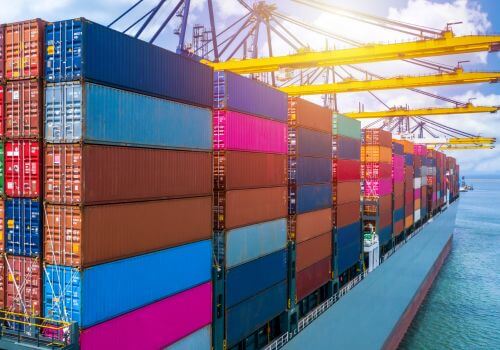
John Lash, group vice president of product strategy at E2open, said U.S. imports from China are declining while imports from Mexico are rising, mostly through tactical sourcing from manufacturers already operating in Mexico. He added that some companies are also pursuing broader moves to shift manufacturing from Asia to Mexico, redirecting freight from ocean lanes to truck-driven land corridors.
That shift is putting pressure on border hubs such as Laredo and major Mexico-U.S. routes, including Interstate 35, where Lash said truck volumes have visibly increased.
Tariff volatility is also changing transportation planning. In a May 19 report on 2025 U.S. customs entries, Infios said tariffs are no longer a predictable cost line for businesses. Shipment values rose about 78% from the prior year while entry counts fell about 7%, suggesting companies are consolidating shipments and shipping more strategically rather than pulling back from trade.
Don Mabry, senior vice president of global trade at Infios, said transportation strategy has become inseparable from tariff strategy. Freight decisions are increasingly tied not only to cost and transit time, but also to tariff exposure, policy risk and flexibility.
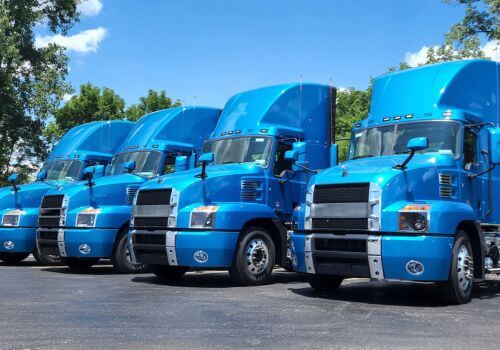
Mabry said trucking has been one of the clearest beneficiaries of nearshoring and tariff-driven network redesign because it helps companies reposition inventory faster, shorten supply chains and respond more quickly to changing conditions. Shorter supply chains also reduce exposure to long ocean transit during periods of policy uncertainty and provide more predictable transit windows.
Companies are also reworking fulfillment strategies. Fabrizio Alvear, co-president at ePost Global, said brands are moving inventory into regional fulfillment hubs and placing warehouses closer to end customers, especially in Europe and Canada, to reduce tariff exposure and avoid unnecessary duties, taxes and transportation costs.
Alvear said many global brands historically shipped products into the U.S. for fulfillment before distributing internationally, but tariff volatility and higher duties have made that model more expensive. More companies are now moving inventory directly into regional markets, reducing freight through traditional U.S. transportation networks. That means fewer port pickups, fewer domestic trucking moves and fewer export shipments, while rising fuel prices further encourage companies to eliminate unnecessary transportation legs.
Matt Muenster, chief economist at Breakthrough, said the shift toward Mexico predates the tariffs introduced in 2018 and goes back to broader changes following the 2008 financial crisis. He said growth in the North American manufacturing base has supported more freight along cross-border corridors, and recent tariffs or geopolitical disruptions are unlikely to stop that longer-term trend.
Muenster said some companies may delay major investments until there is more clarity on a reworked USMCA agreement, but the economic case for nearshoring remains strong, especially given long-term uncertainty around trade with China and East Asia. He said freight volumes at major U.S.-Mexico border crossings have changed significantly over the past decade and continue to grow.
Source Logistics reached a similar conclusion in its May 20 Supply Chain Outlook Report, identifying nearshoring and trade-driven geographic restructuring as the main forces reshaping warehousing, transportation and fulfillment. The report found that supply chains are becoming more regionalized and resilience-focused, making infrastructure near key trade corridors increasingly important.
CEO Raul Villarreal said North American supply chains are undergoing long-term restructuring rather than simply reacting to tariffs or short-term economic conditions. Companies are redesigning logistics networks around resiliency, proximity and cross-border flexibility, with Mexico playing a larger role in manufacturing and distribution strategies.
Villarreal said recent disruptions, including tariffs, port congestion and geopolitical instability, exposed the risks of supply chains built mainly around low cost. Businesses are now placing greater value on predictable transit times, inventory visibility, regional redundancy and dependable capacity.
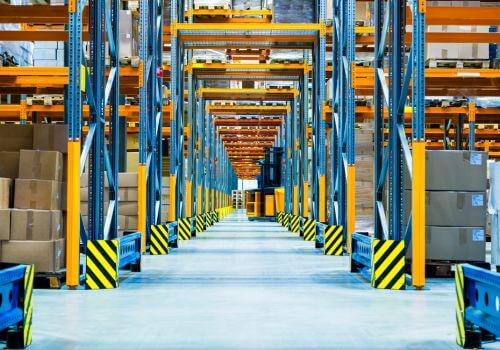
As manufacturing and sourcing move closer to the U.S. market, demand is rising for facilities near cross-border and regional distribution corridors. Villarreal said this has increased the importance of sites that can support transloading, overflow storage, inventory buffering and faster replenishment tied to Mexico-U.S. trade flows, while also raising demand for warehouse operators capable of managing more complex logistics networks.