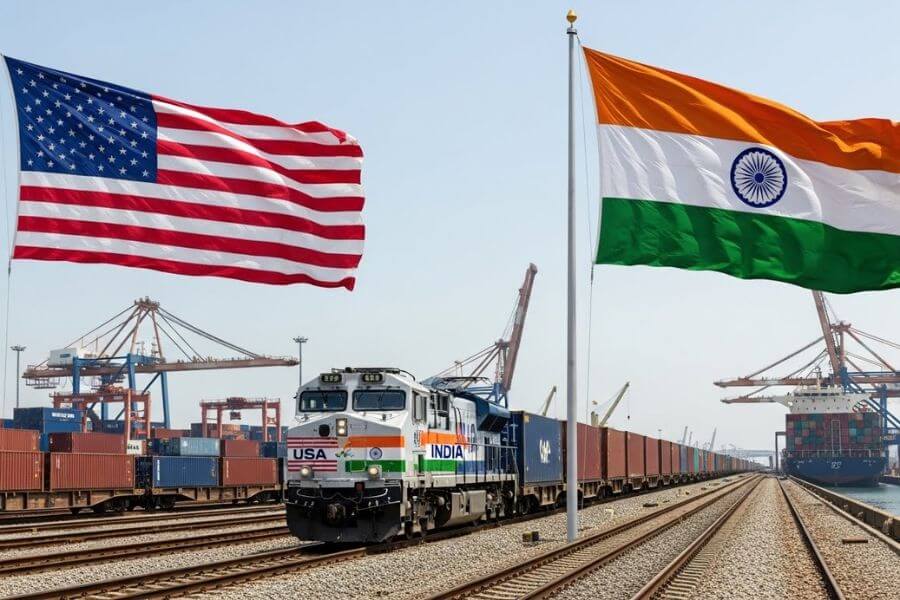
Trade between the United States and India has surged in recent years, making the U.S. India’s largest trading partner in 2024-25. Bilateral trade reached nearly US$132 billion, with India exporting about US$86.5 billion and importing roughly US$45.3 billion.
In this article, we’ll take a look at the 10 most traded goods between the two nations, covering both what India sends to the U.S. and what it imports from the U.S., based on the latest data (2024-25).
1. Electrical & Electronic Equipment
One of the standout categories in recent years is electrical and electronic equipment, including smartphones, telecom devices, consumer electronics, and other electronic hardware. India exported approximately US$15.9 billion worth of electrical machinery and equipment to the U.S. in FY 2024-25.
What’s driving this surge is a combination of global demand for affordable electronics and shifts in global manufacturing supply chains. Indian factories, including those producing smartphones, telecom gear, and other consumer electronics, have ramped up output, targeting U.S. consumers with competitively priced, high-quality goods. This mirrors broader global trade patterns, where India is gradually becoming a manufacturing hub beyond traditional goods.
2. Precious Stones, Gems & Jewelry
A traditional powerhouse in India’s export basket remains precious stones, gems, and jewelry, particularly diamonds, gold items, gemstones, and fine jewellery. According to FY 2024-25 data, shipments of natural or cultured pearls, precious or semi-precious stones, and articles made thereof to the U.S. amounted to around US$9.97 billion.
This sector’s strength stems from India’s long-established cutting, polishing, and jewelry-crafting industries, especially in regions known for gemstone processing. High demand in the U.S. for luxury items and fine jewelry ensures a steady market for Indian-made pieces. Even as technology and pharmaceuticals grow, gems and jewelry remain a core, often high-margin component of bilateral trade.
3. Pharmaceuticals & Medical Products
India’s pharmaceutical industry has become a global powerhouse, and the U.S. imports a significant portion of generic medicines, active pharmaceutical ingredients (APIs), vaccines, and other medical products from India. In FY 2024-25, exports of pharmaceutical products to the U.S. stood at around US$9.78 billion.
This reflects India’s comparative advantage in producing cost-effective, high-quality generic medicines and medical supplies. The trend has been bolstered by increasing global demand for affordable healthcare products, and the U.S., with its large population and robust healthcare infrastructure, remains a key destination. The significance of pharma in US-India trade has steadily risen in recent years.
4. Machinery & Engineering Goods
Heavy machinery, mechanical appliances, industrial components, and engineering goods form another major pillar of India-to-U.S. trade. Machinery and related goods accounted for about US$6.69 billion of exports from India to the United States in FY 2024-25.
These goods span a wide array from auto parts and boilers to turbines, mechanical appliances, and industrial machinery. The demand in the U.S. for specialized machinery and components, often at competitive prices, makes India a viable source. Additionally, diversification of global manufacturing and supply-chain realignment has contributed to the growth of this trade segment.
5. Petroleum Products & Fuels (Refined & Distilled)
Though not a traditional natural-resource exporter on a global scale like some oil-rich nations, India does send refined petroleum products and fuel oils to the United States. In 2024-25, petroleum products (mineral oils and products of their distillation) from India to the U.S. formed a significant trade category (though smaller compared to electronics or pharma).
Historically, much of India-U.S. energy-related trade flows the other way, with India importing crude oil, petroleum products, and mineral fuels from the U.S. Nonetheless, the fact that India exports refined or specialized petroleum products speaks to the evolving capacities and diversification in trade beyond traditional raw materials.
6. Mineral Fuels, Oils & Coal
On the flip side, one of the top categories exported from the U.S. to India is mineral fuels, oils, and related products, including crude oil, refined petroleum, coal, and petroleum gases. According to recent data, these remain among the most significant goods that India imports from the U.S.
This trade reflects India’s energy needs: as one of the world’s fastest-growing large economies, India requires huge volumes of energy products to power industry, transportation, and infrastructure. The U.S., being a major oil and gas producer and exporter, serves as a key supplier. In recent times, shifting global energy geopolitics and supply-chain realignments have further boosted this category’s importance.
7. Machinery, Boilers, and Heavy Equipment
Beyond fuels and energy, the U.S. supplies India with a wide range of machinery, heavy equipment, nuclear reactors/boilers, and industrial appliances. In FY 2024-25, machinery and mechanical appliances from the U.S. were among the top imports into India.
These goods are essential for India’s infrastructure development, manufacturing sector, energy processing, and other capital-intensive industries. As India continues to industrialize, modernize its infrastructure, and boost its manufacturing output, demand for high-quality machinery from the U.S. remains robust. This trade reflects the complementary economic roles: India as a growing industrial economy, and the U.S. as a supplier of capital-intensive industrial goods.
8. Electrical Machinery & Equipment
Just as India exports electrical and electronic equipment to the U.S., the reverse flow also exists: the U.S. exports certain electrical machinery, components, and equipment to India. According to recent trade data, electrical machinery ranks among the notable U.S. exports to India.
This may include specialized electrical systems, industrial electrical equipment, medical/ scientific instruments, components for infrastructure, and other high-value electronic goods. As India modernizes its infrastructure from power distribution to smart grids and manufacturing, demand for advanced electrical machinery remains high, making this trade category increasingly relevant.
9. Precious Stones & Metals
Interestingly, precious stones and metals also feature among exports from the U.S. to India. While India is globally known for its jewelry-making and gemstone polishing industries, trade is not strictly one-directional. According to trade data for 2024-25, stones, metals, and related articles from the U.S. constitute part of India’s import basket.
This flow may represent raw materials, specialized metals, or jewelry goods aimed at manufacturing, processing, or consumption within India. It reflects the complex, intertwined nature of global supply chains, where both countries serve as sources and markets for different parts of a value chain.
10. Chemical Products & Basic Chemicals
Finally, chemical products, including basic chemicals, organic chemicals, intermediates used in manufacturing, and related raw materials, are among the frequently traded goods between the two nations. The U.S. lists chemicals and basic chemical products among its top exports to India.
For India, chemicals are crucial inputs for a range of sectors: pharmaceuticals, manufacturing, plastics, agriculture, and more. For the U.S., exporting chemicals to India represents both a steady market and a way to support industries dependent on chemical inputs. As supply-chain diversification continues globally, chemical trade remains a backbone of industrial cooperation between the two countries.
Conclusion
The trade relationship between the U.S. and India is no longer limited to a few commodity lines. It has evolved into a multifaceted exchange of high-value goods from electronics and machinery to pharmaceuticals, precious stones, fuels, and chemicals. The top 10 traded goods outlined above highlight how each country leverages its strengths and meets the demand of the other.
As global trade patterns shift, supply chains evolve, and economies grow, this bilateral trade is likely to become even more diversified and significant. For businesses, policymakers, and analysts, paying attention to these goods and how their demand and supply evolve offers valuable insight into the economic trajectory of two of the world’s most important economies.