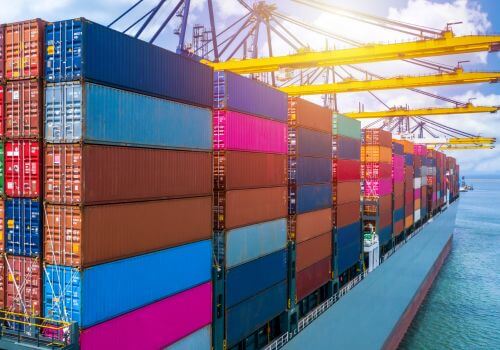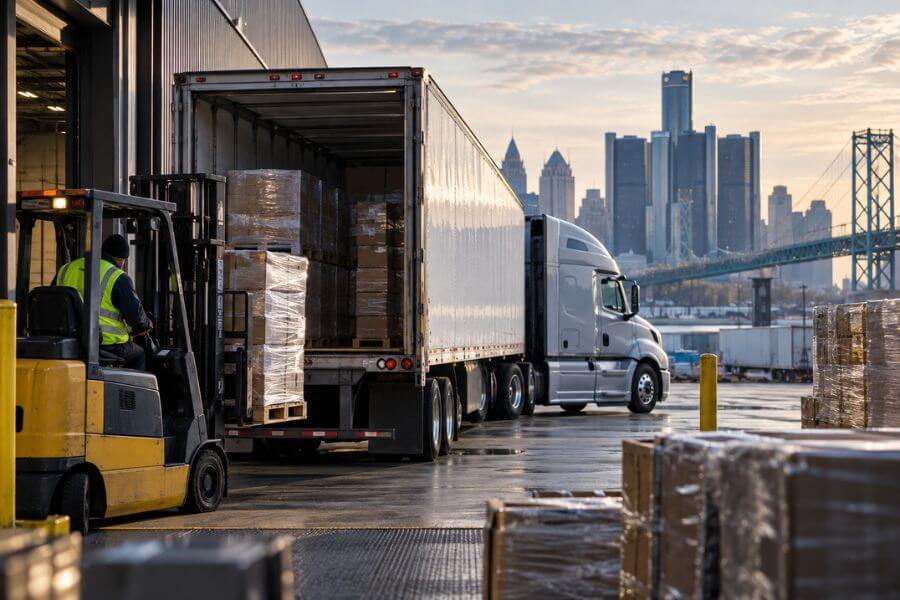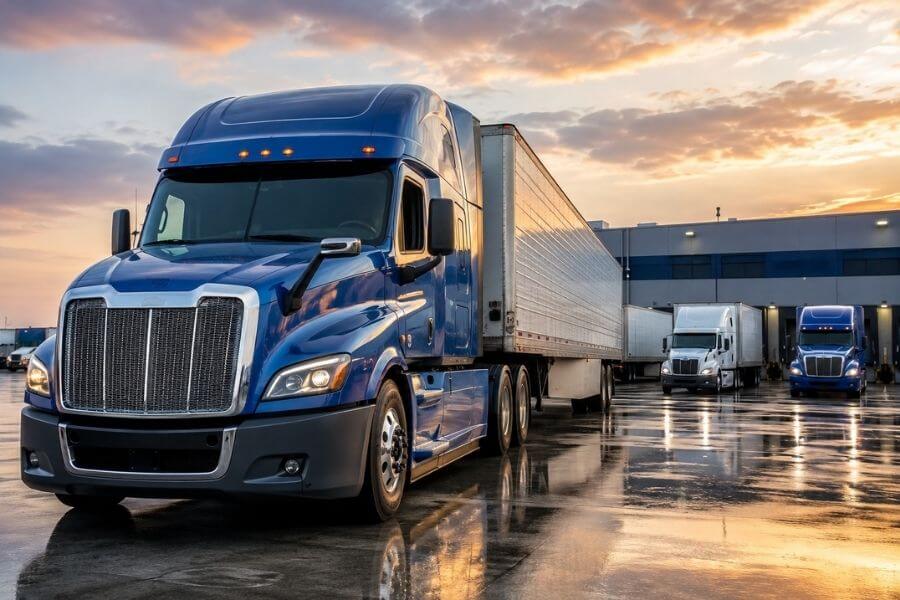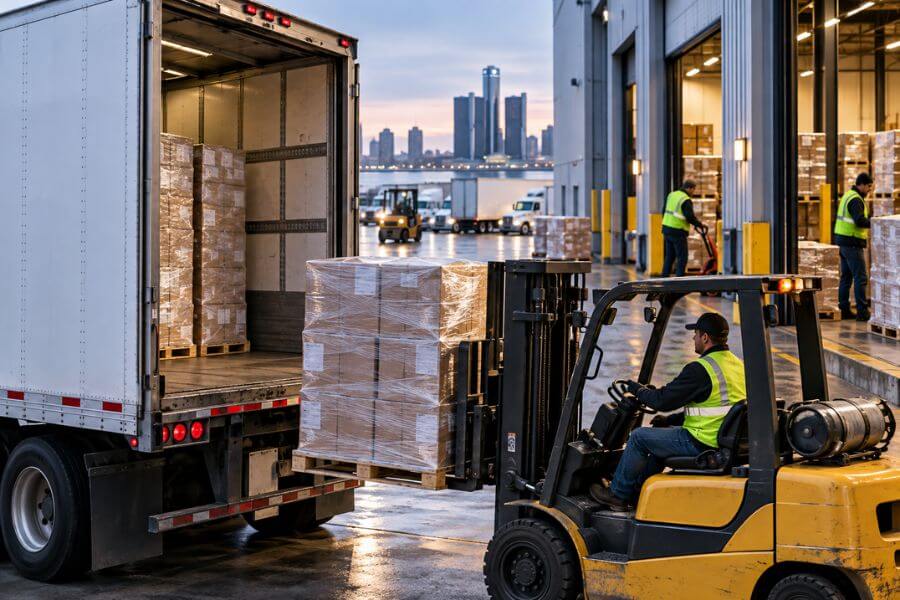
Choosing the right LTL carrier in Michigan can make a major difference in freight costs, transit times, shipment visibility, and overall supply chain performance. With a large manufacturing base, major interstate corridors, extensive automotive activity, and important freight connections with Canada, Michigan remains one of the most active transportation markets in the Midwest.
Less-than-truckload, or LTL, shipping is especially useful for businesses that need to move palletized freight without paying for an entire truck. Manufacturers, automotive suppliers, distributors, retailers, and other businesses can use LTL transportation to consolidate smaller shipments and move freight efficiently throughout Michigan, the Midwest, and the rest of North America.
Michigan’s transportation network also plays an important role in supporting just-in-time inventory and manufacturing operations. The Michigan Department of Transportation notes that an efficient and dependable freight network can lower costs, improve competitiveness, and support just-in-time inventory systems.
This guide highlights some of the top Michigan LTL carriers and freight companies to consider in 2026, including regional transportation providers, nationwide LTL carriers, cross-border specialists, and integrated logistics companies.
Why Michigan is an Important Hub for LTL Freight
Michigan is one of the most important freight markets in the Great Lakes region. Its combination of manufacturing facilities, automotive suppliers, warehouses, distribution centers, interstate highways, and international trade creates steady demand for reliable LTL transportation.
The state’s automotive supply chain alone includes a dense network of manufacturers and suppliers. Michigan’s 2026 freight planning materials note that the state produced roughly 19% of U.S. light-duty vehicles in 2024 and that 95 of the top 100 automotive suppliers to North America have a presence in Michigan.
Major highway corridors such as I-75, I-94, I-69, I-96, US-23, and other routes connect Michigan businesses with Ohio, Indiana, Illinois, Wisconsin, Ontario, and markets throughout the United States.
For Michigan businesses, a strong LTL network can help:
- Reduce the cost of shipping smaller freight loads
- Support frequent supplier and manufacturing deliveries
- Move palletized freight without booking a full trailer
- Connect Michigan with major Midwest distribution markets
- Support automotive and industrial supply chains
- Improve regional replenishment programs
- Handle inbound and outbound warehouse freight
- Support cross-border shipments between the U.S. and Canada
- Provide scheduled pickup and delivery options
- Scale transportation capacity as shipment volumes change
This makes LTL shipping particularly valuable for Michigan manufacturers, automotive suppliers, distributors, retailers, wholesalers, and growing businesses.
Benefits of Using an LTL Carrier in Michigan
LTL transportation allows multiple shippers to share trailer capacity. Instead of paying for an entire truck, each shipper generally pays for the portion of trailer space its freight requires.
Lower Freight Costs
Businesses with shipments that do not require an entire truck can often reduce transportation costs by using LTL rather than full truckload service.
For companies regularly shipping a few pallets between Michigan and neighboring states, LTL can provide a practical balance between cost and service.
Flexible Shipment Sizes
LTL works well for businesses whose shipping volumes change from day to day. A company may need to send two pallets to Ohio one day, six pallets to Illinois the next, and a smaller shipment across Michigan later in the week.
LTL gives businesses more flexibility without waiting until enough freight accumulates to fill an entire trailer.
Broad Regional and National Coverage
Many of the major LTL carriers operating in Michigan maintain extensive networks throughout the Midwest and across North America.
XPO, for example, says its LTL network has more than 400 operating locations and reaches more than 99% of U.S. ZIP codes. Estes operates national LTL services throughout all 50 states, while ABF Freight operates 240 service centers across the United States, Canada, and Puerto Rico.
Better Support for Manufacturing Supply Chains
Michigan manufacturers frequently need smaller quantities of components, raw materials, equipment, or finished goods moved between suppliers, production facilities, warehouses, and customers.
LTL shipping can help support these recurring freight movements without requiring a dedicated truck for every shipment.
Cross-Border Freight Options
Michigan’s proximity to Ontario makes cross-border transportation particularly important.
Several carriers on this list provide Canadian coverage or cross-border solutions. Old Dominion’s Detroit service center, for example, specifically identifies itself as a gateway for freight moving across the Canadian border into Ontario, while Day & Ross has a strong Canadian network and offers cross-border LTL service.
Top Michigan LTL Carriers & Freight Companies
Here are 10 Michigan LTL carriers and freight companies to consider in 2026.
| Company | Best For | Key Freight Services |
|---|---|---|
| Logos Logistics | Integrated Michigan logistics and flexible LTL coordination | LTL, freight brokerage, trucking, warehousing, cross-docking |
| FedEx Freight | Large-scale nationwide LTL shipping | Priority LTL, economy LTL, nationwide freight |
| XPO | Nationwide asset-based LTL transportation | Regional LTL, national LTL, freight tracking |
| Central Transport | Michigan-based nationwide LTL service | LTL transportation, regional and national freight |
| Dayton Freight | Midwest and regional LTL shipping | LTL, expedited freight, truckload |
| Old Dominion Freight Line | Regional, national, and cross-border LTL | LTL, expedited, guaranteed, Canada freight |
| Estes Express Lines | Broad national and regional LTL coverage | LTL, next-day, time-critical, cross-border |
| Day & Ross | Canada-U.S. and cross-border freight | LTL, truckload, transborder, dedicated transportation |
| Saia LTL Freight | Regional and national LTL shipping | LTL, regional freight, nationwide transportation |
| ABF Freight | Nationwide LTL and integrated logistics | LTL, expedited, truckload access, supply chain solutions |
1. Logos Logistics
Logos Logistics is a Michigan-headquartered logistics company offering freight transportation alongside warehousing, trucking, freight brokerage, and other third-party logistics services.
Unlike a traditional pure-play LTL carrier operating primarily through a national terminal network, Logos can help businesses coordinate LTL shipments as part of a broader logistics strategy. Its freight brokerage operation includes less-than-truckload transportation for smaller shipments that do not require an entire trailer.
This can be particularly valuable for businesses that want one logistics partner to coordinate transportation together with warehousing, cross-docking, inventory management, distribution, or other supply chain activities.
Logos Logistics is headquartered in Romulus and operates Michigan warehouse facilities in Romulus and Warren, giving the company a strong presence in the Detroit-area logistics market.
Key services include:
- LTL freight coordination
- Freight brokerage
- Asset-based trucking
- Regional and interstate transportation
- 3PL warehousing
- Cross-docking
- Distribution
- Transportation management
- Contract logistics
- Automotive logistics
- Inventory management
- Value-added services
Logos Logistics is especially useful for Michigan businesses that need more than point-to-point LTL transportation. Manufacturers and distributors can combine freight management with warehousing and distribution through one logistics partner.
For automotive businesses, the company also provides specialized services including parts transportation, sequencing, cross-docking, break bulk, and just-in-sequence delivery.
2. FedEx Freight
FedEx Freight remains one of the largest names in North American less-than-truckload transportation.
A major change occurred in 2026: FedEx Freight completed its separation from FedEx Corporation on June 1, 2026 and became an independent publicly traded company. The company now trades on the New York Stock Exchange under the ticker FDXF.
As of June 1, 2026, FedEx Freight reported more than 365 locations, including approximately 355 shipping terminals, and infrastructure covering approximately 98% of U.S. ZIP codes.
FedEx Freight maintains service-center operations in Michigan, including its Jackson location, supporting businesses moving palletized freight throughout the state and into the company’s wider North American network.
Key services include:
- Less-than-truckload freight
- Regional LTL shipping
- National LTL shipping
- Priority freight
- Economy-oriented LTL options
- Shipment tracking
- Pickup and delivery
- Cross-border freight
- Large-volume freight solutions
FedEx Freight can be a good fit for businesses that ship LTL freight frequently and want access to one of North America’s largest dedicated LTL networks.
3. XPO
XPO is one of the largest less-than-truckload carriers operating in North America and maintains a significant freight network throughout Michigan and the broader Midwest.
The company reports more than 400 operating locations and service reaching more than 99% of U.S. ZIP codes.
Michigan businesses have access to XPO service centers including Detroit and Grand Rapids. Its Grand Rapids facility, for example, operates from Kraft Avenue in Grand Rapids, while the company’s Detroit operation supports southeastern Michigan freight customers.
Key services include:
- Less-than-truckload transportation
- Regional LTL
- Long-haul LTL
- Pickup and delivery
- Freight tracking
- Transit-time tools
- Shipment management
- Cross-border transportation
XPO is well-suited to shippers that need an established asset-based LTL carrier with broad national coverage and significant terminal infrastructure.
4. Central Transport
Central Transport has especially strong ties to Michigan. The company is headquartered in Warren, making it one of the most locally connected major LTL carriers on this list.
Central Transport describes itself as a nationwide LTL carrier offering direct services to 98% of major manufacturing areas across the United States and Canada.
Its Michigan base can make Central Transport particularly relevant for manufacturers, automotive suppliers, distributors, and other businesses shipping freight throughout the Detroit region and beyond.
Key services include:
- Less-than-truckload shipping
- Regional freight transportation
- Nationwide LTL
- U.S.-Canada freight
- Pickup scheduling
- Shipment tracking
- Bill of lading tools
- Transit-time planning
- Freight claims support
Central Transport can be considered by Michigan shippers that want an established LTL carrier with deep roots in the Detroit-area transportation industry.
5. Dayton Freight Lines
Dayton Freight is an established regional freight carrier with particularly strong coverage throughout the Midwest.
Michigan falls within Dayton Freight’s core service area, and the company maintains service-center coverage across the state. Its current service-center directory lists Michigan operations serving Brownstown, Detroit, Grand Rapids, Iron Mountain, Jackson, Kalkaska, and Saginaw.
That network makes Dayton Freight especially relevant for companies moving freight between Michigan and major Midwest states such as Ohio, Indiana, Illinois, Wisconsin, Minnesota, and surrounding markets.
Key services include:
- LTL freight
- Regional transportation
- Truckload services
- Pickup and delivery
- Freight tracking
- Transit-time planning
- Liftgate-capable equipment
- North American coverage through partner networks
Dayton Freight is a strong regional option for Michigan businesses that regularly move freight within the Midwest and value dense service-center coverage close to their customers and suppliers.
6. Old Dominion Freight Line
Old Dominion Freight Line, commonly known as ODFL, operates an extensive LTL network with multiple service centers serving Michigan businesses.
Its Michigan operations include service centers covering Detroit, Ann Arbor/Romulus, Lansing, Grand Rapids, and Saginaw. The Detroit facility serves communities throughout southeastern Michigan and also functions as a gateway for freight moving between Michigan and Ontario.
Key services include:
- Regional LTL
- National LTL
- Inter-regional LTL
- Expedited transportation
- Guaranteed delivery options
- Freight consolidation
- Cross-border transportation
- Truckload brokerage
- Specialized freight services
- Supply chain consulting
ODFL is useful for Michigan businesses requiring broad LTL coverage as well as manufacturers and distributors shipping regularly between Michigan, the rest of the United States, and Canada.
7. Estes Express Lines
Estes Express Lines is a major privately held freight transportation company with extensive national and regional LTL coverage.
The company serves all 50 states as well as Canada, Mexico, Puerto Rico, and the Caribbean. Estes reports more than 300 freight terminals in the United States and Canada and nearly 7,000 next-day shipping lanes.
Michigan is well represented within that network. Estes operates terminals serving markets including Detroit, Flint, Grand Rapids, Lansing-area locations, and other parts of the state. Its Flint terminal, for example, offers next-day LTL connections to destinations including Detroit, Chicago, Toronto, Indianapolis, Cleveland, and Columbus.
Key services include:
- Regional LTL
- National LTL
- Next-day freight
- Time-critical transportation
- Cross-border shipping
- Final-mile freight
- Guaranteed transportation
- Offshore freight
- Freight forwarding
Estes can be a good option for businesses that need both regional Midwest transportation and broader national coverage through one carrier.
Its short-haul network is particularly relevant to Michigan because Estes identifies Detroit, Flint, Grand Rapids, Marshall/Lansing, and Mesick-area terminals among facilities providing next-day freight connections to Canadian markets including Toronto and Windsor.
8. Day & Ross
Day & Ross is a North American transportation and logistics company with particularly strong Canadian and cross-border capabilities.
The company offers LTL, truckload, dedicated transportation, intermodal, logistics, flatbed, and transborder services. Its core LTL operation has extensive Canadian coverage, while U.S. LTL coverage is supported through its strategic relationship with R+L Carriers.
Michigan is an important market within that cross-border network. Day & Ross lists a dedicated operation in Shelby Township as well as partner LTL gateways serving Detroit/Ypsilanti, Battle Creek, and Grayling.
The company also has Michigan warehousing and cross-docking capabilities supporting its broader transportation operations.
Key services include:
- LTL freight
- Truckload transportation
- U.S.-Canada cross-border freight
- Dedicated transportation
- Flatbed
- Intermodal
- Warehousing
- Cross-docking
- Logistics management
- Dangerous goods transportation
Day & Ross is particularly relevant for Michigan businesses whose supply chains extend into Canada or require a combination of cross-border transportation and broader logistics services.
9. Saia LTL Freight
Saia LTL Freight is another major LTL carrier with an established and growing presence in Michigan.
Saia expanded its Michigan network in late 2024 with the opening of a Warren terminal, which at the time increased its Michigan operation from five facilities to six. The company said the additional location was intended to increase capacity, improve freight movement, and reduce transit times for customers in the region.
Its continuing Michigan operations are also reflected by current activity in markets including Warren, Grayling, Saginaw, and the Grand Rapids area.
Key services include:
- Less-than-truckload transportation
- Regional LTL
- National freight
- Pickup and delivery
- Linehaul transportation
- Freight tracking
- Terminal-based distribution
- Business freight solutions
Saia can be a useful option for manufacturers and distributors that need established LTL coverage connecting Michigan with markets throughout the Midwest and the rest of the country.
10. ABF Freight
ABF Freight is the primary LTL carrier of ArcBest and has more than a century of experience in freight transportation.
ABF operates 240 service centers across all 50 states, Canada, and Puerto Rico. Its carrier network and partnerships provide extensive coverage throughout the United States.
Michigan has particularly strong ABF coverage. ArcBest’s current Michigan service-center directory lists facilities serving Romulus, Kalkaska, Saginaw, Walker, Mason, and Auburn Hills.
Key services include:
- LTL transportation
- Regional freight
- Nationwide LTL
- Cross-border transportation
- Pickup and delivery
- Shipment tracking
- Freight visibility
- Expedited solutions through ArcBest
- Truckload access through ArcBest
- Warehousing and broader logistics solutions through ArcBest
ABF Freight is a good option for Michigan companies that want a traditional asset-based LTL carrier while retaining access to additional transportation and supply chain services through ArcBest.
Logos Logistics vs. Traditional Michigan LTL Carriers
The companies on this list do not all operate under the same business model.
Large carriers such as FedEx Freight, XPO, Old Dominion, Estes, Saia, Dayton Freight, Central Transport, and ABF Freight primarily move LTL shipments through large terminal and linehaul networks.
Logos Logistics provides a different model.
Rather than functioning only as a nationwide terminal-based LTL carrier, Logos can coordinate LTL transportation as part of a broader 3PL solution that includes warehousing, freight brokerage, trucking, cross-docking, contract logistics, inventory management, and distribution.
| Feature | Logos Logistics | Traditional National LTL Carrier |
|---|---|---|
| LTL Shipping | Available through freight management and brokerage | Core transportation service |
| Michigan Presence | Michigan-headquartered with Romulus and Warren facilities | Varies by carrier |
| Warehousing | Integrated 3PL warehousing | Usually not the primary service |
| Cross-Docking | Available | Terminal transfers are part of LTL networks |
| Asset-Based Trucking | Available | Typically extensive carrier fleet |
| Freight Brokerage | Available | Varies |
| Automotive Logistics | Specialized capabilities | Primarily transportation |
| Inventory Management | Available through 3PL operations | Typically outside core LTL service |
| Best Fit | Businesses wanting integrated logistics support | Businesses primarily needing point-to-point LTL freight |
For a business that simply needs pallets transported from one location to another, a large nationwide LTL carrier may provide exactly what is needed.
For a company that also needs freight received at a warehouse, cross-docked, stored, managed, consolidated, or distributed, working with an integrated 3PL provider can simplify the transportation process.
Industries That Use Michigan LTL Freight
Automotive
Michigan’s automotive sector generates frequent movement of components, replacement parts, packaging, machinery, tooling, and other materials.
LTL can be useful when a shipment does not require a full trailer but still needs to move between suppliers, distribution centers, manufacturing plants, or dealerships.
Industrial Manufacturing
Industrial manufacturers frequently ship machinery components, raw materials, fabricated products, replacement parts, and finished goods.
LTL gives manufacturers flexibility when shipment volume is too large for parcel shipping but too small to justify a dedicated truckload.
Retail and Consumer Goods
Retailers and distributors can use LTL for store replenishment, wholesale orders, regional distribution, and palletized shipments to retail locations.
Food and Beverage
Certain packaged food and beverage products can move through LTL networks when the carrier and equipment are appropriate for the commodity and required handling conditions.
Wholesale Distribution
Wholesalers frequently ship multiple pallets to business customers rather than full truckloads to a single destination. This makes LTL a natural part of many wholesale distribution networks.
Automotive Aftermarket
Tires, aftermarket components, replacement parts, accessories, and service equipment frequently move in quantities suited to LTL transportation.
Industrial and Aerospace
Industrial and aerospace suppliers may use LTL for components, packaged materials, equipment, and other freight, depending on shipment dimensions, value, handling requirements, and urgency.
How to Choose the Right Michigan LTL Carrier
The right Michigan freight carrier depends on more than the lowest quoted rate.
Before selecting an LTL provider, compare the following factors.
Michigan Terminal Coverage
Look at how close the carrier’s service centers are to your origin and destination.
Dense Michigan terminal coverage can help improve pickup availability, regional transit times, and freight handling efficiency.
Transit Times
Compare expected transit times for the lanes you actually use.
A carrier that performs well between Detroit and Chicago may not necessarily provide the same advantage between northern Michigan and the Southeast.
Regional vs. National Coverage
If most of your freight stays within Michigan, Ohio, Indiana, Illinois, and Wisconsin, a strong Midwest carrier may work well.
Businesses shipping throughout the United States may prefer a carrier with broader national infrastructure.
Canadian Coverage
Michigan businesses frequently interact with Canadian suppliers and customers.
If your freight regularly moves across the border, compare each provider’s service into Ontario and the rest of Canada, along with customs coordination and partner-carrier arrangements.
Freight Type
Make sure your carrier can properly handle your commodity.
Oversized freight, hazardous materials, high-value products, fragile items, temperature-sensitive goods, and unusual dimensions may require specialized services or additional planning.
Freight Classification and Pricing
LTL pricing can depend on factors including:
- Freight class
- Weight
- Dimensions
- Density
- Origin and destination
- Fuel surcharges
- Accessorial services
- Liftgate requirements
- Residential delivery
- Appointment delivery
- Limited-access locations
Providing accurate shipment information can help reduce unexpected reclassification or accessorial charges.
Shipment Visibility
Look for tracking tools that allow your team to monitor pickups, terminal movements, expected delivery, and proof of delivery.
Claims and Freight Handling
Because LTL freight can move through multiple terminals, handling quality matters.
Review how a carrier manages damage claims, shipment exceptions, packaging requirements, and freight liability.
Customer Support
Freight problems occasionally happen even with experienced carriers.
Responsive local customer service can be particularly valuable when a shipment is delayed, an appointment changes, or a delivery requires special coordination.
How Michigan Businesses Can Reduce LTL Shipping Costs
Businesses can take several steps to improve LTL transportation efficiency.
Consolidate Freight When Possible
Instead of sending several small LTL shipments to the same destination, combining orders into fewer larger shipments may reduce transportation costs.
Provide Accurate Dimensions and Weight
Incorrect freight measurements can lead to reweighing, reclassification, and additional charges.
Use Proper Packaging
Palletizing and securing freight correctly can reduce the risk of damage while making freight easier to handle through LTL terminals.
Reduce Unnecessary Accessorials
Liftgates, residential delivery, inside delivery, appointments, limited-access delivery, and other special services can increase freight costs.
Identify requirements before requesting a quote.
Compare Carriers by Lane
There is rarely one LTL carrier that is ideal for every origin-destination pair.
A carrier with strong density on one Michigan lane may price or perform differently on another.
Using a freight broker or transportation management partner can help businesses compare carrier options across different routes.
Combine Transportation With Warehousing
Businesses using a Michigan 3PL warehouse may be able to consolidate inbound or outbound orders before shipping.
Combining inventory management, cross-docking, freight consolidation, and transportation planning can improve overall supply chain efficiency rather than optimizing each shipment individually.
Michigan LTL Freight FAQs
What is LTL freight?
LTL stands for less-than-truckload. It is a transportation method where freight from multiple customers shares space on the same truck.
Instead of paying for an entire trailer, businesses generally pay based on their individual shipment characteristics.
When should I use LTL shipping?
LTL is usually appropriate when a shipment is larger than typical parcel freight but does not require an entire truck.
ArcBest notes that LTL is commonly used for palletized freight weighing roughly 150 to 15,000 pounds, although the ideal transportation mode depends on other factors such as shipment dimensions, urgency, handling requirements, and destination.
Who are some major LTL carriers in Michigan?
Major companies serving the Michigan LTL market include FedEx Freight, XPO, Central Transport, Dayton Freight, Old Dominion Freight Line, Estes Express Lines, Day & Ross, Saia LTL Freight, and ABF Freight.
Logos Logistics also provides LTL freight coordination alongside broader trucking, freight brokerage, warehousing, and 3PL services.
Are there Michigan-based LTL and freight companies?
Yes. Central Transport is headquartered in Warren, Michigan, while Logos Logistics is headquartered in Romulus and operates logistics facilities in Romulus and Warren.
Which LTL carriers ship from Michigan to Canada?
Several providers on this list support Canadian freight.
Old Dominion operates cross-border services through its network, Estes provides Canada transportation, Day & Ross specializes heavily in Canadian and cross-border freight, and other national LTL carriers also provide Canada coverage.
Always check the exact origin, destination, commodity, customs requirements, and service level before booking.
What is the difference between LTL and full truckload?
With LTL, multiple shippers typically share trailer space.
Full truckload, or FTL, generally dedicates the trailer to one shipper and usually moves the freight more directly from origin to destination.
LTL can be more economical for smaller shipments, while truckload may be more appropriate for larger, high-volume, fragile, or particularly time-sensitive shipments.
How do I choose the best LTL carrier for my Michigan business?
Compare carrier coverage, terminal locations, rates, transit times, freight handling, technology, customer service, claims processes, and your most frequently used shipping lanes.
The right carrier depends on your freight rather than simply the size of the transportation company.
Final Thoughts
Michigan’s manufacturing base, automotive industry, interstate highway network, distribution infrastructure, and connection to Canada make LTL transportation an important part of the state’s logistics market.
FedEx Freight, XPO, Central Transport, Dayton Freight, Old Dominion Freight Line, Estes Express Lines, Day & Ross, Saia LTL Freight, and ABF Freight all provide different network strengths for businesses moving freight within Michigan and throughout North America.
The right provider depends on where your freight is going, how frequently you ship, the size and type of your products, your transit-time requirements, and whether you need transportation alone or a broader logistics solution.
For businesses looking to combine LTL freight, trucking, freight brokerage, warehousing, cross-docking, distribution, and supply chain management, Logos Logistics offers an integrated option headquartered in Michigan.
With facilities in Romulus and Warren and transportation capabilities supporting local, regional, and nationwide operations, Logos Logistics can help manufacturers, automotive suppliers, distributors, retailers, and other businesses develop a more coordinated freight strategy.
Ready to improve your Michigan LTL and freight strategy? Contact Logos Logistics to discuss your transportation requirements and build a freight solution around your shipping volume, lanes, warehousing needs, and supply chain goals.