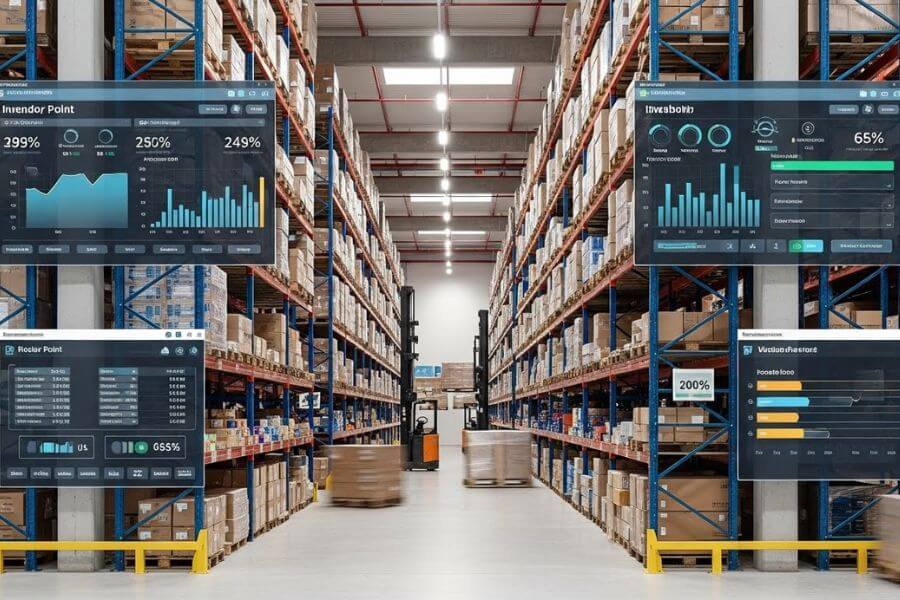
In logistics, maintaining optimal inventory levels is one of the biggest challenges companies face. Stock too much, and you tie up capital and warehouse space. Stock too little, and you risk stockouts, delayed deliveries, frustrated customers, and lost revenue. The solution? A well-calculated Reorder Point (ROP).
The reorder point is one of the most important concepts in inventory management. It tells you the exact moment when you need to replenish stock to avoid running out of products. Whether you operate an e-commerce business, a distribution company, or a manufacturing facility, understanding and applying reorder points effectively can significantly improve operational efficiency.
This comprehensive guide covers everything you need to know about reorder point in logistics, including what it is, why it matters, how to calculate it, real-world examples, common mistakes to avoid, and best practices to improve your supply chain performance.
What is a Reorder Point?
A reorder point (ROP) is the inventory level at which your business must place a new order to restock a product before it runs out. It considers two critical factors:
- Lead time demand: How many units you expect to sell or use during the supplier’s lead time.
- Safety stock: Extra inventory kept as a buffer against supply delays or demand spikes.
In simple terms:
Reorder Point = Stock Level That Triggers a New Purchase Order
For example, if you sell 50 units per day and your supplier takes 5 days to deliver, you’ll need at least 250 units on hand to cover that period. Add safety stock, and that becomes your reorder point.
Why Reorder Point Matters in Logistics
Reorder points are essential in supply chain management because they directly influence:
- Stock availability: Maintaining the right ROP ensures you never run out of critical products, enabling continuous order fulfillment.
- Customer satisfaction: Modern customers expect fast, reliable delivery. ROP helps ensure products are always available when customers need them.
- Reduced carrying costs: Instead of overstocking inventory “just in case,” ROP helps you keep lean, efficient inventory levels.
- Improved cash flow: Businesses can avoid tying up capital in unnecessary inventory, freeing funds for other operations.
- Operational efficiency: Reorder points automate decision-making, reducing manual monitoring and forecasting errors.
Components of an Effective Reorder Point
To calculate an accurate reorder point, you need to understand the following components:
- Average daily usage (ADU): This is how much stock you sell or consume per day. It can be based on historical data or forecasted demand.
- Lead time: The time it takes for your supplier to deliver an order after you place it. Lead time may include:
- Order processing time
- Shipping time
- Customs or inspection delays
- Internal receiving time
- Lead time demand: This is the amount of product you expect to use during lead time.
- Safety stock: Safety stock protects your business from two primary risks:
- Unexpected spikes in demand
- Supplier delivery delays
- Service level: This refers to the probability that you will not run out of stock during replenishment. Higher service levels require more safety stock.
Standard Reorder Point Formula
The most common formula used in logistics is:
Reorder Point = (Average Daily Usage × Lead Time) + Safety Stock
Here’s what each part means:
- Average Daily Usage × Lead Time: Expected demand during supplier fulfillment period.
- Safety Stock: Buffer inventory to prevent stockouts.
This formula is ideal for most businesses because it balances accuracy with simplicity.
How to Calculate Reorder Point (Step-by-Step)
Let’s break it down to make it practical and easy to apply.
Step 1: Calculate Average Daily Usage
Look at historical sales data for a defined period (e.g., 90 days).
Example:
You used 9,000 units in 90 days.
Average daily usage = 9,000 ÷ 90 = 100 units/day
Step 2: Determine Your Supplier Lead Time
Ask your supplier or look at past orders.
Example:
Your supplier usually takes 7 days to deliver.
Step 3: Calculate Lead Time Demand
Lead time demand = 100 units/day × 7 days = 700 units
Step 4: Calculate Safety Stock
Safety stock varies by business. One simple method is:
Safety Stock = (Maximum Daily Usage × Maximum Lead Time) − (Average Usage × Average Lead Time)
If your maximum usage is 120 units/day and maximum lead time is 10 days:
Safety stock = (120 × 10) − (100 × 7)
Safety stock = 1,200 − 700 = 500 units
Step 5: Calculate Reorder Point
Using the standard formula:
Reorder Point = 700 + 500 = 1,200 units
This means when your inventory drops to 1,200 units, you should place a new order.
Why Safety Stock is Vital
Many businesses underestimate the importance of safety stock. Even if you have accurate forecasts, unexpected events still happen:
- Supply chain disruptions
- Supplier shortages or shutdowns
- Sudden demand spikes
- Seasonal shopping peaks
- Port congestion
- Weather-related delays
Without safety stock, even a small delay in one shipment can lead to backorders and unhappy customers.
How Much Safety Stock Should You Have?
It depends on factors such as:
- Sales variability
- Supplier reliability
- Preferred service level
- Business type (e-commerce vs. B2B vs. manufacturing)
High-demand or high-value items often require more safety stock.
Different Reorder Point Models
Depending on your business needs and complexity, you may choose different ROP models.
1. Fixed Reorder Point Model
This is the most common model, where ROP is set manually based on historical data.
Good for:
- Stable demand
- Predictable suppliers
- Small to medium-sized businesses
2. Variable Reorder Point Model
ROP fluctuates with forecasted demand and real-time lead time changes.
Best suited for:
- Seasonal businesses
- High-demand variability
- Businesses using advanced forecasting systems
3. Automated Reorder Point Systems
Many warehouse management systems (WMS) and ERPs can automatically calculate ROP based on real-time inventory and demand data.
Benefits:
- Higher accuracy
- Less manual work
- Reduction in human errors
- Faster replenishment cycles
Reorder Point vs. Safety Stock vs. EOQ
Understanding how ROP interacts with other inventory metrics is essential.
- Reorder point (ROP): Tells you when to reorder.
- Economic order quantity (EOQ): Tells you how much to reorder.
- Safety stock: Protects you from stockouts.
Together, they help optimize supply chain performance by ensuring:
- Correct timing
- Correct quantity
- Continuous availability
Real-World Example: How Reorder Point Works in Practice
Let’s imagine you run an e-commerce store that sells smartphone accessories. One of your best-selling items is a wireless charger.
- Average daily sales: 40 units
- Supplier lead time: 6 days
- Safety stock: 150 units
Reorder Point = (40 × 6) + 150 = 390 units
Your current warehouse system tracks inventory levels in real time. When stock reaches 390 units, it automatically triggers a purchase order to your supplier.
This ensures:
- You won’t run out during the 6-day lead time
- You maintain enough buffer stock
- Customer orders are fulfilled seamlessly
Common Mistakes Businesses Make with Reorder Points
Even though the ROP formula is simple, many businesses still struggle with inventory issues because of these mistakes:
- Not updating reorder points regularly: Demand and lead times fluctuate. Keeping a static ROP invites stockouts or overstocking.
- Ignoring supplier performance issues: If your supplier’s delivery schedule becomes inconsistent, your ROP needs adjustment.
- Using guesswork instead of data: Reorder points should be data-driven, not based on assumptions.
- Forgetting seasonality: Certain products sell more during holidays, summer, or tax season. ROP should reflect these trends.
- Not monitoring lead time variability: Even a small shift in lead time (e.g., from 5 days to 7 days) can cause serious stockouts for high-demand SKUs.
- Relying on manual tracking: Manual inventory tracking is prone to errors, which leads to inaccurate reorder points.
How Technology Improves Reorder Point Accuracy
Modern logistics companies increasingly use automation and AI-driven tools to manage reorder points.
- Inventory Management Systems (IMS): Offer real-time tracking and automated reorder alerts.
- Warehouse Management Systems (WMS): Track inbound and outbound stock movements and calculate ROP dynamically.
- Enterprise Resource Planning (ERP): Integrates sales, purchasing, inventory, and financial data to create accurate reorder models.
- AI and machine learning: These systems analyze trends and seasonality to continuously adjust reorder points.
Benefits of Using a Reorder Point Strategy
Implementing reorder points can transform your logistics operations. Key benefits include:
- Fewer stockouts → happier customers
- Lower carrying costs → more efficient use of capital
- Better forecasting → informed business decisions
- Reduced manual work → more time for strategic tasks
- Improved supplier relationships → predictable ordering patterns
- Higher inventory turnover → lean and efficient operations
How Often Should You Review Reorder Points?
Experts recommend reviewing ROPs:
- Monthly for high-volume, fast-moving products
- Quarterly for stable SKUs
- Annually for long-tail or specialty items
- Immediately during major supply chain disruptions
In industries like e-commerce, electronics, and fashion, demand fluctuates quickly, so frequent ROP adjustments are essential.
Reorder Point Strategies for Different Business Types
Different industries require different ROP approaches. Here are examples:
1. E-commerce
- High SKU counts
- Fast demand swings
- Rely heavily on automated systems
2. Manufacturing
- Must consider raw materials and components
- Lead times vary widely
- Safety stock is critical
3. Retail
- Seasonal demand
- Multi-location inventory
- ROP may differ by store
4. Distribution & 3PL
- Large inventories
- Need advanced forecasting
- Serve multiple customers with varying demand patterns
Advanced Reorder Point Techniques
As businesses scale, more sophisticated ROP strategies may be needed.
1. Demand Forecasting Models
Use predictive analytics to adjust ROP based on anticipated demand.
2. ABC Inventory Classification
Assigns different ROP rules based on SKU importance:
- A-items (high-value): high service levels
- B-items (moderate importance): balanced approach
- C-items (low-cost, high-volume): minimal safety stock
3. Service-Level Optimization
Adjust reorder points to hit specific service-level goals (95%, 98%, or 99%).
4. Dynamic Safety Stock
Automatically adapt safety stock levels based on forecast variability.
Signs it’s Time to Adjust Your Reorder Point
Monitor your inventory data for red flags like:
- Frequent stockouts
- Excess inventory buildup
- Supplier delays
- Higher customer demand
- Increased inventory carrying costs
- Slower turnover rates
When these occur, it’s time to revisit ROP calculations.
Frequently Asked Questions About Reorder Point
Is reorder point the same as minimum inventory level?
Not exactly. Minimum inventory refers to the lowest amount of stock you can have without disrupting operations. ROP considers lead time demand once you hit that minimum.
How can small businesses use reorder points?
Even simple spreadsheet-based ROP systems significantly help small businesses avoid stockouts.
How does ROP differ for fast vs. slow-moving items?
Fast-moving items require tighter, more frequent ROP reviews. Slow-moving items can use longer review cycles.
Do all SKUs need a reorder point?
In large inventories, focus first on high-demand or high-value items.
Can ROP be fully automated?
Yes. Modern software can calculate, track, and adjust reorder points in real time.
Conclusion
Reorder points play a crucial role in optimizing inventory levels, avoiding stockouts, reducing carrying costs, and improving customer satisfaction. Whether your business is large or small, mastering ROP is essential for building a resilient and efficient supply chain.
By understanding the components of reorder point, applying accurate calculations, leveraging technology, and reviewing ROPs regularly, businesses can maintain perfect stock levels and streamline logistics operations.