Real-time shipment tracking has become a critical part of modern supply chains. E-commerce brands, logistics providers, and manufacturers all rely on accurate shipment visibility to prevent delays, reduce losses, and improve customer satisfaction. Thanks to the Internet of Things (IoT), companies can now monitor shipments at every stage of the journey. Smart sensors, connected trackers, and intelligent devices continuously transmit location and environmental data, helping businesses make better logistics decisions. From monitoring temperature-sensitive goods to preventing cargo theft, IoT devices are transforming the way shipments move around the world. Here are ten IoT devices that are revolutionizing real-time shipment tracking.
1. GPS Tracking Devices
GPS tracking devices are one of the most widely used IoT tools for shipment monitoring. These devices provide real-time location data, allowing logistics teams to track trucks, containers, and individual shipments throughout the delivery process. GPS trackers send location updates to cloud platforms where companies can monitor routes, detect delays, and optimize delivery schedules. This visibility helps reduce lost shipments and improves overall supply chain efficiency. For e-commerce fulfillment providers and 3PL companies, GPS tracking also improves transparency with clients by providing accurate shipment status updates. As GPS technology becomes smaller and more affordable, it is increasingly integrated directly into packaging and shipping containers.
2. Smart Cargo Sensors
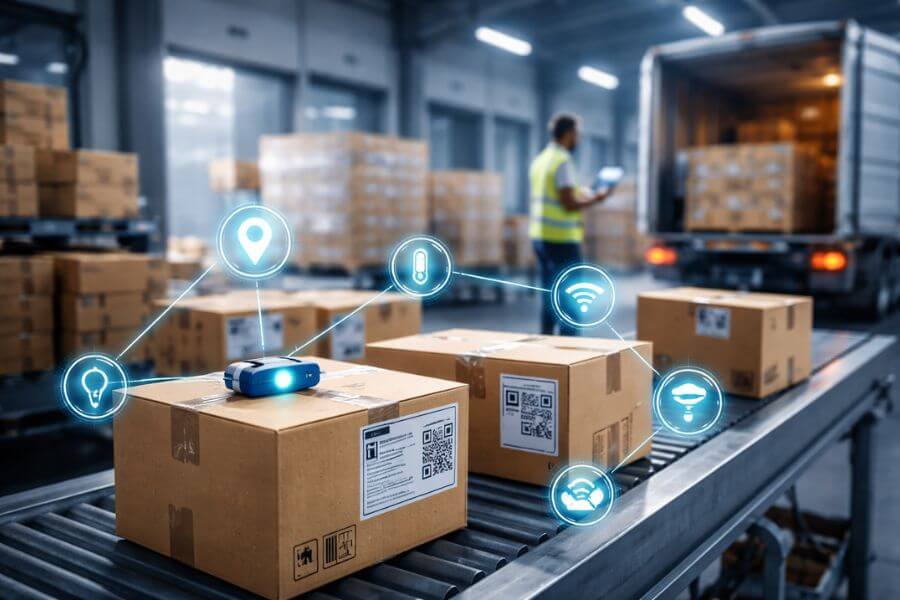
Smart cargo sensors collect environmental data inside shipping containers and packages. These IoT devices measure factors such as humidity, light exposure, shock, and motion. By transmitting this information in real time, businesses can detect potential damage or mishandling during transit. For example, if a package experiences excessive vibration or sudden impacts, logistics managers can immediately investigate the issue. Smart cargo sensors are especially valuable for fragile goods, electronics, and high-value shipments. They help companies maintain product quality and identify problems before deliveries reach customers. With improved shipment transparency, businesses can reduce disputes, claims, and product losses throughout the supply chain.
3. Temperature Monitoring Sensors
Temperature monitoring sensors play a critical role in cold chain logistics. These IoT devices continuously measure and transmit temperature data for shipments containing pharmaceuticals, food products, and medical supplies. If the temperature moves outside safe ranges, alerts are instantly sent to logistics teams, so corrective actions can be taken. This helps prevent spoilage and regulatory compliance issues. Temperature monitoring sensors are often placed inside insulated packaging, refrigerated trucks, or shipping containers. With real-time monitoring, companies can ensure product integrity during long-distance transportation. For industries that rely on strict temperature control, these devices have become essential for maintaining product safety and quality.
4. RFID Tracking Tags
Radio Frequency Identification, or RFID, tags allow shipments to be tracked automatically as they move through warehouses and distribution centers. Unlike traditional barcodes, RFID tags do not require direct scanning and can be read remotely by RFID readers. This allows large volumes of packages to be tracked instantly as they pass through checkpoints. In logistics operations, RFID technology improves inventory visibility and reduces manual labor. It also helps detect misplaced shipments inside fulfillment centers. When combined with warehouse management systems, RFID tags provide continuous tracking from storage to outbound shipping, improving efficiency and accuracy across the entire logistics process.
5. Bluetooth Low Energy Beacons
Bluetooth Low Energy beacons are small IoT devices designed for short-range tracking inside warehouses, ports, and distribution centers. These beacons communicate with nearby gateways or mobile devices to report shipment location and movement. Because they use very little power, BLE beacons can operate for months or even years without battery replacement. Logistics teams often use them to monitor pallet movements, track assets, and locate shipments inside large facilities. By creating a network of connected beacons, companies can map real-time shipment movement across complex logistics environments. This technology helps improve operational visibility and speeds up order processing.
6. Cellular IoT Trackers
Cellular IoT trackers connect directly to mobile networks to transmit shipment data in real time across long distances. These devices are ideal for tracking shipments that travel across cities, countries, or continents. Unlike short-range technologies, cellular trackers do not rely on nearby receivers and can send updates from almost anywhere with network coverage. Logistics companies use them to track trucks, shipping containers, and high-value cargo. Cellular IoT trackers also support additional sensors such as temperature and motion monitoring. With constant connectivity, businesses gain continuous visibility over shipments, improving route planning, security monitoring, and delivery accuracy.
7. Satellite Tracking Devices
Satellite tracking devices are designed for shipments traveling through remote areas where cellular coverage is limited. These IoT devices communicate directly with satellites, allowing shipment data to be transmitted even in oceans, deserts, or rural regions. Satellite trackers are commonly used for maritime shipping, international logistics, and remote transportation routes. By providing continuous tracking regardless of location, they help companies maintain visibility across global supply chains. Satellite tracking also improves security for valuable cargo by enabling real-time monitoring and alerts. For international logistics operations, satellite-enabled IoT devices ensure shipments remain visible throughout their entire journey.
8. Smart Container Locks
Smart container locks combine security and tracking into a single IoT device. These locks use connected sensors and wireless communication to monitor container access and location. Logistics teams receive alerts if a container is opened unexpectedly or tampered with during transit. Many smart locks also include GPS tracking capabilities, providing real-time shipment visibility. This technology is especially useful for preventing cargo theft and unauthorized access. Smart container locks are commonly used for high-value shipments, international freight, and cross-border transportation. By combining physical security with digital monitoring, they help businesses protect shipments throughout the delivery process.
9. IoT Pallet Trackers
IoT pallet trackers allow logistics companies to monitor palletized shipments throughout warehouses, trucks, and distribution networks. These devices are attached directly to pallets and track location, movement, and handling conditions. By providing real-time pallet visibility, companies can reduce misplaced inventory and improve warehouse efficiency. Pallet trackers are particularly useful for high-volume e-commerce operations and large-scale retail distribution. They help logistics teams quickly identify pallet locations, optimize warehouse workflows, and streamline loading processes. With detailed pallet-level tracking, businesses gain better control over inventory movement and improve overall supply chain coordination.
10. Smart Shipping Labels
Smart shipping labels represent one of the newest innovations in IoT shipment tracking. These labels combine printed shipping information with embedded sensors and connectivity features. Smart labels can track temperature, location, and handling conditions while transmitting data through wireless networks. Because they are integrated directly into the label itself, they are lightweight and easy to apply to packages. Logistics providers use smart labels to track individual parcels without attaching separate hardware devices. This makes them especially useful for e-commerce shipments. As the technology evolves, smart shipping labels are expected to make real-time tracking more scalable and affordable.
Conclusion
IoT technology is rapidly transforming how shipments are tracked across global supply chains. From GPS trackers and temperature sensors to smart labels and satellite devices, these technologies provide unprecedented visibility into the movement and condition of goods. Real-time shipment tracking allows businesses to reduce delays, prevent losses, and improve customer satisfaction. For e-commerce brands and logistics providers, adopting IoT solutions is no longer optional. It is becoming a competitive necessity. As IoT technology continues to evolve, shipment tracking will become even more accurate, automated, and intelligent, helping supply chains operate faster and more efficiently.
Frequently Asked Questions
What is IoT in shipment tracking?
IoT in shipment tracking refers to connected devices that collect and transmit real-time data about shipments. These devices monitor location, temperature, movement, and environmental conditions during transportation. By sending this information to cloud platforms, logistics teams gain visibility into shipments and can quickly respond to delays, risks, or handling issues.
Why is real-time shipment tracking important?
Real-time shipment tracking helps businesses monitor deliveries continuously and identify issues before they escalate. It improves supply chain visibility, reduces lost shipments, and increases customer trust. With accurate tracking information, companies can also optimize delivery routes, manage inventory better, and respond quickly to unexpected delays.
How do GPS trackers work in logistics?
GPS trackers use satellite signals to determine the exact geographic location of a shipment. The device sends location data to cloud platforms using wireless communication such as cellular networks. Logistics teams can then view shipment movement in real time, helping them monitor deliveries and optimize transportation routes.
What industries benefit most from IoT shipment tracking?
Industries that rely on sensitive or high-value shipments benefit the most from IoT tracking. These include pharmaceuticals, food and beverage, electronics, and e-commerce. IoT devices help maintain product quality, prevent theft, and ensure regulatory compliance by monitoring shipment conditions throughout transportation.
Can IoT devices prevent cargo theft?
IoT devices help reduce cargo theft by providing continuous shipment visibility and security alerts. Smart locks, GPS trackers, and motion sensors notify logistics teams if containers are opened or moved unexpectedly. This real-time monitoring allows companies to respond quickly and protect valuable shipments during transit.
Are IoT tracking devices expensive?
The cost of IoT tracking devices varies depending on the technology and features included. Basic trackers can be relatively affordable, while advanced devices with multiple sensors and satellite connectivity may cost more. However, many companies find that the improved visibility and reduced losses justify the investment.
How long do IoT tracking device batteries last?
Battery life depends on the type of device and how frequently it transmits data. Some IoT trackers operate for several months, while low-power devices such as Bluetooth beacons can last several years. Power management technologies help extend battery life while maintaining reliable tracking performance.
What is cold chain monitoring?
Cold chain monitoring refers to tracking temperature-sensitive shipments during transportation and storage. IoT temperature sensors measure conditions continuously and alert logistics teams if temperatures move outside safe ranges. This helps protect products such as vaccines, medications, and perishable foods from spoilage or damage.
Do IoT tracking devices require internet connectivity?
Most IoT tracking devices use wireless networks such as cellular, satellite, or Bluetooth to transmit data. These connections allow shipment information to be sent to cloud platforms where logistics teams can monitor it. Some devices store data locally and upload it once a network connection becomes available.
Will IoT replace traditional shipment tracking methods?
IoT will not completely replace traditional tracking methods, but will significantly enhance them. Technologies like barcodes and manual scanning will still be used in many logistics processes. However, IoT adds continuous real-time monitoring, providing much deeper visibility and automation throughout the supply chain.