For businesses that depend on freight, the warning signs are becoming harder to ignore. Trucking rates remain unpredictable, carrier margins are under pressure, major warehouse incidents can disrupt entire regions, and global chokepoints such as the Strait of Hormuz can quickly show up in domestic transportation costs.
In other words, logistics risk is no longer isolated to one lane, one carrier, one warehouse, or one mode of transportation. A fire in Los Angeles, a fuel-price shock overseas, or tighter carrier economics can all impact how quickly and affordably products move across the United States.
That is why companies need more than a basic trucking provider. They need a logistics partner that can help them plan, adapt, and keep freight moving when conditions change.
Higher Rates Do Not Always Mean Healthier Freight Networks
When trucking rates rise, many shippers assume carriers are simply charging more. But the reality is more complicated. Carriers can face higher revenue on paper while still dealing with thinner margins caused by fuel volatility, equipment costs, insurance, maintenance, labor, compliance, and inconsistent demand.
For businesses, this creates a difficult environment. If a company relies too heavily on spot-market freight, it may be exposed to sudden price swings. If it relies on too few carriers, it may struggle to find capacity when the market tightens. If it lacks visibility into shipment planning, it may not know where costs are rising until invoices arrive.
The solution is not just chasing the cheapest rate. It is building a smarter freight strategy.
That means using a mix of dedicated capacity, asset-based trucking, freight brokerage, lane planning, real-time tracking, and better shipment data. With the right system in place, companies can identify inefficient lanes, avoid unnecessary accessorials, reduce empty miles, improve service reliability, and make better decisions before costs spiral.
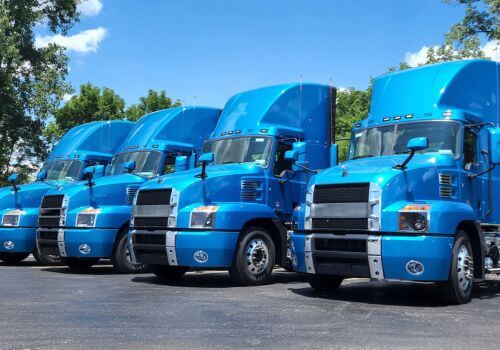
This is where Logos Logistics helps. As an asset-based trucking and 3PL provider, Logos supports both short-haul and long-haul freight across the U.S., while also offering freight brokerage solutions that connect shippers with reliable carrier capacity when additional flexibility is needed. Instead of leaving businesses exposed to one carrier or one pricing model, Logos helps build transportation programs that are more flexible, cost-aware, and resilient.
Warehouse Disruption Is Also a Transportation Problem
The recent warehouse fire in Boyle Heights, Los Angeles, is a reminder that warehousing risk can quickly become a transportation crisis. When a large cold-storage facility is taken offline, the impact goes far beyond the building itself. Inventory can be damaged or delayed, routes can be disrupted, nearby businesses can be affected by smoke or access restrictions, and customers waiting on time-sensitive goods may experience major service failures.
Cold-storage facilities are especially complex because of insulation, refrigeration systems, dense racking, and specialized building materials. Once a major incident begins, recovery is rarely simple. It can require emergency response, environmental monitoring, product disposal, inventory reconciliation, transportation rerouting, and customer communication.
For shippers, the lesson is clear: warehousing and trucking cannot be treated as separate functions. If inventory is sitting in the wrong location, with no contingency plan and no transportation backup, a local incident can become a national supply chain problem.
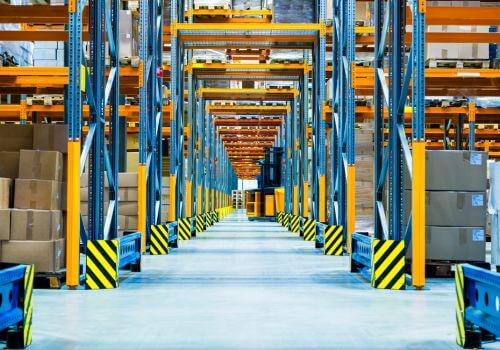
Logos Logistics helps reduce that risk through integrated warehousing, cross-docking, inventory management, order fulfillment, and transportation services. With strategic U.S. locations in Michigan, Ohio, Delaware, and California, Logos can help businesses position inventory closer to key markets, reduce unnecessary storage time, and move freight efficiently through its warehouse and trucking network.
For companies dealing with automotive parts, tires, batteries, electronics, consumer goods, e-commerce, food and beverage, industrial products, or other high-volume freight, this kind of integrated setup matters. It gives businesses more control over where inventory sits, how quickly it can be moved, and how easily freight can be rerouted if disruption hits.
Global Chokepoints Can Hit Domestic Trucking Costs
The Strait of Hormuz may seem far away from a U.S. warehouse dock, but its impact can reach American businesses quickly. When energy markets are disrupted, diesel prices, fuel surcharges, ocean freight costs, insurance premiums, and transportation budgets can all move higher.
Even companies that do not import directly from the Middle East can feel the effects. Diesel is a major cost in trucking. When fuel becomes more expensive or less predictable, carriers must account for that risk. Those costs can then flow into truckload, LTL, drayage, intermodal, and final-mile transportation.
This is why freight planning needs to include more than pickup and delivery dates. Businesses need visibility into transportation costs, route efficiency, carrier performance, inventory positioning, and contingency options.
Logos Logistics’ Transportation Management System helps companies plan shipments, configure loads, schedule routes, track freight, monitor vehicle and load status, and access web-based reporting. Its Warehouse Management System supports inventory visibility, order entry, EDI connections, reporting, invoicing, reconciliation, barcode scanning, and real-time management information.
That technology gives businesses the ability to make decisions based on facts, not guesswork.
How Logos Logistics Helps Businesses Stay Ahead
In a market where costs can rise quickly and disruption can come from multiple directions, Logos Logistics helps businesses strengthen their supply chain through:
Asset-based trucking for reliable regional and national transportation.
Freight brokerage for flexible carrier capacity and competitive routing options.
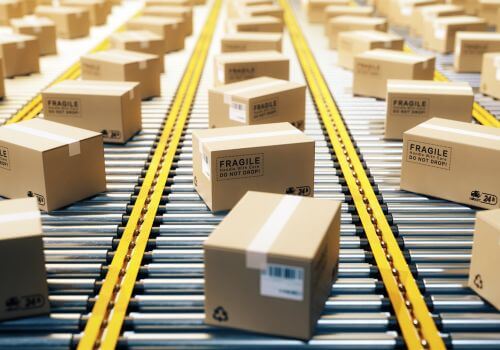
Cross-docking to reduce storage time, speed up transfers, and lower handling costs.
3PL warehousing for inventory management, order fulfillment, distribution, and value-added services.
Technology-driven visibility through WMS, TMS, EDI, web-based reporting, GPS tracking, and real-time shipment data.
Strategic U.S. locations that support more efficient distribution across key markets.
This combination allows businesses to move away from reactive logistics and toward a more controlled, cost-effective, and resilient supply chain.
The Bottom Line
Today’s logistics environment rewards companies that plan ahead. Higher carrier costs, warehouse disruptions, fuel volatility, and global shipping uncertainty are not temporary inconveniences. They are part of the new operating reality for U.S. businesses.
The companies that perform best will be the ones that build flexible freight networks, diversify capacity, improve warehouse visibility, and work with a 3PL partner that can manage both transportation and storage under one integrated strategy.
Logos Logistics helps businesses do exactly that.
From asset-based trucking and freight brokerage to warehousing, cross-docking, fulfillment, and real-time logistics technology, Logos gives companies the tools and support they need to control costs, reduce risk, and keep freight moving when the market gets unpredictable.