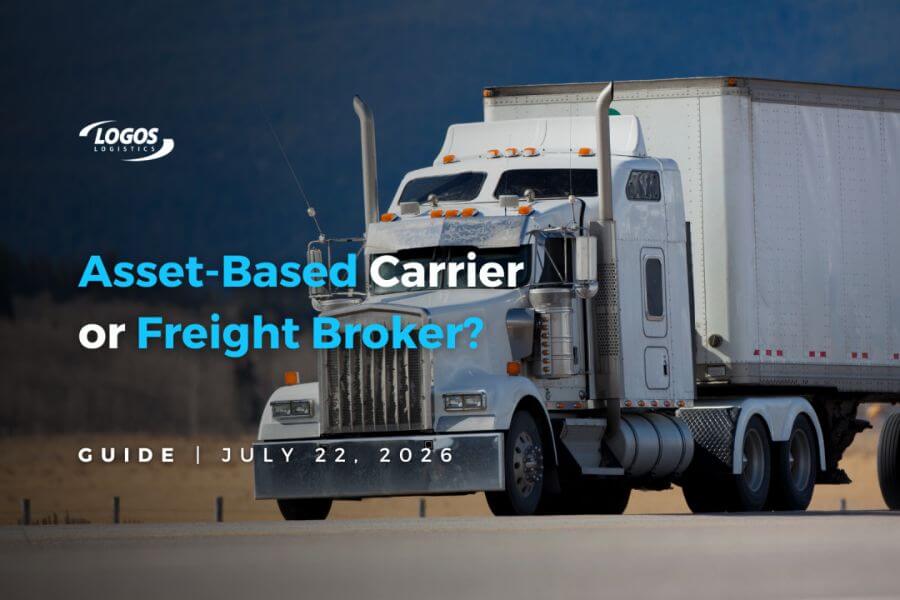
Choosing the right transportation partner can directly affect delivery performance, operating costs and customer satisfaction. For many shippers, the decision comes down to two options: working with an asset-based carrier or using a freight broker.
Both models can play an important role in a successful supply chain, but they operate differently. An asset-based carrier transports freight using trucks and equipment it operates, while a freight broker connects shippers with independent motor carriers that have available capacity. The Federal Motor Carrier Safety Administration describes a broker as an intermediary that arranges transportation but does not physically transport the property.
So, which option is right for your business? The answer depends on your shipment frequency, routes, capacity requirements and need for operational control.
What Is an Asset-Based Carrier?
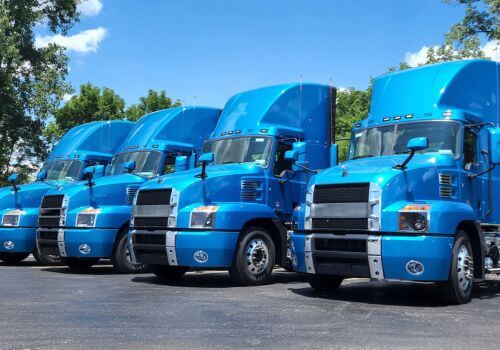
An asset-based carrier owns or directly operates transportation equipment, such as tractors and trailers, under its own motor-carrier authority. Because the carrier is responsible for physically moving the freight, the shipper works more directly with the company managing the vehicles, drivers and daily transportation operations.
Asset-based carriers may provide services including:
- Full truckload transportation
- Short-haul and long-haul shipping
- Dedicated transportation
- Shuttle services
- Intermodal drayage
- Just-in-time delivery
- Just-in-sequence delivery
- Expedited transportation
Logos Logistics is an asset-based carrier providing transportation services that include short- and long-haul trucking, dedicated private fleets, intermodal drayage, just-in-time delivery and sequence delivery.
What Is a Freight Broker?
A freight broker does not normally use its own equipment to transport a shipment. Instead, the broker identifies an available motor carrier within its network and arranges for that carrier to move the freight.
Brokers act as intermediaries between shippers and carriers. They may help negotiate rates, source capacity, coordinate appointments, track loads and manage communication throughout the shipment.
Because brokers can work with numerous carriers, they can offer access to a wider range of equipment, routes and transportation services than one carrier may be able to provide independently.
Advantages of Working With an Asset-Based Carrier
Greater Operational Control
One of the biggest advantages of an asset-based carrier is control. The company transporting the freight is also managing the equipment and dispatching the vehicles.
This reduces the number of parties involved in the shipment. When a schedule changes, a delivery exception occurs or additional information is needed, the shipper can communicate directly with the transportation provider responsible for moving the load.
More Consistent Service
Asset-based carriers can be particularly valuable for regular, high-volume lanes. Using the same transportation provider can create more consistent procedures for pickups, delivery appointments, driver communication and freight handling.
Drivers may also become familiar with a customer’s facilities, loading requirements, security procedures and delivery expectations. This familiarity can reduce avoidable errors and improve operational efficiency.
Stronger Support for Time-Critical Freight
Manufacturers operating just-in-time or just-in-sequence supply chains require dependable transportation. A delayed shipment of components can disrupt production and, in severe cases, contribute to an assembly-line shutdown.
An asset-based carrier has direct oversight of the equipment assigned to the shipment, making the model well suited to scheduled routes, automotive components, plant shuttles and other time-sensitive freight.
Clearer Accountability
When an asset-based carrier handles the shipment, responsibility is more concentrated. The company accepting the load is also the company operating the transportation equipment.
A freight broker can still provide excellent service, but the movement involves at least one additional party: the broker’s contracted carrier. This can make communication and accountability more complicated when unexpected problems occur.
Dedicated Transportation Options
Businesses with predictable shipment volumes may benefit from dedicated transportation, where vehicles, drivers and other resources are assigned to a particular customer or route.
Dedicated transportation can provide greater scheduling consistency, customised operating procedures and more dependable capacity without requiring the shipper to purchase and manage a private fleet. It is particularly useful for automotive, manufacturing, retail and other operations with strict delivery windows.
Advantages of Working With a Freight Broker
Access to Broader Capacity
A single asset-based carrier cannot have equipment available in every market at all times. Freight brokers address this limitation by sourcing capacity from a network of qualified motor carriers.
This can be useful when a shipper needs transportation outside its carrier’s normal operating region or experiences an unexpected increase in volume.
Flexibility During Seasonal Peaks
Shipment demand can change significantly throughout the year. Product launches, seasonal sales, manufacturing surges and unexpected orders can create transportation requirements that exceed a company’s normal capacity.
A broker can approach multiple carriers to find additional trucks without requiring the shipper to establish a new relationship with each provider.
Coverage for Irregular Routes
Asset-based carriers are often most efficient within established routes and service areas. A freight broker may be more suitable for infrequent lanes, one-time shipments or destinations outside a carrier’s core network.
The broker can search for carriers already operating in the relevant market, potentially reducing empty miles and improving the likelihood of securing capacity.
Access to Specialised Equipment
Some shipments require flatbeds, refrigerated trailers, liftgates, team drivers or other specialised services. A freight broker can source different equipment types from across its carrier network rather than being restricted to one fleet.
Logos Logistics combines its asset-based transportation capabilities with freight brokerage services and a network of more than 500 asset-based providers, allowing it to support shipments that extend beyond its own fleet capacity.
Potential Limitations of Each Model
Neither option is automatically right for every shipment.
An asset-based carrier may have limited availability during periods of high demand or may not operate in every required market. Its fleet may also lack the specialised equipment needed for an unusual shipment.
A freight broker may provide broader coverage, but service quality can depend on the carrier selected for each load. Shippers should therefore ask how carriers are evaluated, how shipment visibility is managed and who takes responsibility for resolving service failures.
Cost should also be evaluated carefully. A broker is not necessarily more expensive, and an asset-based carrier is not necessarily less expensive. Rates depend on factors including distance, equipment, demand, fuel, shipment frequency, dwell time and network balance.
The lowest quoted rate may not represent the lowest total cost if unreliable service leads to detention, expedited replacement freight, production disruption or missed customer appointments.
When Should You Choose an Asset-Based Carrier?
An asset-based carrier may be the better choice when your business has:
- Regular or predictable shipping lanes
- Frequent shipments within the carrier’s network
- Strict pickup and delivery appointments
- Just-in-time or sequence-delivery requirements
- A need for dedicated trucks or drivers
- High expectations for service consistency
- Time-sensitive manufacturing operations
- A preference for direct communication and accountability
This model is particularly effective for manufacturers and automotive suppliers that depend on repeatable transportation performance.
When Should You Use a Freight Broker?
A freight broker may be preferable when your business has:
- Irregular shipment volumes
- Seasonal or unexpected capacity requirements
- Freight moving across numerous regions
- One-time or infrequent lanes
- Specialised equipment requirements
- Overflow freight that a primary carrier cannot cover
- A need to compare multiple carrier options quickly
Brokers can also help smaller transportation teams manage a large number of individual carriers through a single point of contact.
Is a Hybrid Transportation Model Better?
For many businesses, the most effective solution is not choosing one model exclusively. It is combining both.
A shipper might use an asset-based carrier for regular, high-priority lanes while relying on brokerage capacity for seasonal peaks, overflow shipments and locations outside the carrier’s normal network.
This hybrid approach provides the consistency and control of an owned fleet while maintaining access to additional capacity when transportation requirements change.
The key advantage is having both services managed by one logistics partner. Instead of coordinating separately with a trucking company, broker and warehouse provider, businesses can centralise more of their supply-chain operations.
Questions to Ask a Transportation Provider
Before selecting an asset-based carrier, freight broker or hybrid logistics provider, ask:
- Which lanes do you serve with your own equipment?
- How large is your fleet and what equipment is available?
- How do you respond when your own capacity is unavailable?
- How are external carriers evaluated and monitored?
- What shipment-tracking technology do you provide?
- Can you support dedicated, just-in-time or sequenced deliveries?
- How are delivery exceptions communicated?
- Can you also provide warehousing and inventory services?
- What experience do you have within our industry?
- Who is accountable when a shipment does not go according to plan?
The answers will help determine whether the provider can deliver consistently rather than simply offering an attractive initial rate.
Find the Right Transportation Solution With Logos Logistics
The choice between an asset-based carrier and a freight broker depends on the needs of each shipment. Asset-based transportation delivers greater direct control, consistency and accountability, while freight brokerage provides broader capacity, geographic reach and flexibility.
Logos Logistics brings both models together. As an asset-based carrier and full-service third-party logistics provider, Logos supports customers with trucking, freight brokerage, dedicated transportation, intermodal drayage, warehousing and contract logistics.
Whether your business needs dependable capacity for recurring routes or additional coverage for changing shipment volumes, Logos Logistics can develop a transportation solution built around your supply chain.
Contact Logos Logistics to discuss your trucking and transportation requirements: https://www.logos3pl.com/