In fast-moving e-commerce logistics, speed and accuracy aren’t optional; they’re survival. Whether you’re shipping products to Los Angeles or to Paris, warehouse efficiency directly impacts customer satisfaction and profit margins. That’s where batch picking comes in.
Batch picking is one of the most effective warehouse fulfillment strategies for high-volume e-commerce operations. If you’re handling dozens or hundreds of small, similar orders daily, this method can dramatically improve productivity, reduce labor costs, and streamline global shipping.
Let’s break down everything you need to know about batch picking and how to use it effectively.
What is Batch Picking?
Batch picking is a warehouse fulfillment method where multiple orders are grouped into a single picking run. Instead of picking items for one order at a time, workers collect products for several orders in one trip around the warehouse.
Orders are typically grouped by:
- Shared SKUs
- Nearby storage locations
- Shipping urgency
- Delivery destination
For example, if five customers order the same skincare serum, a picker retrieves all five units in one tour instead of making five separate trips. After collecting the items, they’re sorted by order at a staging or packing station.
This approach differs from:
- Single-order picking: one order per trip
- Zone picking: warehouse divided into sections handled by assigned workers
Batch picking is especially effective for e-commerce businesses shipping small, similar items like beauty products, accessories, or limited-edition merchandise.
How Batch Picking Works
The process usually begins with a Warehouse Management System (WMS).
The WMS analyzes incoming orders and groups them based on criteria such as item location, SKU overlap, and shipping deadlines. It then generates:
- A consolidated pick list
- Total quantities per SKU
- An optimized walking route
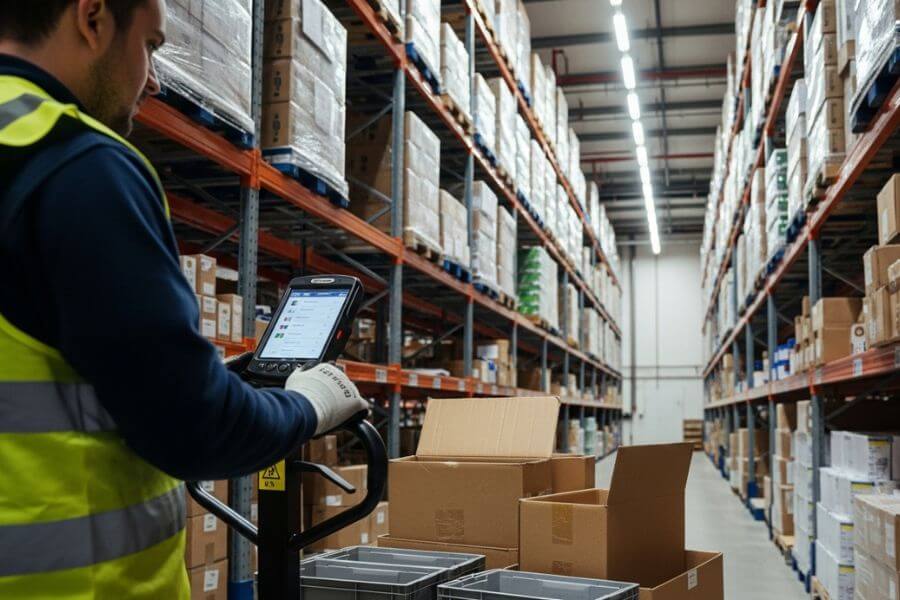
Pickers use carts or labeled totes to collect items for multiple orders simultaneously. Each tote corresponds to a specific order. Once the picking run is complete, items move to a central staging or packing station where they’re sorted, verified, and packed.
Because warehouse workers can walk up to 10 miles per day, reducing redundant trips significantly improves efficiency. Batch picking often cuts travel time by 50–80%.
Key Benefits of Batch Picking
1. Reduced Travel Time
Walking is one of the biggest productivity drains in a warehouse. By consolidating orders into one route, batch picking eliminates repeated visits to the same storage locations.
For e-commerce sellers experiencing spikes or flash sales, this translates to faster fulfillment and shorter shipping times.
2. Higher Productivity
Batch picking can increase order output by two to three times per hour compared to single-order picking. Workers spend more time picking and less time moving.
For growing e-commerce brands shipping globally from Busan or Seoul, that efficiency compounds quickly.
3. Lower Labor Costs
Fewer picking runs mean fewer labor hours. Many operations report 20–30% labor cost reductions after implementing batching strategies.
For exporters managing tight margins, especially with fluctuating global trade conditions, cost control can be critical.
4. Improved Accuracy
When paired with a WMS and structured sorting processes, batch picking can reduce picking errors and returns. Accurate fulfillment is particularly important for bundled skincare sets, influencer merchandise drops, and limited-edition releases.
5. Scalability During Demand Surges
Holiday sales, K-drama merchandise launches, and viral product moments can cause sudden order spikes. Batch picking helps warehouses handle volume surges without proportionally increasing labor.
As global trade policies shift, including new developments under Donald Trump, logistics efficiency between Asia and the U.S. becomes even more important. Operational improvements like batch picking help offset rising shipping and compliance costs.
Best Practices for Implementing Batch Picking
If you’re considering adopting batch picking, follow these best practices to maximize results:
Start with Smart Batch Sizes
Begin with small batches of 5–10 orders. Oversized batches can cause confusion and sorting bottlenecks. Gradually scale as your team becomes comfortable.
Use a Warehouse Management System (WMS)
Automation is key. A WMS handles grouping logic, route optimization, and real-time tracking. Manual batching works at a very small scale, but automation unlocks full efficiency.
Label Everything Clearly
Use clearly labeled totes or carts for each order. Visual clarity reduces sorting errors and speeds up the packing process.
Monitor Performance Metrics
Track:
- Pick rate (orders per hour)
- Error rate
- Labor hours per order
- Travel distance
Dashboards and analytics tools help identify bottlenecks and optimize continuously.
Combine with Zone Picking in Larger Warehouses
In bigger facilities, batch picking works well with zone picking in a “pick-and-pass” model. Each zone handles its assigned SKUs before passing orders to the next section.
Test During Off-Peak Periods
Implement and refine batching strategies during slower weeks before scaling during peak demand periods.
When Should You Use Batch Picking?
Batch picking is ideal if your e-commerce business:
- Processes 50+ daily orders
- Sells low-SKU, high-volume items
- Ships small, standardized products
- Experiences frequent product overlap across orders
It’s particularly effective for:
- Beauty brands
- Merchandise sellers
- Subscription box businesses
- Variety show or influencer merchandise drops
However, batch picking may not be suitable for:
- Large or bulky items
- Highly customized products
- Made-to-order goods
- Complex assembly orders
In those cases, single-order or zone picking may work better.
Conclusion
Batch picking is one of the most powerful fulfillment strategies for modern e-commerce warehouses. By grouping similar orders into a single picking run, businesses reduce walking time, cut labor costs, improve accuracy, and scale efficiently during demand surges.
For Asia-based sellers shipping globally, especially to the U.S., optimizing warehouse workflows isn’t optional. It’s a competitive advantage.
If your e-commerce operation is growing and handling repetitive, high-volume orders, batch picking could be the operational upgrade that transforms your fulfillment speed and profitability.