As sustainability shifts from a “nice-to-have” to a business necessity, companies across the globe are rethinking how goods move through supply chains. Traditional linear logistics models: make, ship, use, dispose are no longer viable in a world facing resource scarcity, rising costs, and environmental regulations. This is where circular logistics comes in.
Circular logistics focuses on keeping products, materials, and resources in use for as long as possible through reuse, repair, refurbishment, recycling, and responsible reverse flows. It plays a critical role in enabling the circular economy, helping businesses reduce waste, lower costs, and meet sustainability goals without sacrificing operational efficiency.
In this ultimate guide, we’ll explore what circular logistics is, how it works, its benefits, real-world use cases, challenges, and how businesses, especially e-commerce and global fulfillment providers, can successfully implement circular logistics strategies.
What is Circular Logistics?
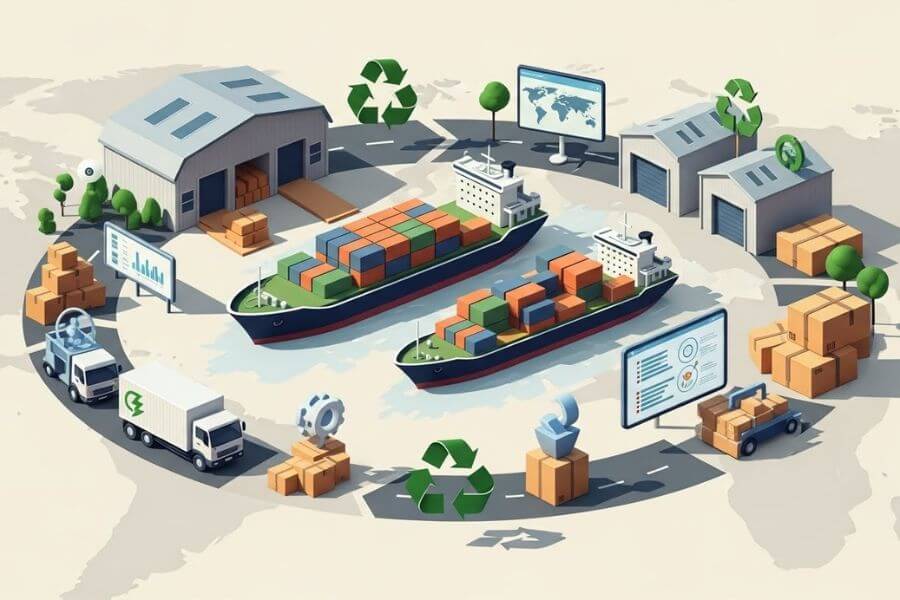
Circular logistics refers to logistics processes designed to support circular economy principles by extending product lifecycles and minimizing waste. Unlike traditional logistics, which focuses mainly on the forward movement of goods from manufacturer to customer, circular logistics emphasizes bi-directional flows, including returns, repairs, recycling, and redistribution.
At its core, circular logistics aims to:
- Reduce material extraction
- Maximize asset utilization
- Recover value from returned or end-of-life products
- Minimize landfill waste
Circular logistics connects closely with reverse logistics, but it goes further by integrating sustainability into every logistics decision, from packaging and transportation to warehouse operations and last-mile delivery.
Circular Logistics vs. Traditional Logistics
Understanding the difference between circular and traditional logistics highlights why circular models are gaining traction.
Traditional (Linear) Logistics
- One-way product flow
- Focus on speed and cost only
- Waste generated at end of use
- Limited responsibility after delivery
Circular Logistics
- Two-way or multi-loop product flows
- Focus on sustainability, cost, and value recovery
- Emphasis on reuse, refurbishment, and recycling
- Ongoing responsibility throughout product lifecycle
In circular logistics, the supply chain doesn’t end at the customer; it loops back.
Why Circular Logistics Matters More Than Ever
Several global trends are accelerating the adoption of circular logistics:
Rising Environmental Regulations
Governments worldwide are enforcing stricter rules on waste reduction, packaging materials, and carbon emissions. Circular logistics helps companies stay compliant and future-proof their operations.
Increasing Logistics Costs
Fuel price volatility, labor shortages, and higher freight rates make wasteful logistics models unsustainable. Recovering value from returns and reused assets helps offset rising costs.
E-commerce Growth and Returns
E-commerce return rates can reach 20-30%, making reverse logistics unavoidable. Circular logistics turns returns from a cost center into a value opportunity.
Consumer Demand for Sustainability
Modern consumers increasingly favor brands that demonstrate environmental responsibility, transparency, and ethical operations.
Key Components of Circular Logistics
Circular logistics is not a single process; it’s a system made up of interconnected components.
Reverse Logistics
Reverse logistics manages the flow of goods from customers back to warehouses, manufacturers, or recycling centers. This includes:
- Product returns
- Warranty claims
- Repairs and refurbishments
- End-of-life collection
An efficient reverse logistics network is the backbone of circular logistics.
Sustainable Packaging
Packaging plays a major role in circularity. Circular logistics prioritizes:
- Reusable packaging (totes, pallets, containers)
- Recyclable or compostable materials
- Right-sized packaging to reduce waste
- Packaging take-back programs
Reducing single-use packaging directly lowers costs and emissions.
Product Lifecycle Management
Circular logistics supports products beyond the point of sale by enabling:
- Repair and maintenance programs
- Refurbished or resale channels
- Spare parts logistics
- Product upgrades
This approach maximizes the economic value of each product.
Inventory Redistribution
Unsold, returned, or excess inventory doesn’t have to go to waste. Circular logistics enables:
- Secondary markets
- Donation programs
- Outlet or clearance channels
- Cross-border redistribution
Smart redistribution reduces markdown losses and landfill waste.
Recycling and Material Recovery
When products reach the end of their usable life, circular logistics ensures materials are recovered and reintroduced into the supply chain through:
- Material sorting
- Recycling partnerships
- Closed-loop manufacturing
This reduces dependency on virgin raw materials.
Benefits of Circular Logistics
Implementing circular logistics offers both environmental and financial advantages.
Cost Reduction
- Lower disposal and landfill fees
- Reduced raw material procurement
- Better asset utilization
- Improved return value recovery
Over time, circular systems often outperform linear models financially.
Environmental Impact Reduction
- Lower carbon emissions
- Less waste sent to landfills
- Reduced resource extraction
- Smaller overall environmental footprint
These benefits support corporate sustainability and ESG goals.
Improved Brand Reputation
Companies that invest in circular logistics demonstrate responsibility and transparency, strengthening trust with customers, investors, and partners.
Regulatory Compliance
Circular logistics helps businesses meet current and future environmental regulations with minimal disruption.
Supply Chain Resilience
By reusing materials and products, companies become less vulnerable to supply shortages and global disruptions.
Circular Logistics in E-commerce and Fulfillment
Circular logistics is especially relevant for e-commerce businesses and global fulfillment providers.
Managing Returns Efficiently
Returns are inevitable in e-commerce. Circular logistics transforms return handling by:
- Automating return workflows
- Grading returned items
- Reselling, refurbishing, or recycling products
This reduces return costs and recaptures value.
Multi-Channel Redistribution
Returned or excess stock can be redirected to:
- Secondary marketplaces
- International markets
- Discount or outlet channels
Fulfillment providers play a key role in managing these flows efficiently.
Sustainable Last-Mile Delivery
Circular logistics also extends to delivery by:
- Optimizing routes to reduce emissions
- Using electric or low-emission vehicles
- Consolidating deliveries and returns
Real-World Examples of Circular Logistics
Apparel Industry
Fashion brands use circular logistics to:
- Collect worn clothing
- Refurbish or recycle textiles
- Resell second-hand items
This reduces textile waste and boosts customer loyalty.
Electronics and Technology
Electronics companies rely heavily on circular logistics for:
- Device trade-in programs
- Component recovery
- Certified refurbished product sales
Recovered materials like metals and chips retain high value.
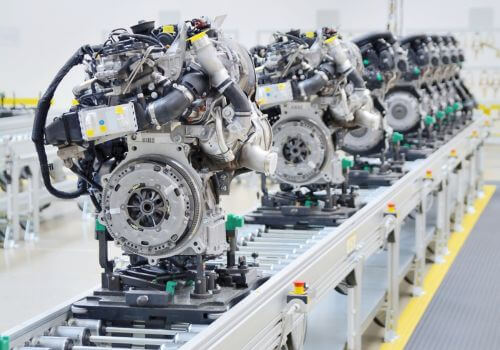
Automotive and Industrial Equipment
Heavy equipment manufacturers use circular logistics to:
- Remanufacture parts
- Extend equipment lifecycles
- Reduce material costs
Challenges of Implementing Circular Logistics
Despite its benefits, circular logistics presents challenges.
- Operational Complexity: Managing two-way flows, inspections, and refurbishments requires advanced systems and processes.
- Higher Initial Investment: Technology, infrastructure, and training costs may increase upfront, even though long-term savings are substantial.
- Data and Visibility Gaps: Tracking product condition, location, and lifecycle status demands integrated digital platforms.
- Partner Coordination: Circular logistics requires close collaboration with carriers, recyclers, manufacturers, and fulfillment partners.
How to Implement Circular Logistics Successfully
- Start with Data and Assessment: Analyze return rates, waste streams, packaging usage, and transportation emissions to identify improvement opportunities.
- Optimize Reverse Logistics First: Improving returns processing often delivers the fastest ROI and builds a foundation for circularity.
- Partner with the Right Logistics Providers: Work with fulfillment and logistics partners experienced in reverse logistics, refurbishment, and global redistribution.
- Invest in Technology: Warehouse management systems (WMS), return management software, and data analytics tools provide visibility and control.
- Design Products for Circularity: Collaborate with manufacturers to design products and packaging that are easier to repair, reuse, or recycle.
- Educate Customers: Clear return instructions, repair options, and sustainability messaging increase participation in circular programs.
Conclusion
Circular logistics is no longer optional; it’s a strategic imperative for modern supply chains. By shifting from linear, wasteful models to circular, value-driven systems, businesses can reduce costs, minimize environmental impact, and build more resilient operations.
For e-commerce brands, manufacturers, and global fulfillment providers, circular logistics unlocks new revenue streams while supporting sustainability goals. As technology, regulations, and consumer expectations evolve, circular logistics will play a central role in shaping the future of logistics and supply chain management.
Companies that embrace circular logistics today won’t just move goods more efficiently; they’ll move the world toward a more sustainable future.