The logistics and transportation industry in the United States moves billions of tons of freight every year. Behind the scenes, commercial drivers play one of the most important roles in keeping supply chains running smoothly. Whether someone wants to operate a semi-truck, a hazmat vehicle, a school bus, or a specialized commercial truck, obtaining a Commercial Driver’s License (CDL) is a critical first step.
If your company works in third-party logistics (3PL), freight forwarding, fulfillment, or warehousing, understanding the CDL requirements can be incredibly valuable. This guide breaks down everything you need to know about CDLs, from the basics to endorsements, training requirements, compliance rules, and career outlook.
In this comprehensive article, we’ll cover:
- What a CDL is and why it matters
- Types of CDLs (Class A, B, and C)
- CDL requirements in the United States
- CDL endorsements and restrictions
- Steps to earn a CDL
- Costs, timelines, and training programs
- FMCSA regulations and safety mandates
- CDL renewals and medical certifications
- Job opportunities and salary expectations
- Frequently asked questions
Let’s dive into everything you need to know about the CDL in 2025 and beyond.
What is a Commercial Driver’s License (CDL)?
A Commercial Driver’s License (CDL) is a specialized license required to operate large, heavy, or hazardous commercial vehicles in the U.S. It ensures that drivers are qualified to handle vehicles used for freight transportation, passenger transport, and specialized hauling.
The CDL was established under the Commercial Motor Vehicle Safety Act of 1986 to standardize safety standards and ensure drivers are properly trained.
A CDL is required for operating:
- Tractor-trailers (18-wheelers)
- Straight trucks
- Tanker trucks
- Hazardous material (hazmat) vehicles
- Passenger buses and school buses
- Heavy-duty equipment trucks
Every state issues CDLs but must follow federal guidelines set by the Federal Motor Carrier Safety Administration (FMCSA).
Why are CDLs Important in the Logistics Industry?
For logistics companies, including 3PLs, transportation providers, and freight operators, CDLs are essential for maintaining safe, compliant operations.
Here’s why CDLs matter:
- Safety: Commercial vehicles can weigh up to 80,000 pounds. A CDL ensures drivers understand proper handling and safety rules.
- Compliance: FMCSA enforces strict regulations on companies employing CDL holders. Violations can result in penalties or out-of-service orders.
- Efficiency: Trained CDL drivers improve delivery reliability, reduce accidents, and help freight flow smoothly.
- Trust: Customers trust logistics partners who prioritize qualified drivers and safety compliance.
Types of CDLs: Class A, Class B, and Class C
CDLs are divided into three main classes based on vehicle type and weight.
Class A CDL
A Class A CDL allows drivers to operate combination vehicles with a Gross Combination Weight Rating (GCWR) of 26,001 pounds or more, provided the towed vehicle exceeds 10,000 pounds.
Common Vehicles:
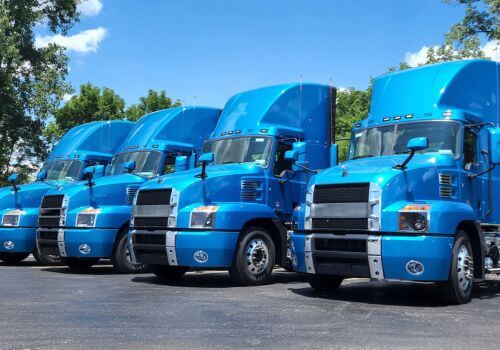
- Tractor-trailers (semi-trucks)
- Flatbeds
- Tanker trucks
- Livestock carriers
- Double/triple trailers
Industry use: Long-haul trucking, regional freight, FTL/LTL carriers, agricultural transport, heavy equipment hauling.
Class B CDL
A Class B CDL covers single vehicles with a GVWR of 26,001 pounds or more, or combination vehicles where the towed unit is 10,000 pounds or less.
Common Vehicles:
- Delivery trucks
- Box trucks
- Dump trucks
- Cement mixers
- Straight trucks
- Some passenger buses
Industry use: Local delivery, construction logistics, municipal services, waste management.
Class C CDL
A Class C CDL is required for:
- Vehicles designed to transport 16 or more passengers, OR
- Vehicles carrying hazardous materials requiring placards, OR
- Smaller commercial vehicles not covered by A or B classes.
Common Vehicles:
- Passenger vans
- Small buses
- Hazmat cargo vans
- Specialty vehicles
Industry use: Passenger services, hazmat courier services, and smaller freight operations.
CDL Requirements in the United States
Although each state may add specific requirements, U.S. federal law sets the core standards.
Basic Eligibility
To apply for a CDL, you must:
- Be 18 years or older for intrastate driving
- Be 21 years or older for interstate driving
- Hold a valid non-commercial driver’s license
- Provide proof of identity and residency
Driving Record Requirements
Applicants must have:
- A clean driving history
- No recent DUI convictions
- No major traffic violations during the review period
Medical Requirements
You must obtain a DOT Medical Examiner’s Certificate, proving fitness to operate commercial vehicles. Requirements include:
- Good physical health
- Adequate vision and hearing
- No disqualifying medical conditions
- Periodic medical recertification every 24 months
CDL Endorsements
Endorsements allow drivers to operate specialized commercial vehicles. These appear as letters on a CDL.
Common CDL endorsements:
| Endorsement | Meaning | Vehicles Allowed |
|---|---|---|
|
H – Hazmat |
Hazardous materials transport |
Fuel tankers, chemical trucks |
|
N – Tank Vehicles |
Liquid cargo tanks |
Milk tankers, oil tankers |
|
P – Passenger |
Passenger transport |
Buses, shuttle vans |
|
S – School Bus |
School buses |
K-12 bus operations |
|
T – Double/Triple Trailers |
Multi-trailer combinations |
Double/triple rigs |
|
X – Tank & Hazmat Combo |
Tanker carrying hazardous materials |
Fuel tankers, chemical tankers |
Each endorsement requires additional written tests, background checks (for hazmat), or skills evaluations.
CDL Restrictions
Restrictions limit what the driver may operate.
Examples include:
- E: No manual transmission
- L: No air brakes
- K: Intrastate-only
- V: Medical variance required
Restrictions typically result from taking the CDL skills test in limited-feature vehicles.
How to Get a CDL: Step-by-Step Process
Here’s the complete process for earning a CDL in the U.S.
Step 1: Meet the Minimum Requirements
Before anything else, ensure you meet the age, residency, driving record, and medical requirements.
Step 2: Obtain a DOT Medical Certificate
A DOT-licensed medical examiner must complete the physical exam, including:
- Vision test
- Hearing test
- Blood pressure check
- Comprehensive health check
Your certificate must be submitted to your state’s DMV.
Step 3: Get a Commercial Learner’s Permit (CLP)
To obtain a CLP, you must pass several written knowledge exams:
- General knowledge test
- Air brakes test (if applicable)
- Combination vehicles test (for Class A)
You must also complete mandatory FMCSA-approved ELDT (Entry-Level Driver Training).
Step 4: Begin CDL Training
Training may be done through:
- Truck driving schools
- Community colleges
- Employer-sponsored training programs
- Private training facilities
Training includes:
- Pre-trip inspections
- Maneuvering and turning
- Backing exercises
- Road driving
- Safety procedures
Step 5: Take the CDL Skills Test
The CDL skills test has three parts:
- Pre-trip inspection
- Basic control test
- Road test
You must take the test using the vehicle type matching your CDL class.
Step 6: Receive Your CDL
Once you pass:
- Pay the CDL issuance fee
- Receive your official Commercial Driver’s License
- Add endorsements if needed
How Much Does CDL Training Cost?
Costs vary by state and program type.
Typical CDL training costs:
- $3,000~$7,000 for standard Class A training
- $1,500~$4,500 for Class B training
- Employer-sponsored programs: $0 upfront, with a work commitment
Additional fees may include:
- DOT physical: $75–$120
- Application and testing fees: $50–$200
- Endorsement fees: $5–$15 each
- Hazmat background check: $86.50
CDL Timelines: How Long Does It Take?
Most drivers complete CDL training and certification in:
- 4~7 weeks for Class A CDL
- 1~3 weeks for Class B CDL
- Several days for additional endorsements
However, training can extend longer depending on availability, job commitments, or full-time vs. part-time scheduling.
FMCSA Compliance: What CDL Drivers Must Follow
CDL drivers must follow strict federal regulations.
Key rules include:
Hours of Service (HOS)
To prevent fatigue:
- Max 11 hours driving after 10 hours off
- Max 14-hour on-duty window
- Required 30-minute breaks
- Weekly limits enforced
Drug and Alcohol Testing
CDL drivers must undergo:
- Pre-employment testing
- Random testing
- Post-accident testing
- Reasonable suspicion testing
ELD Mandate
Electronic Logging Devices automatically track driving hours.
Hazmat Requirements
Drivers transporting hazardous materials must:
- Pass a federal background check
- Receive TSA clearance
- Maintain HAZMAT-specific training
CDL Renewal and Medical Recertification
Most states require CDL holders to renew their license every 4~8 years, depending on state laws.
Drivers must:
- Renew DOT medical certificates every 24 months
- Provide updated records to the DMV
- Maintain compliance or risk CDL suspension
CDL Job Opportunities
Demand for CDL drivers remains strong across the U.S.
Common career paths include:
- Long-haul trucking (OTR)
- Regional trucking
- Local delivery
- LTL/FTL freight
- Tanker operations
- Refrigerated freight
- Waste management
- Construction logistics
- Bus and passenger transport
The trucking industry continues experiencing a driver shortage, meaning CDL holders have excellent job security and competitive pay.
Salary Expectations for CDL Drivers
CDL driver pay depends on experience, region, and hauling type.
Typical salary ranges:
- Class A OTR drivers: $55,000~$90,000/year
- Specialized freight (tanker, hazmat, flatbed): $75,000~$120,000/year
- Local delivery drivers: $45,000~$70,000/year
- Bus/school bus drivers: $30,000~$60,000/year
Owner-operators may earn more but take on higher expenses.
Conclusion
A Commercial Driver’s License (CDL) is the foundation of the U.S. transportation and logistics industry. From long-haul trucking to local deliveries, hazardous material transport, and passenger services, CDL holders keep the supply chain moving every day.
For 3PL companies, understanding CDL requirements is essential for compliance, hiring, and operational excellence. As the industry continues to evolve with new technologies, regulations, and workforce demands, CDL-certified drivers remain one of the most critical roles in freight transportation.
Whether you’re an aspiring driver, a logistics business partner, or an employer evaluating CDL-qualified talent, this comprehensive guide provides the knowledge needed to navigate the field with confidence.
Frequently Asked Questions About Commercial Driver’s Licenses (CDL)
1. How long does a CDL stay valid before it needs to be renewed?
Most CDLs remain valid for 4 to 8 years, depending on your state, but you must keep your DOT medical certificate updated every 24 months to stay compliant.
2. Can I get a CDL if I have a past driving violation?
Yes, many people with past violations can still qualify, but major offenses like recent DUIs, reckless driving, or suspended licenses may delay or prevent CDL approval.
3. Is a high school diploma required to earn a CDL?
No, a high school diploma or GED is not required, but you must pass all written exams, skills tests, and the DOT medical exam to qualify.
4. Can military veterans transfer their driving experience toward a CDL?
Yes, many states participate in the Military Skills Test Waiver Program, allowing qualified veterans to skip the road skills test based on their military driving experience.
5. Do CDL drivers need to take continuing education or refresher courses?
While not federally required, many employers and insurance providers recommend or mandate refresher training, especially for hazmat, tanker, and specialized operations.