Whether you’re a first-time online shopper ordering from abroad, a small business owner importing goods, or a seasoned logistics professional, customs duty is something you will inevitably encounter. Yet it remains one of the most misunderstood aspects of international trade.
This guide breaks down everything from the basic definition to advanced strategies for managing costs so you can cross borders with confidence.
- $1.7T: Global customs duties collected annually
- 200+: Countries with customs frameworks
- 5,000+: HS tariff codes in use worldwide
What is Customs Duty?
Customs duty (also called an import duty or tariff) is a tax levied by a government on goods that cross its borders. It applies primarily to imported goods, though some countries also levy export duties on specific commodities.
Governments use customs duties to achieve several objectives:
Key Purposes
- Revenue generation: customs duties are a significant source of government income, especially in developing economies.
- Protecting domestic industries: higher tariffs on foreign goods make domestic alternatives more competitive.
- Trade policy leverage: tariffs are a diplomatic tool used in bilateral and multilateral trade negotiations.
- Regulating import volumes: duties can slow the influx of goods that might overwhelm domestic markets.
- Safety & standards enforcement: customs acts as a checkpoint for prohibited or regulated goods.
Customs duty is distinct from Value Added Tax (VAT) or Goods and Services Tax (GST), though both may be payable at the border. Import VAT is calculated on the total value of goods including the customs duty itself.
How is Customs Duty Calculated?
The calculation of customs duty depends on three core elements: the customs value of the goods, the applicable duty rate, and the classification of the goods.
The Basic Formula
Customs Duty = Customs Value × Duty Rate (%)
Example: A shipment of electronics worth $2,000 with a 5% duty rate incurs $100 in customs duty.
What is “Customs Value”?
Most countries use the CIF (Cost, Insurance, Freight) value as the basis for customs valuation. This includes:
| Component | Description |
|---|---|
| Cost | The purchase price of the goods |
| Insurance | The cost of insuring the shipment |
| Freight | The cost of transporting goods to the destination port |
The United States, however, uses the FOB (Free on Board) value, the price at the port of origin, not including freight and insurance to the destination. Always confirm the valuation method used by your import country.
Ad Valorem vs. Specific Duties
Duty rates come in two main forms. Ad valorem duties are expressed as a percentage of value (most common), while specific duties are fixed amounts per unit, weight, or volume (e.g., $2 per kilogram). Some products face compound duties, a combination of both.
Types of Customs Duty
| Type | How It Works | Common Examples |
|---|---|---|
| Basic / MFN Duty | Standard rate applied to all WTO member imports under “Most Favoured Nation” status | Most consumer goods |
| Preferential Duty | Reduced rates under free trade agreements (FTAs) | EU-UK Trade Agreement, USMCA |
| Anti-Dumping Duty | Imposed when foreign goods are sold below market price, harming domestic producers | Steel, solar panels |
| Countervailing Duty | Offsets foreign government subsidies given to exporters | Agricultural goods, textiles |
| Safeguard Duty | Temporary emergency tariff to protect a domestic industry from a sudden surge in imports | Varies by country |
| Retaliatory Duty | Imposed in response to another country’s trade restrictions | US-China trade war goods |
Customs duty is not just a tax; it is one of the most powerful instruments governments use to shape trade flows and protect national economic interests.
Who Pays Customs Duty?
In most cases, the importer of record is legally responsible for paying customs duty. This can be:
- Individual consumers purchasing goods from international online retailers
- Businesses importing raw materials, components, or finished products
- Freight forwarders or customs brokers acting on behalf of the importer
The Incoterms (International Commercial Terms) agreed upon in a sales contract determine who bears responsibility for freight, insurance, and customs clearance costs. Under DDP (Delivered Duty Paid), the seller handles all duties. Under DAP (Delivered at Place), the buyer is responsible.
Important for E-Commerce Shoppers: When you buy from overseas retailers, customs duty is typically your responsibility. Some platforms (like Amazon) collect duties at checkout, but many do not. Always check before purchasing, you may owe money before your parcel is released.
Exemptions & Duty-Free Thresholds
Not every import attracts duty. Most countries set a de minimis threshold, a value below which goods are imported duty-free.
| Country / Region | De Minimis Threshold | Notes |
|---|---|---|
| United States | $800 USD | One of the highest globally; duty and tax free |
| European Union | €150 | VAT applies on all imports; duty-free below €150 |
| United Kingdom | £135 | VAT still due; duty-free below threshold |
| Australia | AUD $1,000 | GST applies on all imports since 2018 |
| Canada | CAD $20 | One of the lowest thresholds among developed nations |
| Japan | ¥10,000 | Approximately $65–70 USD |
Beyond de minimis thresholds, specific categories of goods may qualify for exemptions or zero-rate duties, including:
- Goods covered by free trade agreements (if rules of origin are met)
- Personal gifts below a certain value
- Items imported for temporary use under an ATA Carnet
- Humanitarian aid and disaster relief goods
- Diplomatic goods for embassies and consulates
- Returned goods previously exported from the same country
Understanding HS Codes
Every product imported into a country must be assigned a Harmonized System (HS) code, a standardized numerical classification system developed by the World Customs Organization (WCO) and used by 200+ countries.
HS codes are 6 digits at the international level (countries can extend them to 8 or 10 digits for domestic purposes). The code determines the applicable duty rate, so accurate classification is critical.
How HS Codes Work:
A code like 8517.12 breaks down as: 85 = Chapter (Electrical machinery), 17 = Heading (Telephone sets), 12 = Subheading (Smartphones). Misclassifying a product can result in underpaying (triggering penalties) or overpaying duty.
You can look up HS codes using your country’s customs authority website or the WCO’s online database. For complex or high-value goods, hiring a licensed customs broker is strongly recommended.
The Customs Clearance Process
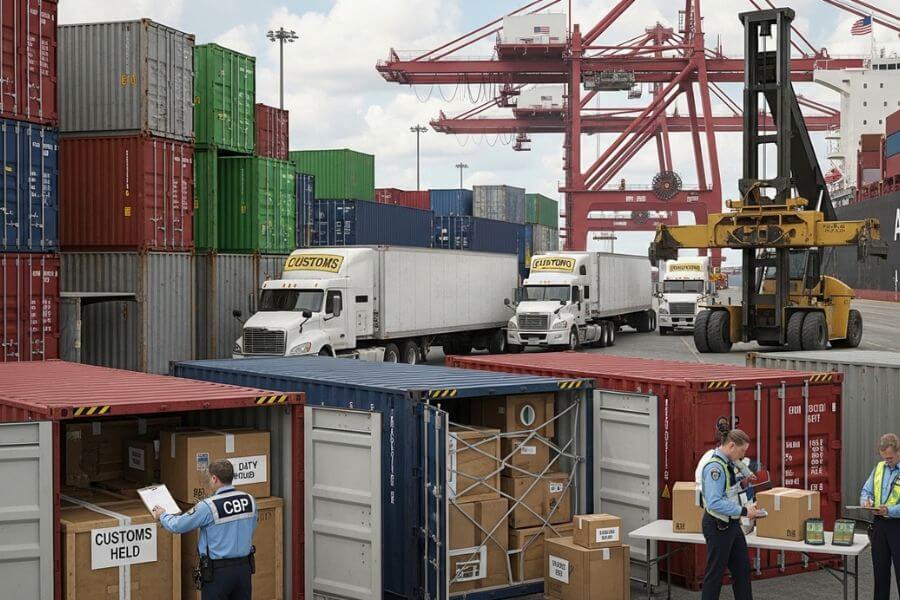
Customs clearance is the official process of getting goods through customs so they can enter (or leave) a country. Here is a step-by-step overview of how it typically works for imports:
| Step | What Happens |
|---|---|
| 1. Arrival | Goods arrive at the port of entry (airport, seaport, land border) |
| 2. Entry Declaration | Importer or broker submits a customs declaration (e.g., CBP Form 7501 in the US) |
| 3. Document Review | Customs officers review commercial invoice, packing list, bill of lading, and other documents |
| 4. Duty Assessment | Customs calculates duties owed based on HS code, value, and origin |
| 5. Physical Inspection | A percentage of shipments are selected for physical inspection (X-ray or manual) |
| 6. Duty Payment | Importer pays assessed duties and taxes |
| 7. Release | Goods are released and can proceed to their final destination |
For most routine commercial shipments, automated customs systems (such as the US ACE or EU CDS) process entries electronically, allowing clearance within hours. Delays occur when documentation is incomplete, goods are flagged for inspection, or duties are disputed.
Tips to Reduce Your Customs Bill
- Leverage Free Trade Agreements (FTAs): If your goods qualify under an FTA between the exporting and importing countries, duty rates can be reduced to zero. Obtain a certificate of origin to claim the preference.
- Use bonded warehouses or customs zones: Goods stored in a bonded warehouse or Free Trade Zone are not subject to duty until they enter domestic commerce. This improves cash flow and allows re-export without duty payment.
- Apply for duty drawback: If you import goods that are later exported (or used in manufacturing exports), you may be entitled to a refund of duties paid.
- Review your HS classifications: Incorrect classification is surprisingly common. A proper classification review by a customs expert often reveals overpaid duties that can be recovered through post-entry amendments.
- Consider first-sale valuation: In some jurisdictions (including the US), you may be able to base customs value on the manufacturer’s price rather than the middleman’s price, lowering dutiable value.
- Use temporary import programs: For goods brought in for repair, exhibition, or testing and then re-exported, ATA Carnets and similar programs allow duty suspension.
Common Mistakes to Avoid
- Undervaluing goods: Declaring a lower value to reduce duty is customs fraud. Penalties include fines, seizure of goods, and bans on future imports.
- Incorrect country of origin: Rules of origin determine which duty rate applies. Misrepresenting origin (e.g., to claim FTA benefits) is illegal.
- Missing documentation: Incomplete commercial invoices, missing licenses, or absent certificates of origin cause costly delays.
- Ignoring prohibited & restricted goods lists: Some goods (certain foods, chemicals, firearms, IP-infringing goods) face strict controls or outright bans. Check the destination country’s prohibited goods list before shipping.
- Confusing duty with VAT/GST: Both may apply at the border. Budgeting only for one will lead to unexpected charges.
- Neglecting classification on e-commerce platforms: Marketplace sellers often auto-assign HS codes. Always verify; you are legally responsible for the declared classification, not the platform.
Frequently Asked Questions
Do I always have to pay customs duty on international purchases?
Not always. If the value of your purchase falls below your country’s de minimis threshold, no duty is owed. Goods covered by free trade agreements may also qualify for zero-rate or reduced duty, provided the correct origin documentation is supplied.
How do I find the duty rate for a specific product?
First, identify the correct HS code for your product. Then check your country’s official tariff schedule, the USITC Harmonized Tariff Schedule for the US, or the EU’s TARIC database, to find the applicable rate for your product’s origin country.
What happens if I refuse to pay customs duty?
Customs authorities will not release your goods. If duties remain unpaid for an extended period, goods may be auctioned or destroyed. Additional storage charges from the port or freight carrier will also accumulate.
Can I get a refund if I overpay customs duty?
Yes. Most customs authorities allow post-entry amendments or formal refund claims if you can demonstrate that duties were overpaid due to incorrect classification, valuation, or misrepresentation of origin.
Is customs duty the same as import tax?
The terms are often used interchangeably, but strictly speaking, “import tax” can encompass customs duty and border VAT/GST. These are separate charges; both may apply to the same shipment simultaneously.
Final Thoughts
Customs duty may seem like a bureaucratic hurdle, but understanding it fully puts you in control. Whether you’re a consumer tracking a parcel or a business scaling international operations, knowing how duties are calculated, when exemptions apply, and how to navigate the clearance process is indispensable knowledge.
The rules vary by country and change frequently, particularly during periods of geopolitical trade tension. Staying informed, maintaining accurate records, and working with qualified customs professionals when needed will help you stay compliant and competitive in global markets.