Whether you’re a first-time importer, a seasoned exporter, or a finance professional looking to sharpen your trade knowledge, the Letter of Credit (LC) is one of the most important instruments in international trade finance. It bridges the trust gap between buyers and sellers located in different countries, protecting both parties with a bank’s guarantee.
In this comprehensive guide, we cover absolutely everything from the basic definition of an LC to how it works step-by-step, the different types, the parties involved, key documents required, advantages, disadvantages, costs, and more.
What is a Letter of Credit (LC)?
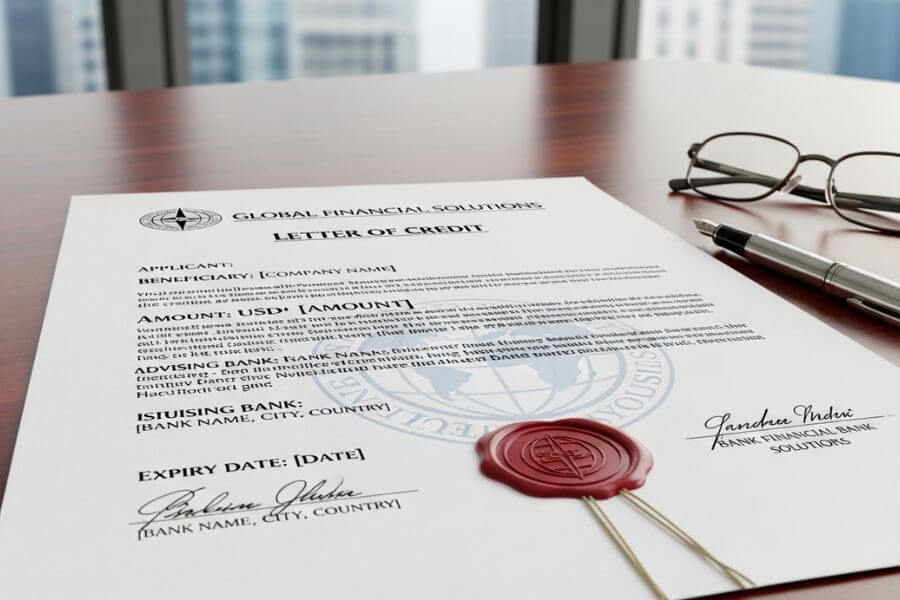
A Letter of Credit (LC) is a financial instrument issued by a bank on behalf of a buyer (importer), guaranteeing that the seller (exporter) will receive payment, provided the seller meets all the specified terms and conditions outlined in the LC document.
Also known as a Documentary Credit, an LC acts as a conditional bank guarantee. The bank commits to paying the seller once the seller presents specific documents proving that the goods or services have been shipped or delivered as agreed. If the buyer fails to pay, the bank steps in to fulfill the obligation.
Letters of Credit are widely used in international trade where buyers and sellers may not know each other personally, operate under different legal systems, or face currency exchange risks. The LC effectively replaces personal trust with institutional trust.
How Does a Letter of Credit Work?
The LC process involves multiple parties and a sequence of carefully defined steps. Here’s a clear breakdown of how the entire process flows from agreement to payment:
- Sales Contract: The buyer (importer) and seller (exporter) agree on the terms of a trade deal, including price, quantity, shipping timeline, and payment method, specifying that payment will be made via an LC.
- LC Application: The buyer applies to their bank (the Issuing Bank) to open an LC in favor of the seller, specifying all terms and conditions: documents required, expiry date, shipment date, port details, etc.
- LC Issuance: The issuing bank reviews the application, approves it (usually against collateral or a credit line), and issues the LC. The LC is then transmitted typically via SWIFT to the seller’s bank (the Advising Bank).
- LC Advice: The advising bank in the seller’s country authenticates the LC and notifies the seller that an LC has been opened in their favor. The seller reviews the LC terms carefully.
- Shipment of Goods: The seller ships the goods as per the LC conditions, ensuring everything (quantity, quality, packaging, labeling) complies with what was agreed.
- Document Preparation & Presentation: The seller prepares all required documents (invoice, bill of lading, packing list, certificate of origin, etc.) and presents them to the advising or confirming bank within the LC validity period.
- Document Examination: The advising/confirming bank examines the documents typically within 5 banking days under UCP 600, to verify they are “complying documents” that match LC terms exactly.
- Payment to Seller: If the documents comply, the bank pays the seller (either at sight or on the maturity date for deferred payment LCs). The documents are then forwarded to the issuing bank.
- Reimbursement to Issuing Bank: The issuing bank reimburses the confirming/advising bank and debits the buyer’s account. The issuing bank releases the documents to the buyer.
- Goods Released to Buyer: The buyer uses the original transport documents (e.g., Bill of Lading) to take delivery of the goods from the shipping company or port authorities.
Key Parties in a Letter of Credit
| Party | Also Known As | Role |
|---|---|---|
| Applicant | Buyer / Importer | Requests the LC from their bank; the party that owes payment for the goods. |
| Beneficiary | Seller / Exporter | The party in whose favor the LC is issued; entitled to receive payment upon complying document submission. |
| Issuing Bank | Opening Bank | The buyer’s bank; issues the LC and takes primary payment responsibility. |
| Advising Bank | Notifying Bank | The seller’s bank; authenticates and advises the LC to the beneficiary. Does not guarantee payment. |
| Confirming Bank | — | Adds its own payment guarantee to the LC in addition to the issuing bank’s commitment. Used when the seller doesn’t fully trust the issuing bank. |
| Negotiating Bank | — | The bank that examines documents and pays/advances funds to the seller before receiving reimbursement from the issuing bank. |
| Reimbursing Bank | — | A third bank authorized by the issuing bank to reimburse the negotiating or confirming bank on its behalf. |
Types of Letters of Credit
There are many types of LCs designed for different trade scenarios and risk profiles. Here are the most important ones:
- Irrevocable LC: Cannot be amended or cancelled without the consent of all parties. The most common type and standard under UCP 600.
- Confirmed LC: A second bank (usually in the seller’s country) adds its guarantee, giving the seller extra protection if the issuing bank defaults.
- Sight LC: Payment is made immediately upon the presentation of complying documents, with no deferred payment period.
- Usance (Deferred) LC: Payment is made at a future date (e.g., 30, 60, 90 days after shipment), effectively granting the buyer credit terms.
- Revolving LC: Automatically reinstates to its original amount after each drawing. Ideal for regular, recurring transactions between the same parties.
- Standby LC: Acts as a backup payment guarantee triggered only if the buyer defaults. Commonly used in North America and similar to a bank guarantee.
- Transferable LC: Allows the original beneficiary to transfer part or all of the LC to a secondary supplier, useful for middlemen or traders.
- Back-to-Back LC: A new LC issued using an existing LC as collateral. Used by intermediary traders who need to pay their own suppliers.
- Green Clause LC: Provides pre-shipment finance for storage and warehousing costs in addition to pre-shipment production advances.
- Red Clause LC: Allows the seller to receive advance payment (partial or full) before shipping goods, funded by the issuing bank.
Key Documents Required in an LC Transaction
The heart of every LC transaction is the document examination. Banks pay against documents, not against the actual goods. Here are the most commonly required documents:
- Commercial Invoice: Issued by the seller; describes the goods, quantity, price, and buyer/seller details. Must match LC terms precisely.
- Bill of Lading (B/L): Issued by the shipping company; serves as a receipt of goods and title document. Required for sea freight shipments.
- Packing List: Details the contents of each package: weight, dimensions, and number of units. Must align with the invoice.
- Certificate of Origin: Certifies the country where the goods were manufactured. Often required for customs and duty purposes.
- Inspection Certificate: Issued by a third-party inspection body confirming the quality and quantity of goods before shipment.
- Insurance Certificate: Proves the goods are insured against loss or damage during transit. Usually required for CIF incoterms.
Important: Even a minor discrepancy between the documents and the LC terms can result in a discrepant presentation, allowing the bank to refuse payment. Common discrepancies include incorrect descriptions, late presentation, and missing endorsements. Sellers must read the LC carefully before shipping.
Advantages of Using a Letter of Credit
For the Seller (Exporter)
- Payment is guaranteed by a bank, not just the buyer’s promise
- Reduces risk of non-payment or buyer default
- Enables entry into new markets with unfamiliar buyers
- Can be used as collateral to obtain pre-shipment financing
- Confirmed LCs protect against sovereign/country risk
For the Buyer (Importer)
- Payment is only released when documents prove that the goods were shipped
- Reduces the risk of paying for goods that were never shipped
- Deferred payment (Usance) LC provides working capital flexibility
- Establishes credibility with suppliers, especially in new relationships
- Enables negotiation of better prices by removing the seller’s risk
Disadvantages and Risks of Letters of Credit
Pros
- Strong payment security for exporters
- Reduces counterparty risk internationally
- Widely accepted globally
- Governed by clear international rules (UCP 600)
- Enables financing and credit
Cons
- Complex and time-consuming to set up
- High bank fees and charges
- Strict document compliance required
- Fraud risk if fake documents are presented
- Doesn’t guarantee the quality of goods
- Ties up the buyer’s credit line
A critical risk to understand: LCs deal in documents, not goods. A bank will pay if the documents look correct, even if the goods are defective or misrepresented. This is why buyers often require inspection certificates as part of the LC terms.
Letter of Credit vs. Bank Guarantee: Key Differences
| Feature | Letter of Credit | Bank Guarantee |
|---|---|---|
| Primary purpose | Payment assurance (trade finance) | Performance / contingency assurance |
| When triggered | On presentation of complying documents | Only on default or non-performance |
| Common usage | Import/export transactions | Construction, tenders, services |
| Primary beneficiary | Seller / Exporter | Buyer / Employer / Government |
| Nature | Proactive (bank pays first) | Reactive (bank pays if default occurs) |
Costs and Fees Associated with Letters of Credit
LCs are not free; they come with various bank charges that can add up. Key fees include:
- Opening/Issuance Fee: Charged by the issuing bank for setting up the LC. Typically 0.1%–0.5% of the LC value per quarter, with a minimum fee.
- Advising Fee: Charged by the advising bank for authenticating and transmitting the LC to the beneficiary. Usually a flat fee.
- Confirmation Fee: Charged by the confirming bank for adding its guarantee. Ranges from 0.1% to 1%+ depending on the issuing country’s risk.
- Negotiation Fee: Charged when the negotiating bank purchases the documents/drafts. Usually 0.1%–0.2% of the document value.
- Amendment Fee: Charged each time the LC terms are amended. Can be $50–$200+ per amendment, depending on the bank.
- Discrepancy Fee: Charged when submitted documents contain discrepancies that require a waiver. Typically $50–$150 per discrepancy.
Total LC costs typically range from 0.5% to 2%+ of the transaction value, making them more suitable for medium-to-large trade deals where the security justifies the expense.
UCP 600: The Global Rulebook for Letters of Credit
The Uniform Customs and Practice for Documentary Credits (UCP 600) is a set of rules published by the International Chamber of Commerce (ICC) that governs the issuance and use of letters of credit worldwide. It was last revised in 2007 and is incorporated into most LCs by reference.
Key highlights of UCP 600 include:
- Banks have 5 banking days to examine documents and determine compliance
- All LCs are irrevocable unless expressly stated otherwise
- Banks deal in documents only, not in goods or services
- Strict compliance with documents is required for the payment obligation to be triggered
- Clear definitions of terms like “on board,” “original document,” and “clean transport document.”
For electronic transactions, the eUCP 2.0 supplement extends UCP 600 rules to cover electronic presentation of documents, reflecting the growing digitization of trade finance.
Frequently Asked Questions (FAQ)
What is the difference between a sight LC and a usance LC?
A sight LC requires payment immediately upon presentation of complying documents, giving the seller instant access to funds. A usance (or deferred payment) LC specifies payment at a future date, for example, 90 days after the bill of lading date, effectively giving the buyer a credit period to sell the goods before paying.
Can an LC be cancelled or amended?
Under UCP 600, all LCs are irrevocable by default, meaning they cannot be cancelled or amended without the agreement of all parties: the applicant, the issuing bank, and the beneficiary. Revocable LCs (which the issuing bank could cancel without notice) are no longer recognized under UCP 600.
What happens if there is a discrepancy in the documents?
If the bank finds a discrepancy, it will notify the presenter within 5 banking days. The presenter has several options: correct the discrepancy (if time allows), request the issuing bank to seek a waiver from the applicant, or accept rejection and seek payment through other means.
Is a Letter of Credit the same as a bank guarantee?
No. An LC is a proactive payment instrument primarily used in trade; the bank pays when documents are presented. A bank guarantee is a reactive instrument; the bank only pays if the applicant defaults on their obligation. They serve different purposes and are used in different contexts.
What does “SWIFT MT700” mean in the context of LCs?
SWIFT MT700 is the standardized electronic messaging format used by banks worldwide to transmit the issuance of a documentary credit (Letter of Credit) over the SWIFT network. It ensures that all relevant LC details: terms, amount, expiry, and required documents are communicated securely and accurately between banks in different countries.
Who pays the LC charges: buyer or seller?
Typically, the buyer pays the issuing and opening fees, while the seller pays the advising and negotiation fees in their own country. However, this is negotiable and should be clearly specified in the LC itself (“charges to applicant” or “all charges to beneficiary”).
What is the typical validity period of an LC?
Most LCs are valid for 30 to 180 days, though this varies based on the transaction. The LC must specify an expiry date and place. The seller must present documents before the expiry date to claim payment.
Conclusion
A Letter of Credit remains one of the most powerful tools in international trade finance. It builds a bridge of trust between unknown parties across borders, backed by the credibility and resources of banking institutions. While it comes with costs and complexity, the security it offers, especially for high-value transactions in new or uncertain markets, is often well worth it.
Whether you’re an exporter seeking assurance of payment, an importer trying to establish credibility with a new supplier, or a finance professional managing trade risks, mastering the Letter of Credit is an invaluable skill in today’s global economy.