Modern e-commerce has changed how customers shop. People no longer buy products from just one place. They might discover a product on social media, compare prices on a website, place an order through a mobile app, and choose in-store pickup. Because of this behavior, businesses must connect all their sales channels into one smooth system. This is where omnichannel fulfillment becomes important.
Omnichannel fulfillment is the process of managing inventory, orders, and shipping across multiple sales channels while creating one consistent customer experience. Instead of treating each channel separately, businesses integrate everything so orders can be fulfilled from the most efficient location. This approach improves delivery speed, reduces costs, and increases customer satisfaction. In this guide, you will learn how omnichannel fulfillment works, why it matters, how it differs from multichannel fulfillment, and how businesses can successfully implement it.
What Is Omnichannel Fulfillment
Omnichannel fulfillment is a logistics strategy where businesses manage inventory and fulfill orders across multiple connected sales channels. These channels can include e-commerce websites, online marketplaces, physical stores, mobile apps, and social commerce platforms. The key difference is integration. All channels share real-time inventory data and order management systems.
This allows businesses to fulfill orders from the most efficient location. For example, an online order could be shipped from a warehouse, fulfilled from a retail store, or picked up locally. Customers get flexibility while businesses gain better control over operations. The goal is to remove friction between shopping channels and create a seamless buying journey from discovery to delivery.
How Omnichannel Fulfillment Works
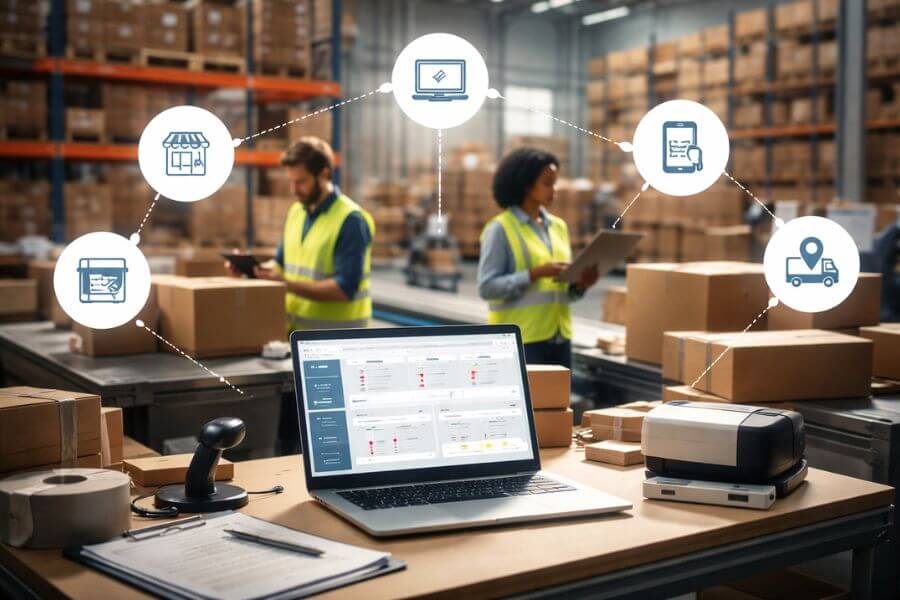
Omnichannel fulfillment depends on technology and operational coordination. At the center of this system is an order management system that connects inventory, orders, and shipping operations. When a customer places an order, the system automatically decides where to fulfill it based on factors like location, inventory availability, and delivery speed.
For example, if a customer orders a product online, the system may choose the nearest warehouse to reduce shipping time. If the warehouse is out of stock, the system might route the order to a nearby retail store instead. This flexibility helps businesses prevent stockouts and delays while maintaining a positive customer experience.
Omnichannel vs Multichannel Fulfillment
Many people confuse omnichannel fulfillment with multichannel fulfillment. While both involve selling across multiple platforms, the main difference is integration. Multichannel fulfillment means selling on multiple platforms but managing them separately. Each channel may have its own inventory and processes.
Omnichannel fulfillment connects all channels into one system. Inventory is shared, data is synchronized, and operations are coordinated. This allows customers to move between channels without disruption. For example, a customer could buy online and return in-store without complications. This unified approach makes omnichannel fulfillment more complex but also more powerful.
Why Omnichannel Fulfillment Matters
Customer expectations continue to rise. Fast shipping, flexible delivery options, and accurate inventory information are no longer optional. Businesses that cannot meet these expectations risk losing customers to competitors. Omnichannel fulfillment helps companies stay competitive by offering the convenience customers expect.
It also improves operational efficiency. Instead of holding excess inventory in one location while another runs out, businesses can balance stock across locations. This reduces storage costs and improves cash flow. Companies that adopt omnichannel fulfillment often see better customer retention and higher lifetime value.
Key Benefits of Omnichannel Fulfillment
Better Customer Experience
Customers want convenience and flexibility. Omnichannel fulfillment allows businesses to offer services such as buy online pick up in store, ship from store, and easy returns. These options create a smoother shopping journey and build customer trust.
Faster Delivery Speeds
Because orders can be fulfilled from multiple locations, businesses can choose the closest fulfillment point. This reduces transit time and shipping costs while improving delivery speed.
Improved Inventory Visibility
Real-time inventory tracking helps businesses know exactly what stock they have and where it is located. This prevents overselling and reduces stockouts.
Higher Operational Efficiency
Integrated systems allow businesses to automate routing decisions and reduce manual processes. This leads to fewer errors and more efficient workflows.
Increased Sales Opportunities
When inventory is visible across channels, businesses can sell products from any location. This increases product availability and prevents missed sales.
Common Omnichannel Fulfillment Models
Ship From Warehouse
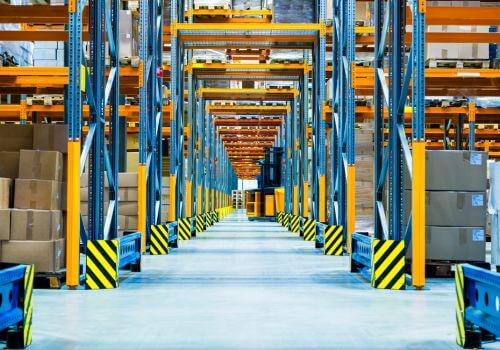
This is the traditional model where orders are fulfilled from centralized distribution centers. It works well for businesses with large warehouse operations and predictable order volumes.
Ship From Store
Retail stores can act as mini fulfillment centers. This helps businesses move slow inventory and reduce delivery times by shipping from locations closer to customers.
Buy Online Pick Up In Store
This option allows customers to place orders online and pick them up at a nearby store. It reduces shipping costs and increases foot traffic to physical locations.
Buy Online Return In Store
This model allows customers to return online purchases at physical stores. It improves convenience and simplifies returns management.
Micro Fulfillment Centers
Some businesses use small fulfillment centers located in urban areas. These centers are designed to support fast local delivery and same-day fulfillment.
Technology Needed for Omnichannel Fulfillment
Successful omnichannel fulfillment requires the right technology stack. Without proper systems, it becomes difficult to manage inventory and orders across channels.
Order Management System
An order management system connects all sales channels and manages order routing. It ensures orders are processed efficiently and fulfilled from the best location.
Warehouse Management System
A warehouse management system helps manage inventory, picking, packing, and shipping processes. It improves accuracy and operational efficiency.
Inventory Management Software
Inventory software provides real-time visibility across all locations. This prevents overselling and helps businesses maintain accurate stock levels.
Shipping Software
Shipping platforms help businesses compare carrier rates, print labels, and track shipments. Integration with fulfillment systems ensures smooth operations.
Data Analytics Tools
Analytics tools help businesses monitor performance metrics such as delivery times, fulfillment costs, and customer satisfaction. This data helps improve decision-making.
Challenges of Omnichannel Fulfillment
While omnichannel fulfillment offers many benefits, it also comes with challenges. Businesses must plan carefully to avoid operational issues.
Inventory Complexity
Managing inventory across multiple locations can be difficult without proper systems. Businesses must maintain accurate data to prevent fulfillment errors.
Technology Integration
Integrating multiple systems can be complex and time-consuming. Businesses must ensure all platforms communicate properly.
Operational Costs
Setting up omnichannel fulfillment may require investments in technology, training, and infrastructure. However, these costs often pay off through improved efficiency.
Returns Management
Handling returns across channels requires clear processes. Businesses must ensure returned products are properly inspected and restocked.
Best Practices for Omnichannel Fulfillment
Centralize Inventory Data
Keeping inventory data in one system helps prevent discrepancies. Centralized data improves accuracy and decision-making.
Automate Order Routing
Automation reduces manual errors and speeds up processing. Smart routing ensures orders are fulfilled from the best location.
Use Real Time Tracking
Providing tracking information improves transparency and customer trust. Customers want to know where their orders are at all times.
Optimize Warehouse Layouts
Efficient warehouse layouts improve picking speed and reduce labor costs. Businesses should review workflows regularly.
Partner With Fulfillment Providers
Many businesses work with third-party logistics providers to manage omnichannel fulfillment. This allows companies to scale operations without building infrastructure.
How 3PL Providers Support Omnichannel Fulfillment
Third-party logistics providers play an important role in omnichannel fulfillment. These providers offer warehousing, shipping, and technology solutions that help businesses manage multiple sales channels.
Working with a 3PL allows businesses to expand into new markets without opening new warehouses. Many providers offer distributed warehouse networks that support faster delivery. They also provide technology integrations that connect e-commerce platforms, marketplaces, and inventory systems. This reduces operational complexity and helps businesses focus on growth.
Industries That Benefit From Omnichannel Fulfillment
Omnichannel fulfillment is useful across many industries. Retail companies often use it to connect online and physical stores. Fashion brands use it to manage seasonal inventory across locations. Electronics companies use it to handle high-demand product launches.
Beauty brands use omnichannel fulfillment to manage online orders and retail distribution. Subscription businesses use it to maintain consistent delivery schedules. Any company that sells across multiple channels can benefit from adopting this strategy.
Future Trends in Omnichannel Fulfillment
The future of omnichannel fulfillment will be shaped by automation and artificial intelligence. Businesses are investing in robotics to speed up warehouse operations. Predictive analytics is helping companies forecast demand more accurately.
Same-day delivery is becoming more common as businesses expand local fulfillment networks. Sustainable logistics practices are also gaining attention. Companies are working to reduce packaging waste and optimize delivery routes to lower environmental impact. As technology continues to improve, omnichannel fulfillment will become even more efficient and accessible.
How to Start Implementing Omnichannel Fulfillment
Businesses interested in omnichannel fulfillment should begin by evaluating their current operations. Understanding existing processes helps identify gaps and opportunities.
The next step is investing in integrated technology systems. Businesses should choose platforms that connect e-commerce channels, inventory systems, and shipping operations. Training teams is also important. Employees must understand new workflows and tools.
Companies should start small by testing omnichannel strategies in selected locations. Once processes are refined, businesses can scale operations gradually. Continuous improvement is important. Monitoring performance metrics helps businesses optimize their fulfillment strategy over time.
Conclusion
Omnichannel fulfillment is no longer just an advanced logistics strategy. It is becoming a necessity for businesses that want to stay competitive in modern e-commerce. Customers expect flexibility, fast delivery, and consistent experiences across all shopping channels. Businesses that can meet these expectations gain a strong advantage.
By integrating inventory, orders, and fulfillment operations, companies can create more efficient systems and improve customer satisfaction. While implementation may require investment and planning, the long-term benefits often outweigh the challenges. Businesses that embrace omnichannel fulfillment position themselves for growth, better customer loyalty, and stronger operational performance in an increasingly connected retail environment.
Frequently Asked Questions
What is the difference between omnichannel fulfillment and traditional fulfillment?
Traditional fulfillment usually relies on a single warehouse or distribution center to process orders. Omnichannel fulfillment uses multiple connected locations such as warehouses and retail stores. The goal is to fulfill orders from the most efficient location while maintaining a consistent customer experience across all sales channels.
Is omnichannel fulfillment only for large businesses?
Omnichannel fulfillment is often associated with large retailers, but small and medium businesses can also benefit. With the help of modern software and logistics partners, smaller companies can implement omnichannel strategies without building complex infrastructure. Many fulfillment providers offer scalable solutions designed for growing e-commerce brands.
Does omnichannel fulfillment reduce shipping costs?
Omnichannel fulfillment can reduce shipping costs by allowing businesses to ship orders from locations closer to customers. This reduces delivery distances and transit times. However, cost savings depend on proper inventory planning and efficient order routing. Businesses must balance inventory placement with demand patterns.
What role does inventory visibility play in omnichannel fulfillment?
Inventory visibility is critical because it allows businesses to see stock levels across all locations in real time. Accurate data prevents overselling and helps ensure orders are fulfilled quickly. Without clear inventory visibility, omnichannel fulfillment becomes difficult to manage effectively.
How long does it take to implement an omnichannel fulfillment strategy?
The timeline depends on the size of the business, the complexity of operations, and the technology involved. Some companies can begin implementing basic strategies within a few months. More advanced implementations that involve multiple warehouses and integrations may take longer. Careful planning and phased rollouts help ensure success.