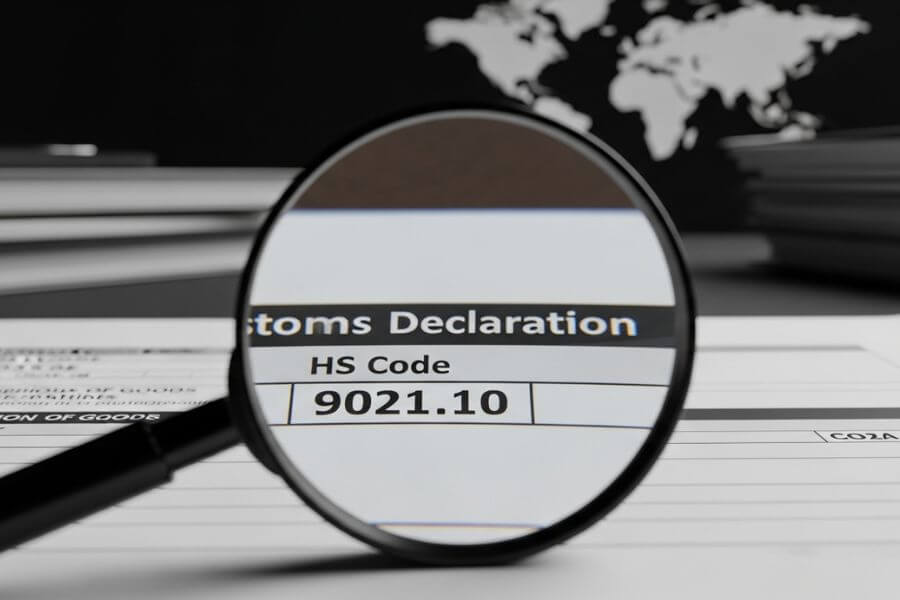
Whether you’re a seasoned importer or just entering global trade, tariff classification is one of the most critical and most misunderstood concepts in customs compliance. Get it right, and your goods move smoothly across borders at the correct duty rate. Get it wrong, and you risk fines, delays, penalties, and costly retroactive assessments. This complete guide explains everything you need to know.
What is Tariff Classification?
Tariff classification is the process of assigning a standardized numeric code to a product or good for the purpose of customs control, duty assessment, trade statistics, and regulatory compliance. Every physical product that crosses an international border must be classified according to an internationally recognized coding system.
This classification determines three critical outcomes: the rate of import duty payable on the goods, whether any trade restrictions or permits apply (such as anti-dumping measures or quotas), and how the goods are counted in international trade statistics. In essence, classification is the foundation upon which all of customs law is built.
The concept dates to the 19th century, when individual countries maintained their own incompatible tariff schedules. International trade was a labyrinthine puzzle of competing codes. It wasn’t until 1988, when the World Customs Organization (WCO) introduced the Harmonized Commodity Description and Coding System universally known as the Harmonized System (HS), that a truly global standard was established.
Key Definition: Tariff classification is the systematic assignment of a commodity code to goods, determining applicable duties, taxes, trade controls, and statistical reporting obligations at the point of import or export.
The Harmonized System: The Global Language of Trade
The Harmonized System (HS) is a multipurpose international nomenclature developed and maintained by the World Customs Organization. It is used by more than 200 countries and covers approximately 98% of the world’s merchandise trade. Think of it as the universal Dewey Decimal System for physical goods.
The HS is organized into 21 sections, 97 chapters, around 1,200 headings, and over 5,000 subheadings. The first six digits of any HS code are standardized; a six-digit code for laptop computers means exactly the same thing in South Korea, Brazil, Germany, and Nigeria.
Beyond six digits, countries add their own national subdivisions. The United States uses the Harmonized Tariff Schedule (HTS), which extends to 8–10 digits. The European Union uses the Combined Nomenclature (CN) with 8 digits. The UK uses its own UK Global Tariff after Brexit. While the first six digits remain internationally harmonized, the additional digits reflect each country’s specific tariff lines and statistical needs.
How the HS Is Structured
The HS is divided into sections grouped by broad product categories: live animals and animal products (Section I), vegetable products (Section II), chemicals (Sections VI–VII), machinery and electronics (Section XVI), vehicles (Section XVII), and so on. Within each section, chapters narrow the scope, headings narrow it further, and subheadings provide the most granular classification.
Anatomy of an HS Code
Understanding how an HS code is built helps demystify the classification process. Let’s use a concrete example: a stainless steel kitchen knife. Its HS code might be 8211.91.30.00.
- 82 Chapter (2 digits): Cutlery, spoons, forks, tools of base metal
- 11 Heading (4 digits): Knives with cutting blades
- 91 HS Subheading (6 digits): Table knives having fixed blades
- 30.00 National digits (8-10 digits): stainless steel blades (US HTS)
The first two digits (the chapter) give you the broadest category. Adding the next two gives you the heading. The fifth and sixth digits form the internationally standardized six-digit subheading. Only after those six digits do countries diverge with their own national extensions to establish specific duty rates.
The Six General Rules of Interpretation (GRIs)
The backbone of the HS classification system is the General Rules for the Interpretation (GRIs), six sequential rules that determine how goods are classified when the answer isn’t immediately obvious. These rules must be applied in order. You cannot skip to Rule 3 without first exhausting Rules 1 and 2.
- GRI 1 – Headings and Legal Notes: Classification is determined first by the terms of the headings, section notes, and chapter notes. If the heading and its notes clearly describe the product, the analysis stops here. This rule resolves the vast majority of classifications.
- GRI 2 – Incomplete or Unfinished Goods / Mixtures: References to an article include incomplete or unfinished versions of that article, provided they have the essential character of the complete article. Also applies to mixtures or combinations of materials.
- GRI 3 – Goods Classifiable Under Multiple Headings: When goods could fall under two or more headings: (a) the most specific heading takes priority; (b) if equally specific, classify by essential character; (c) if still unresolved, classify under the last applicable heading numerically.
- GRI 4 – Most Analogous Goods: Goods not classifiable by any of the preceding rules are classified under the heading for the goods to which they are most akin.
- GRI 5 – Containers and Packaging: Special-purpose containers (camera cases, musical instrument cases) are classified with the article if presented together. Packing materials and containers presented with goods are generally classified with those goods.
- GRI 6 – Subheading Classification: Rules 1–5 apply mutatis mutandis to determine the appropriate subheading within a heading. Only subheadings at the same level can be compared.
Expert Tip: Always start with GRI 1 before anything else. Customs authorities and courts consistently find that classifiers who skip directly to GRI 3 have made a legal error, even if they arrived at the right code. The sequential application of GRIs is itself a legal requirement.
Step-by-Step: How to Classify a Product
Classifying a product correctly is part science, part art. Here is a systematic approach used by professional customs brokers and trade compliance officers:
Step 1: Understand the Product Completely
Before opening any tariff schedule, you must fully understand the product. This means knowing its material composition, function, intended use, how it’s manufactured, and how it’s marketed. A product described only as “electronic component” provides far too little information to be classified correctly.
Step 2: Identify the Product’s Essential Character
For multi-material or multi-function products, determine what gives the item its essential character. Is it the material it’s made from? Its primary function? The factor that makes it most valuable? This guides you toward the correct section of the tariff schedule.
Step 3: Consult the Section and Chapter Notes
Before reading any headings, review the legal notes for the relevant section and chapter. These notes may explicitly include or exclude certain goods, define terms, or extend the scope of headings in ways that aren’t intuitive. Ignoring the notes is one of the most common and most costly classification errors.
Step 4: Identify Candidate Headings
Find two or three headings that could potentially describe your product. Use the alphabetical index as a starting point, but never rely on it alone; it’s a guide, not a legal instrument. Read each candidate heading in full.
Step 5: Apply the GRIs in Sequence
Work through GRIs 1 through 6 in order until you’ve determined the correct heading, then the correct subheading. Document your reasoning at each step, as this documentation can be invaluable in the event of a customs audit.
Step 6: Verify with Explanatory Notes
The WCO publishes Explanatory Notes, an unofficial but highly authoritative guide to the HS. Many national customs authorities treat them as persuasive guidance. Check whether your classification is consistent with the relevant Explanatory Notes.
Step 7: Check for Binding Rulings
Search for published customs rulings on similar goods. In the US, you can search CROSS (Customs Rulings Online Search System). In the EU, check the EBTI database of Binding Tariff Information. These rulings show you how customs authorities have classified analogous products in the past.
“The correct classification of goods is not optional; it is a legal obligation in every jurisdiction that applies the Harmonized System.” World Customs Organization
Common Tariff Classification Mistakes
Even experienced professionals make classification errors. Awareness of these common mistakes is the first step toward avoiding them.
Relying on Supplier Codes
Foreign suppliers often provide HS codes that are correct for their country but wrong for your import market. The importer of record is legally responsible for the classification, not the supplier.
Using Outdated Codes
The HS is updated every 5 years. Codes from the 2017 edition may have been deleted or renumbered in 2022. Always verify against the current edition for your jurisdiction.
Ignoring Section Notes
Legal notes can exclude goods from a chapter entirely or redefine terms. A note that says “this chapter does not cover X” is legally binding; missing it can invalidate your classification.
Misidentifying Essential Character
For composite goods, incorrectly determining what gives the item its essential character is a frequent source of error that can lead to a completely different chapter classification.
Applying GRIs Out of Sequence
Jumping directly to GRI 3 without properly applying GRIs 1 and 2 is a procedural error that customs authorities and courts consistently flag as non-compliant.
Confusing 6-Digit with 10-Digit Codes
Using only the six-digit international code when your jurisdiction requires a 10-digit HTS number will result in filing errors, delays, or rejection by customs systems.
Consequences of Misclassification
Misclassification, whether deliberate or accidental, carries serious legal and financial consequences. Customs authorities around the world have become increasingly sophisticated in detecting errors, using data analytics, AI-driven risk targeting, and post-clearance audits to identify discrepancies.
Financial Penalties
Most jurisdictions impose substantial penalties for misclassification. In the United States, penalties under 19 U.S.C. § 1592 can reach up to four times the unpaid duties for negligent violations, and higher still for fraud. The EU imposes administrative penalties plus interest on underpaid duties dating back to the date of importation.
Retroactive Duty Assessments
When customs authorities reclassify goods even years after importation, they can demand payment of all underpaid duties with interest. Many jurisdictions have a look-back period of three to five years. A systematic misclassification error across hundreds of shipments can result in a liability of hundreds of thousands of dollars.
Seizure and Delays
Goods may be detained pending reclassification. For perishable goods or time-sensitive supply chains, even a brief customs hold can cause significant commercial damage beyond the duty discrepancy itself.
Reputational and Operational Impact
Companies with a history of misclassification may be flagged for enhanced scrutiny on future shipments, lose trusted trader status (such as C-TPAT or AEO certification), and face more frequent audits, creating ongoing operational burdens.
Important Note: Voluntary self-disclosure programs exist in many jurisdictions (including the US and Canada) that allow companies to come forward about misclassifications in exchange for significantly reduced penalties. Proactive compliance beats reactive defense in nearly every case.
Best Practices for Classification Compliance
Building a robust tariff classification program requires consistent processes, documented decisions, and ongoing training. Here are the practices that leading trade compliance teams follow:
- Maintain a product classification library: Document the classification rationale for every SKU in your portfolio, including the GRI analysis, relevant notes consulted, and supporting evidence. Update it when products change.
- Seek Binding Tariff Information (BTI) for high-value or ambiguous goods: A BTI ruling from customs gives you certainty and legal protection for the period of validity (typically three years in the EU, unlimited in the US until revoked).
- Engage a licensed customs broker: For complex or high-volume imports, the cost of professional classification advice is almost always lower than the cost of a misclassification penalty.
- Train your procurement and product teams: Classification errors often originate when products are redesigned or new items are sourced without involving trade compliance expertise.
- Stay current with HS updates: Subscribe to WCO publications and your national customs authority’s bulletins to monitor code changes, new exclusion notes, and classification opinions.
- Audit your classifications periodically: Conduct internal reviews, especially after product line changes, acquisitions, or significant trade policy developments, to catch errors before customs does.
- Monitor trade remedy orders; Anti-dumping and countervailing duties can apply to very specific HS codes. A correct classification may nonetheless trigger additional duties if the product falls within a covered scope.
Tools and Resources for Tariff Classification
Official Government Databases
The USITC HTS database at hts.usitc.gov provides the complete, up-to-date US Harmonized Tariff Schedule with duty rates and notes. The EU’s TARIC database covers the full EU Combined Nomenclature with all applicable measures. The UK’s Trade Tariff at trade-tariff.service.gov.uk serves the same function post-Brexit.
WCO Resources
The World Customs Organization publishes the official HS Nomenclature and Explanatory Notes, which are updated with each HS edition. The WCO also publishes classification opinions that provide authoritative guidance on difficult cases.
Binding Ruling Databases
The US CBP’s CROSS database (rulings.cbp.gov) contains published binding rulings dating back decades. The EU’s EBTI database lists all issued Binding Tariff Information decisions. These are invaluable research tools when classifying new or complex products.
Classification Software
Enterprise trade management platforms, including SAP GTS, Thomson Reuters ONESOURCE, Descartes Denied Party Screening, and others, offer automated classification tools. While these can dramatically improve efficiency, they require careful configuration and ongoing maintenance, and must always be reviewed by qualified personnel.
Frequently Asked Questions
Who is responsible for the correct tariff classification?
In most jurisdictions, the importer of record bears legal responsibility for the correct classification of imported goods. This responsibility cannot be transferred to a customs broker or freight forwarder. Working with a broker reduces your risk but does not eliminate your legal duty to ensure accuracy.
What is the difference between an HS code and an HTS code?
An HS code refers to the internationally harmonized six-digit code under the WCO Harmonized System. An HTS code (Harmonized Tariff Schedule) is the US-specific extension, typically 10 digits, that builds on the first six HS digits. The terms are sometimes used interchangeably, but strictly speaking, they differ in length and jurisdiction.
How often does the Harmonized System change?
The WCO updates the HS every five years. The most recent update was HS 2022, which came into effect on January 1, 2022. Significant revisions were made to chapters covering chemicals, electronics, and machinery to reflect technological change and new product categories.
Can I use the same HS code for both imports and exports?
Generally, yes, the six-digit HS code is the same globally. However, export reporting systems (such as the US Schedule B or the EU’s CN export codes) may have their own national subdivisions that differ from import codes beyond the six-digit level. Always check the specific requirements of the exporting country’s system.
What happens if customs disagrees with my classification?
Customs authorities have the right to reclassify goods, demand the difference in duties owed, and impose penalties. You have the right to appeal reclassification decisions through administrative and judicial channels. If you hold a binding ruling that supports your classification, customs authorities are generally bound by it during its validity period.
Do tariff classifications affect country of origin rules?
Yes, indirectly. Many preferential rules of origin, determining whether a product qualifies for reduced duty under a free trade agreement, are defined in terms of HS code changes. A product may need to undergo a specified change in tariff heading (CTH) or tariff subheading (CTSH) to qualify as originating. Misclassification can therefore invalidate FTA claims.
Final Thoughts
Tariff classification is far more than a bureaucratic formality. It is the single most impactful technical determination in customs compliance affecting duty costs, trade remedy exposure, regulatory controls, and statistical reporting. The companies that invest in getting it right consistently outperform their peers on total landed cost and avoid the operational disruptions that misclassification brings.
Whether you’re classifying a simple commodity or a complex multi-function product, the key principles remain the same: know your product deeply, apply the GRIs methodically, document your reasoning, and leverage official resources. When in doubt, seek professional guidance or a binding ruling. The cost of certainty is almost always lower than the cost of a customs dispute.