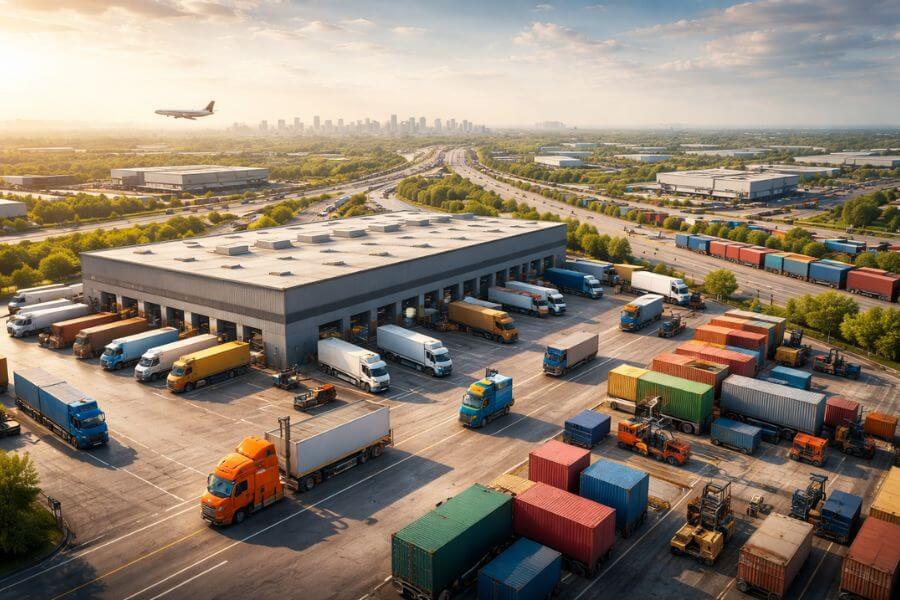
In today’s fast-moving supply chain environment, logistics companies constantly look for ways to move goods faster, reduce costs, and improve efficiency. One of the most widely used distribution models that helps achieve these goals is the hub-and-spoke system. Whether you are running an e-commerce fulfillment operation, managing transportation networks, or simply trying to understand how global shipping works, understanding hub-and-spoke logistics can give you valuable insight into how modern distribution systems operate.
The hub-and-spoke model is not new. Airlines have used it for decades, and logistics companies have adopted it because it helps centralize operations and simplify complex delivery networks. Instead of shipping products directly from point A to point B every time, goods move through a central hub before reaching their final destination. This method creates predictable routes, improves consolidation, and helps companies scale operations more efficiently.
In this guide, you will learn what hub-and-spoke logistics is, how it works, its advantages and disadvantages, when companies should use it, and how it compares to other logistics models. By the end, you will have a clear understanding of why this model remains a foundation of modern logistics systems.
What Is Hub-and-Spoke in Logistics
Hub-and-spoke is a logistics distribution model where goods move through a central facility called a hub before being sent to their final destinations, known as spokes. Instead of sending shipments directly between multiple locations, companies consolidate shipments at a hub and then redistribute them. This creates a structured network that is easier to manage and optimize.
Think of the hub as the center of a wheel and the spokes as the lines extending outward. Products arrive at the hub from suppliers, warehouses, or manufacturers. At the hub, shipments are sorted, consolidated, and redirected to regional distribution centers, retail stores, or customers. This structure reduces the number of direct shipping routes needed and simplifies transportation planning.
This model is commonly used in parcel delivery networks, air cargo operations, retail distribution, and e-commerce fulfillment. Major logistics companies depend on this structure because it allows them to handle high shipment volumes while maintaining predictable delivery schedules.
How the Hub-and-Spoke Model Works
The hub-and-spoke system follows a simple but powerful process. First, goods are collected from multiple origin points. These goods are transported to a central hub facility. At the hub, shipments are sorted based on destination, delivery priority, or transportation method. After sorting, shipments are grouped together and sent out to their respective spokes.
For example, imagine an e-commerce company that ships products across the United States. Instead of shipping directly from one warehouse to hundreds of cities, the company may send products to a central sorting hub. From there, shipments are grouped by region and sent to smaller regional distribution centers. These regional facilities then handle last-mile delivery.
This process reduces complexity because instead of managing hundreds of routes between individual locations, the company mainly manages routes between hubs and spokes. This allows for better planning, improved vehicle utilization, and more efficient labor management.
Key Components of a Hub-and-Spoke Network
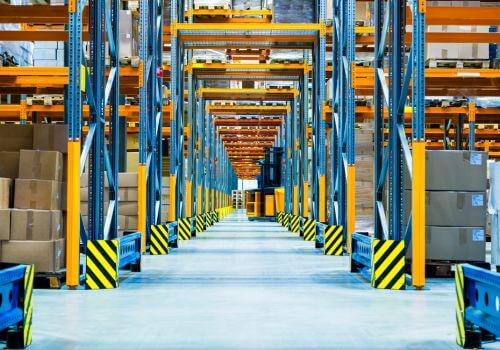
Understanding the main components of a hub-and-spoke system helps clarify why the model works so well. The first component is the central hub. This facility acts as the sorting and coordination center. It often includes advanced automation, warehouse management systems, and transportation management tools.
The second component is the spokes. These are typically smaller distribution centers, local warehouses, or delivery stations. Their main job is to receive shipments from the hub and distribute them locally. Spokes usually focus on speed and proximity to customers.
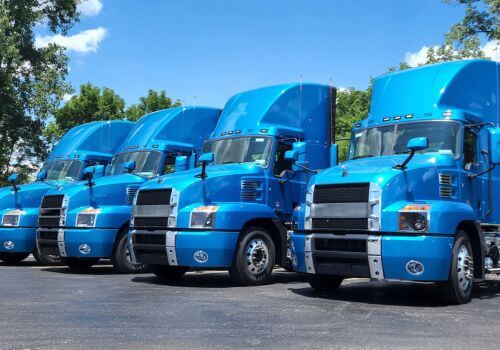
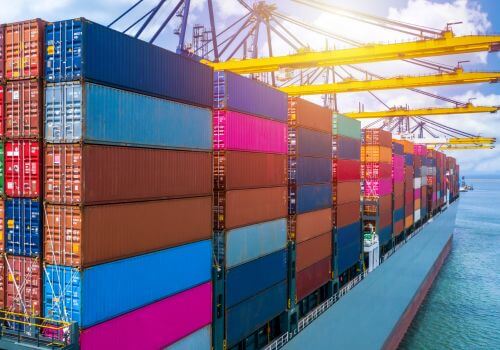
The third component is transportation infrastructure. This includes trucks, aircraft, rail networks, and shipping routes that connect hubs and spokes. Reliable transportation links are essential because delays at this level can affect the entire network.
The final component is technology. Modern hub-and-spoke systems rely heavily on data, forecasting tools, route optimization software, and inventory visibility platforms. Without these systems, it would be difficult to coordinate large shipment volumes efficiently.
Advantages of Hub-and-Spoke Logistics
The hub-and-spoke model offers several benefits that make it attractive for logistics providers and e-commerce businesses. One of the biggest advantages is cost efficiency. By consolidating shipments, companies can maximize truck capacity and reduce transportation costs per unit. Instead of running half-empty vehicles between many locations, shipments can be grouped together.
Another advantage is operational control. Centralizing sorting and routing decisions at the hub allows companies to maintain consistent processes and quality standards. This also makes it easier to implement automation and performance tracking.
Scalability is another major benefit. As shipment volumes grow, companies can expand hub capacity or add more spokes without redesigning the entire network. This flexibility is especially useful for growing e-commerce businesses that experience seasonal demand spikes.
The model also improves visibility. Since shipments pass through central hubs, companies can track inventory movement more accurately. This helps improve forecasting and customer communication.
Finally, hub-and-spoke networks can improve delivery speed when designed correctly. By placing hubs in strategic locations, companies can reach large populations within short transit times.
Disadvantages of the Hub-and-Spoke Model
Despite its advantages, hub-and-spoke logistics is not perfect. One of the biggest risks is dependency on the hub. If the hub experiences disruptions such as equipment failure, labor shortages, or weather issues, the entire network can be affected.
Another challenge is potential delays caused by extra handling. Since shipments must pass through a hub instead of moving directly to their destination, this can add an extra step. If not managed properly, this may increase transit time.
Infrastructure costs can also be high. Building or operating a major hub facility requires significant investment in real estate, automation systems, and labor. Smaller companies may find it difficult to justify these costs without sufficient shipment volume.
There is also a risk of congestion. If too many shipments arrive at the hub at the same time, bottlenecks can occur. This is why many companies invest in advanced scheduling systems and automation technologies to maintain flow efficiency.
Industries That Use Hub-and-Spoke Logistics
Many industries rely on hub-and-spoke networks because of their ability to handle complex distribution needs. Parcel carriers are among the most well-known users. These companies operate large sorting hubs where packages are processed overnight before being dispatched for delivery.
The airline cargo industry also uses this model. Cargo flights often move goods between major airport hubs before sending shipments to regional airports. This structure helps airlines maintain high aircraft utilization rates.
Retail distribution networks frequently use hub-and-spoke systems as well. Large retailers often operate central distribution centers that supply regional stores. This ensures consistent inventory availability while minimizing transportation costs.
E-commerce fulfillment providers also benefit from this model. Central hubs can handle inbound inventory from manufacturers, while regional spokes focus on fast order fulfillment. This is especially useful for companies offering international shipping or multi-region distribution.
Hub-and-Spoke vs Point-to-Point Logistics
To fully understand the hub-and-spoke model, it helps to compare it with the point-to-point model. In a point-to-point system, shipments move directly from origin to destination without passing through a central hub. This can reduce handling and shorten transit times for certain routes.
However, point-to-point networks become complex as the number of locations increases. Managing direct routes between many facilities can lead to higher costs and scheduling challenges. This is why point-to-point models are often used for high-volume dedicated routes rather than broad distribution networks.
Hub-and-spoke networks, on the other hand, reduce the number of routes needed. Instead of connecting every location to every other location, each spoke mainly connects to the hub. This simplifies route planning and reduces operational complexity.
Many companies use a hybrid approach. For example, they may use hub-and-spoke distribution for most shipments but maintain direct routes for high-volume lanes where direct shipping is more efficient.
When Companies Should Use Hub-and-Spoke Distribution
The hub-and-spoke model works best when companies handle large shipment volumes across wide geographic areas. Businesses that ship to many destinations often benefit from consolidation opportunities that reduce costs.
This model is also effective when companies want to centralize inventory management. By storing inventory at a central hub, businesses can reduce safety stock requirements across multiple locations. This improves inventory efficiency and reduces carrying costs.
Companies that want standardized processes often prefer this model. Central hubs allow companies to implement consistent packaging, labeling, and quality control procedures.
However, businesses that require ultra-fast local delivery may need additional regional hubs or micro fulfillment centers. The hub location strategy must align with delivery expectations and customer locations.
Technology Behind Modern Hub-and-Spoke Systems
Technology plays a major role in making hub-and-spoke logistics efficient. Warehouse management systems help coordinate receiving, sorting, and shipping activities within the hub. Transportation management systems help plan routes and optimize loads.
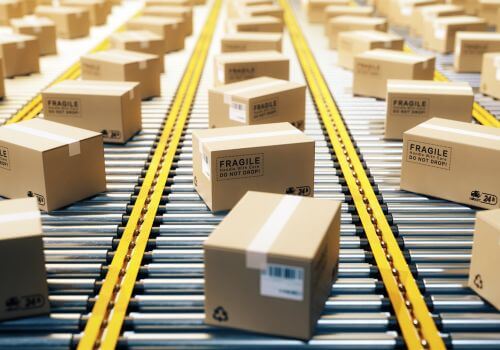
Automation is also becoming more common. Many large hubs use conveyor systems, automated sorters, barcode scanning, and robotics to process thousands of shipments per hour. These systems reduce manual errors and increase processing speed.
Data analytics also supports network optimization. Companies analyze shipment patterns, peak volumes, and transit times to determine the best hub locations and transportation schedules.
Real-time tracking tools also improve transparency. Customers can see where their shipments are as they move through hubs and spokes. This improves customer satisfaction and reduces support inquiries.
Challenges in Managing Hub-and-Spoke Networks
Managing a hub-and-spoke network requires careful planning. One challenge is balancing inbound and outbound flows. If too many shipments arrive without enough outbound capacity, congestion can occur.
Another challenge is maintaining service levels during peak seasons. Holidays and major sales events can significantly increase shipment volumes. Companies must prepare with temporary labor, extended operating hours, or additional transportation capacity.
Network design is also complex. Choosing the wrong hub location can increase transportation costs or slow delivery times. Companies often use modeling tools and demand data to select optimal hub locations.
Risk management is also important. Companies often develop backup plans such as secondary hubs or alternative routing strategies to maintain operations during disruptions.
Future Trends in Hub-and-Spoke Logistics
The hub-and-spoke model continues to evolve as logistics technology advances. One major trend is the use of regional micro hubs to support faster delivery. These smaller hubs complement large central facilities and bring inventory closer to customers.
Sustainability is also becoming a focus. Companies are optimizing hub locations to reduce transportation distances and emissions. Electric delivery vehicles and energy-efficient warehouse designs are becoming more common.
Artificial intelligence is also improving hub operations. AI tools can forecast demand, optimize labor scheduling, and predict potential disruptions before they happen.
Another trend is flexible networks. Instead of relying on a single major hub, some companies are developing multi-hub networks that provide redundancy and improve resilience.
Conclusion
The hub-and-spoke model remains one of the most important logistics strategies because it provides structure, scalability, and efficiency. By centralizing sorting and distribution activities, companies can reduce costs, improve operational control, and support growing shipment volumes. While the model requires careful planning and investment, its benefits often outweigh the challenges for businesses with large and complex distribution needs.
As e-commerce continues to grow and customer expectations increase, hub-and-spoke logistics will continue to play a major role in supply chain design. Companies that understand how to optimize their hub locations, invest in the right technology, and balance their transportation networks will be better positioned to compete in the evolving logistics landscape. Whether you are managing a fulfillment operation or simply learning about supply chains, understanding this model provides valuable insight into how goods move efficiently across regions and countries.
Frequently Asked Questions
What is the main purpose of hub-and-spoke logistics?
The main purpose of hub-and-spoke logistics is to improve efficiency by centralizing sorting and distribution. Instead of managing many direct shipping routes, companies route shipments through a central hub where they are consolidated and redistributed. This helps reduce transportation costs, improve shipment visibility, and create a more scalable logistics network.
Is hub-and-spoke suitable for small businesses?
Small businesses can benefit from hub-and-spoke logistics if they partner with third-party logistics providers that already operate hub networks. Building a private hub may be expensive, but using shared logistics infrastructure allows smaller companies to gain the benefits without major capital investment.
Does hub-and-spoke increase delivery time?
Hub-and-spoke can add an extra handling step, but when designed properly, it often improves overall efficiency. Strategic hub placement and optimized transportation schedules can actually reduce delivery times compared to poorly coordinated direct shipping networks.
What is an example of hub-and-spoke in real life?
Parcel delivery companies provide a clear example. Packages collected from local areas are sent to central sorting facilities. After sorting, they are shipped to regional delivery stations where they are prepared for final delivery. This allows companies to manage large shipment volumes efficiently.
How do companies choose hub locations?
Companies typically choose hub locations based on transportation access, proximity to customers, labor availability, and real estate costs. Data analysis and network modeling tools are often used to identify locations that minimize transportation costs while maintaining fast delivery times.