When goods, vehicles, or travelers cross international borders, they typically pass through a port of entry. Whether you are importing products, exporting goods, managing a supply chain, or simply trying to understand international trade, knowing how ports of entry work can help you avoid delays, reduce costs, and stay compliant with regulations.
In this guide, you will learn what a port of entry is, how it works, why it matters in logistics, and what you should know when moving goods across borders.
What Is a Port of Entry?
A port of entry is an officially designated location where people, cargo, and vehicles can legally enter a country. Government authorities use these locations to inspect travelers and shipments, collect duties and taxes, and enforce customs and immigration laws.
Ports of entry can include:
- Seaports
- Airports
- Land border crossings
- Rail terminals
- Inland customs facilities
Every country has authorized ports of entry that serve as gateways for international trade and travel.
Quick Summary Table
| Topic | Description |
|---|---|
| Definition | Official location where people and goods enter a country |
| Purpose | Customs clearance, inspections, security, and tax collection |
| Common Types | Seaports, airports, land crossings, rail terminals |
| Government Agencies | Customs, border protection, immigration, agriculture inspectors |
| Main Functions | Verify documents, inspect cargo, collect duties, ensure compliance |
| Importance | Supports legal trade, security, and revenue collection |
| Users | Importers, exporters, carriers, travelers, customs brokers |
Why Ports of Entry Are Important
Ports of entry play a major role in global trade and transportation.
Without them, governments would have limited control over what enters or leaves the country.
Key benefits include:
- Protecting national security
- Preventing illegal imports and exports
- Collecting customs duties and taxes
- Ensuring product safety and compliance
- Monitoring international trade activities
- Supporting efficient movement of goods
For businesses, a well-managed port of entry can significantly improve supply chain performance.
Types of Ports of Entry
Seaports
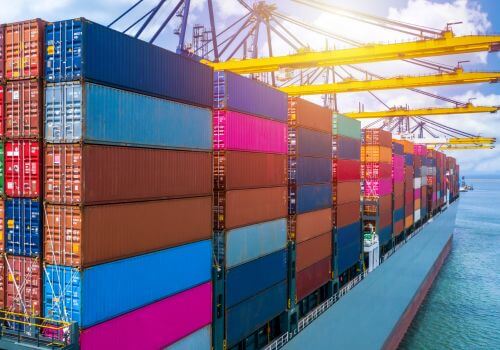
Seaports handle cargo arriving by ocean vessels.
Examples include:
- Container terminals
- Bulk cargo terminals
- Roll-on/roll-off facilities
- Cruise terminals
These ports process millions of containers each year and are critical to international commerce.
Airports
Airports serve as ports of entry for both passengers and air freight.
They are commonly used for:
- High-value goods
- Time-sensitive shipments
- Perishable products
- International travelers
Air freight often clears customs through designated airport facilities.
Land Border Crossings
Land ports of entry are located along international borders.
Common examples include:
- Truck crossings
- Passenger vehicle crossings
- Commercial freight checkpoints
These locations are especially important for trade between neighboring countries.
Rail Ports
Rail ports of entry process international cargo transported by train.
They help move large volumes of goods efficiently across borders and are frequently used in international freight corridors.
How a Port of Entry Works
When cargo arrives at a port of entry, several steps usually take place before it can enter the country.
1. Arrival of Cargo
The shipment arrives by:
- Ship
- Airplane
- Truck
- Train
Carriers submit arrival information to customs authorities.
2. Document Review
Officials review documents such as:
- Commercial invoices
- Bills of lading
- Packing lists
- Import permits
- Certificates of origin
Accurate documentation is essential for smooth processing.
3. Customs Declaration
Importers or customs brokers submit declarations describing:
- Product type
- Quantity
- Value
- Country of origin
- Classification codes
Customs authorities use this information to determine duties and compliance requirements.
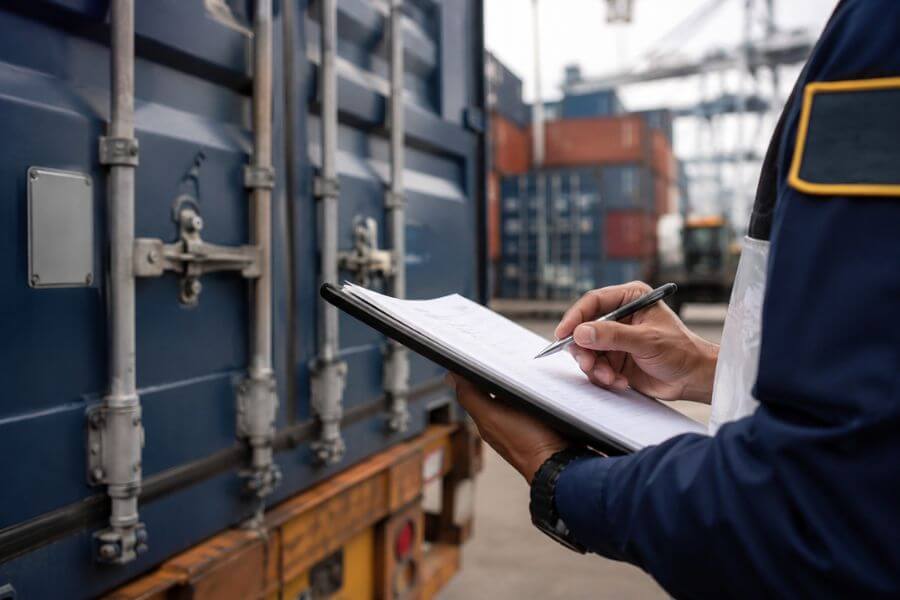
4. Inspection
Some shipments are selected for inspection.
Authorities may examine:
- Cargo contents
- Packaging
- Labels
- Documentation
Inspections help identify prohibited or restricted items.
5. Duty and Tax Assessment
If applicable, customs authorities calculate:
- Import duties
- Taxes
- Fees
Payment is usually required before cargo is released.
6. Cargo Release
After all requirements are met, the shipment is released for delivery to its final destination.
Who Operates a Port of Entry?
Several government agencies may work together at a port of entry.
These can include:
- Customs authorities
- Border protection agencies
- Immigration departments
- Agriculture inspection agencies
- Food safety authorities
- Security agencies
Each organization has specific responsibilities related to trade, safety, and border control.
Port of Entry vs Port of Discharge
These terms are often confused in logistics.
| Term | Meaning |
|---|---|
| Port of Entry | Location where goods officially enter a country and clear customs |
| Port of Discharge | Port where cargo is unloaded from a vessel |
| Relationship | They may be the same location or different locations |
For example, cargo may be unloaded at one seaport but complete customs clearance at a different inland port of entry.
Common Challenges at Ports of Entry
While ports are designed to facilitate trade, several issues can create delays.
Documentation Errors
Incorrect paperwork can lead to:
- Customs holds
- Additional inspections
- Financial penalties
Congestion
High cargo volumes may cause:
- Long wait times
- Container backlogs
- Delivery delays
Regulatory Compliance Issues
Products that fail to meet import requirements may face:
- Refusal of entry
- Fines
- Shipment seizure
Inspection Delays
Random or targeted inspections can increase processing time.
How to Avoid Delays at a Port of Entry
You can improve the chances of smooth customs clearance by following a few best practices.
- Prepare Accurate Documentation: Double-check all shipping documents before cargo arrives.
- Classify Products Correctly: Use the proper tariff classifications and product descriptions.
- Work With Experienced Customs Brokers: Professional brokers can help ensure compliance and reduce errors.
- Understand Import Requirements: Research country-specific regulations before shipping goods.
- Plan for Potential Delays: Build extra time into your supply chain schedule when necessary.
How Ports of Entry Impact Supply Chain Performance
The efficiency of a port of entry directly affects your logistics operations.
Fast clearance can provide:
- Faster deliveries
- Lower storage costs
- Better inventory management
- Improved customer satisfaction
On the other hand, delays at ports can create:
- Increased transportation costs
- Stock shortages
- Production disruptions
- Missed delivery deadlines
This is why many companies carefully choose entry points based on speed, reliability, and infrastructure.
Technology Used at Modern Ports of Entry
Many ports now use advanced technologies to improve efficiency.
Examples include:
- Electronic customs filing
- Automated cargo screening
- Container tracking systems
- Digital document processing
- Artificial intelligence risk assessment
- Electronic payment systems
These tools help reduce paperwork, improve visibility, and speed up cargo processing.
Key Terms Related to Ports of Entry
| Term | Meaning |
|---|---|
| Customs Clearance | Process of obtaining permission for goods to enter a country |
| Import Duty | Tax imposed on imported goods |
| Customs Broker | Licensed professional who assists with customs procedures |
| Bill of Lading | Transportation document issued by a carrier |
| Inspection | Examination of cargo by authorities |
| Release | Authorization allowing goods to enter the country |
Conclusion
A port of entry is much more than a transportation hub. It is the official gateway where goods, vehicles, and travelers enter a country and comply with customs, security, and regulatory requirements.
Understanding how ports of entry work can help you make better logistics decisions, avoid costly delays, and improve supply chain efficiency. Whether you are importing products, exporting goods, or managing international transportation, knowing the role of ports of entry is essential for successful global trade.
Frequently Asked Questions
Can a country have multiple ports of entry?
Yes. Most countries have many ports of entry located at seaports, airports, rail terminals, and land border crossings. Each location is officially authorized to process international arrivals.
What happens if cargo arrives at a location that is not a designated port of entry?
Cargo generally cannot legally enter the country through an unauthorized location. It may be redirected to an approved port of entry or face enforcement actions from authorities.
Are all shipments inspected at ports of entry?
No. Customs authorities often use risk assessment systems to determine which shipments require inspection. Many shipments are cleared without physical examination.
Can imported goods be stored at a port of entry before clearance?
Yes. Many ports provide bonded warehouses or storage facilities where goods can remain while customs procedures are completed and duties are paid.
Does the choice of port of entry affect shipping costs?
Yes. Different ports may have varying handling fees, transportation costs, congestion levels, and processing times. Choosing the right port of entry can help reduce overall logistics expenses.