When shipping packages, many people assume shipping costs are based only on how much a package weighs. While actual weight is important, carriers often use another measurement called volumetric weight. In many cases, volumetric weight can have a bigger impact on your shipping costs than the package’s physical weight.
Whether you are shipping products for your business, sending personal packages, or managing logistics operations, understanding volumetric weight can help you reduce costs and avoid unexpected shipping charges.
This guide explains everything you need to know about volumetric weight, including how it works, how it is calculated, and why it matters in shipping and logistics.
What Is Volumetric Weight?
Volumetric weight, sometimes called dimensional weight or DIM weight, is a pricing method used by shipping carriers. Instead of charging only for how heavy a package is, carriers also consider how much space the package occupies during transportation.
A lightweight but large package can take up significant space in a truck, airplane, or shipping container. Since space is limited, carriers charge based on the package’s volume rather than its actual weight when appropriate.
In simple terms:
- Actual weight measures how heavy a package is.
- Volumetric weight measures how much space a package occupies.
- The higher value is usually used to determine shipping charges.
Why Do Carriers Use Volumetric Weight?
Transportation space is valuable. A truck or aircraft can only hold a certain amount of cargo.
Imagine two packages:
| Package | Actual Weight | Size |
|---|---|---|
| Package A | 20 kg | Small box |
| Package B | 5 kg | Very large box |
Although Package B weighs much less, it takes up far more space. If carriers charged only by weight, they could lose money transporting bulky shipments.
Volumetric weight helps carriers:
- Maximize available cargo space
- Improve transportation efficiency
- Create fair pricing structures
- Reduce losses from oversized lightweight shipments
How Volumetric Weight Is Calculated
The standard formula is:
Volumetric Weight = (Length × Width × Height) ÷ Dimensional Factor
The dimensions are usually measured in centimeters.
A common international air freight formula is:
Volumetric Weight (kg) = Length × Width × Height (cm) ÷ 5000
However, different carriers may use different divisors such as:
| Shipping Type | Common Divisor |
|---|---|
| Air freight | 5000 |
| Express courier | 5000 or 6000 |
| Road freight | Varies by carrier |
| Ocean freight | Different calculation methods |
Always check your carrier’s specific guidelines.
Volumetric Weight Calculation Example
Suppose your package measures:
- Length: 50 cm
- Width: 40 cm
- Height: 30 cm
Step 1: Calculate volume
50 × 40 × 30 = 60,000 cubic centimeters
Step 2: Divide by the dimensional factor
60,000 ÷ 5000 = 12 kg
The volumetric weight is 12 kg.
If the actual weight is:
- 8 kg → Carrier charges based on 12 kg
- 15 kg → Carrier charges based on 15 kg
The higher value is used.
Actual Weight vs Volumetric Weight
Understanding the difference between these two measurements is essential.
Actual Weight
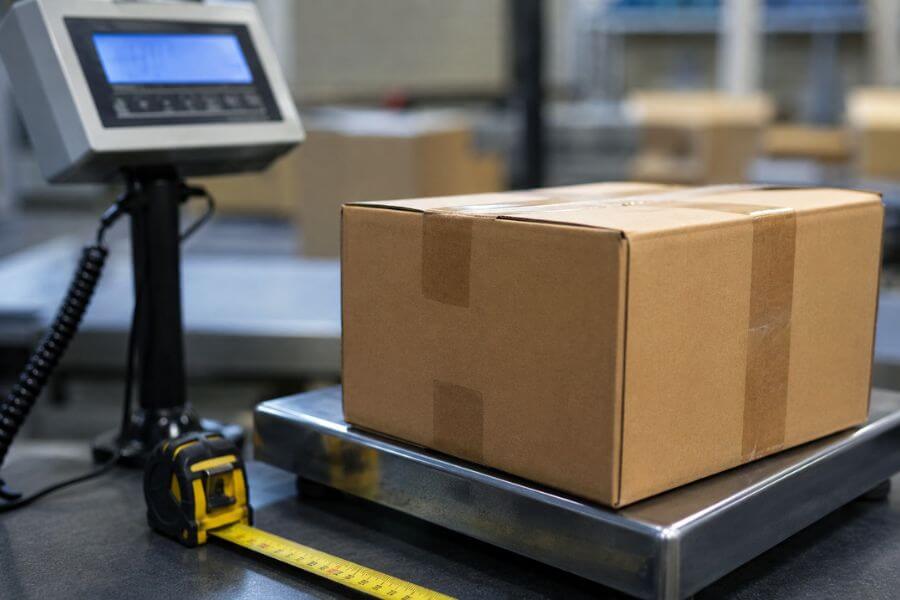
Actual weight refers to the package’s physical weight measured on a scale.
Example:
- Package weighs 10 kg
- Actual weight = 10 kg
Volumetric Weight
Volumetric weight reflects the space occupied by the package.
Example:
- Large box with lightweight products
- Volumetric weight = 15 kg
Which One Is Used?
Most carriers compare both measurements and charge based on the greater value.
| Measurement | Purpose |
|---|---|
| Actual Weight | Physical mass |
| Volumetric Weight | Space occupied |
| Billable Weight | Higher of the two |
Industries Most Affected by Volumetric Weight
Some industries frequently deal with products that are large but lightweight.
Examples include:
- E-commerce
- Furniture
- Home decor
- Toys
- Consumer electronics packaging
- Sports equipment
- Fashion and apparel
- Promotional products
Businesses in these sectors often monitor packaging dimensions carefully to control shipping costs.
How Volumetric Weight Affects Shipping Costs
Volumetric weight can significantly increase shipping expenses.
For example:
| Scenario | Actual Weight | Volumetric Weight | Charged Weight |
|---|---|---|---|
| Small dense package | 10 kg | 6 kg | 10 kg |
| Large lightweight package | 6 kg | 14 kg | 14 kg |
| Equal values | 10 kg | 10 kg | 10 kg |
A small increase in package dimensions can result in a noticeable increase in shipping costs.
This is why packaging optimization is a major focus for logistics and fulfillment operations.
Tips to Reduce Volumetric Weight Charges
You can often lower shipping costs by reducing package dimensions.
- Use Smaller Boxes: Avoid oversized cartons that contain excessive empty space.
- Optimize Product Packaging: Design product packaging that closely matches the product size.
- Eliminate Unnecessary Void Fill: Use only the amount of protective material needed to keep products safe.
- Use Flexible Packaging: Poly mailers and padded envelopes can reduce dimensions for suitable products.
- Consolidate Shipments: Combining multiple products into one optimized package may reduce overall shipping costs.
- Review Carrier Options: Different carriers use different dimensional factors and pricing structures.
Volumetric Weight in Air Freight
Air freight is one of the most common areas where volumetric weight is applied.
Aircraft cargo space is limited and expensive. Because of this, airlines carefully calculate both actual and volumetric weight.
Many air cargo shipments are charged using the formula:
Length × Width × Height ÷ 5000
Large but lightweight cargo often incurs higher transportation costs due to volumetric weight calculations.
Volumetric Weight in E-commerce Fulfillment
E-commerce businesses deal with volumetric weight every day.
Common challenges include:
- Shipping oversized product packaging
- Managing fulfillment costs
- Offering competitive shipping rates
- Reducing transportation expenses
Many online retailers work with third-party logistics providers (3PLs) to optimize packaging and reduce dimensional charges.
Common Mistakes Businesses Make
Several packaging mistakes can increase volumetric weight unnecessarily.
- Using Standard Box Sizes for Every Product: One-size-fits-all packaging often creates wasted space.
- Ignoring Package Dimensions: Many businesses focus only on actual weight and overlook dimensional charges.
- Overusing Protective Materials: Excessive bubble wrap, foam, or fillers can increase package dimensions.
- Not Auditing Shipping Costs: Regular reviews can identify products generating high volumetric weight expenses.
Benefits of Understanding Volumetric Weight
Knowing how volumetric weight works helps you:
- Predict shipping expenses more accurately
- Reduce fulfillment costs
- Improve packaging efficiency
- Compare carrier pricing effectively
- Increase profitability
- Improve customer shipping experiences
For businesses shipping large volumes of products, even small packaging improvements can generate substantial savings over time.
Quick Summary Table
| Topic | Key Takeaway |
|---|---|
| Volumetric Weight | Measures package space usage |
| Actual Weight | Measures physical package weight |
| Billable Weight | Higher of actual or volumetric weight |
| Common Formula | Length × Width × Height ÷ 5000 |
| Main Purpose | Fair carrier pricing based on space and weight |
| Cost Reduction Method | Optimize package dimensions |
| Most Affected Industries | E-commerce, furniture, toys, apparel |
| Major Benefit | Better shipping cost control |
Conclusion
Volumetric weight is one of the most important concepts in modern shipping and logistics. While actual weight measures how heavy a package is, volumetric weight measures how much space it occupies during transportation. Carriers typically charge based on whichever measurement is greater.
By understanding how volumetric weight is calculated and learning how to optimize packaging, you can reduce shipping expenses, improve operational efficiency, and make more informed logistics decisions. Whether you are an individual shipper or a growing e-commerce business, paying attention to package dimensions can have a meaningful impact on your overall shipping costs.
Frequently Asked Questions
Does volumetric weight apply to international shipments only?
No. Volumetric weight is commonly used for both domestic and international shipments. Many courier, parcel, air freight, and ground transportation providers use dimensional pricing.
Can two packages with the same dimensions have different shipping costs?
Yes. If two packages have the same dimensions but different actual weights, the carrier will compare actual and volumetric weight and charge based on the higher value.
Are shipping boxes measured from the inside or outside?
Carriers generally use the external dimensions of the package because those measurements determine how much transportation space the package occupies.
Does volumetric weight affect return shipments?
Yes. Return shipments are typically subject to the same dimensional pricing rules as outbound shipments. Large packages may generate higher return shipping costs.
How often do carriers update dimensional weight policies?
Carriers periodically review and update dimensional factors, pricing structures, and packaging requirements. Businesses should regularly monitor carrier guidelines to stay informed about any changes.